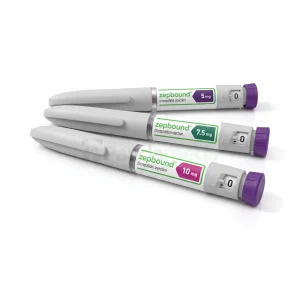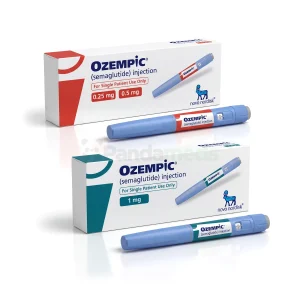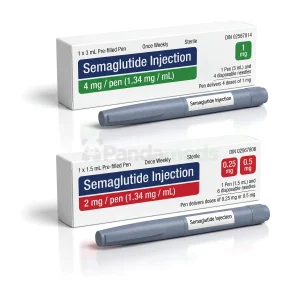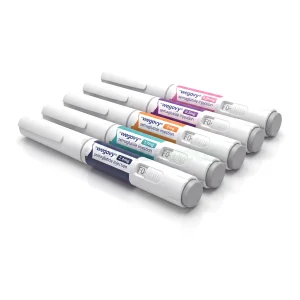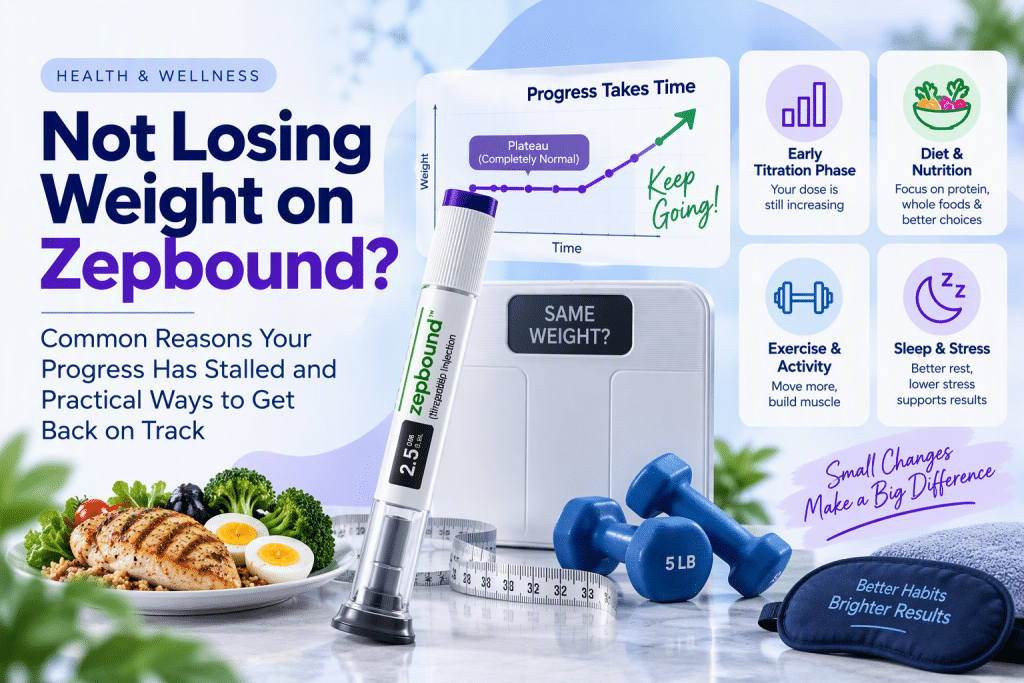

It can be really disheartening if, during or after your weight loss treatment through Zepbound, you get to find out that you are not losing weight or the weight loss results are negligible. Well, this does not mean that the medication is not working. This could happen for many reasons.
Also known as the “Zepbound plateau”, not losing weight on Zepbound may be due to your metabolism or how quickly your body burns calories, which varies for individuals. However, these factors are fixable and are often linked to your current dose chart, lifestyle habits, or expectations.
Therefore, it is important to understand the responsible factors and take necessary actions to get the medicine to do its work. Also note, this isn’t the case with Zepbound only, but also with other GLP-1 medications.
Key Takeaways
- If you are early in the titration phase of Zepbound and expecting significant weight loss results, then this is not a problem with the medication because you will only see limited weight loss during this phase.
- Other than being in the titration phase, some additional factors that may slow down the effect of the medication include diet quality, inadequate protein intake, poor sleep quality, and stress level.
- Weight loss plateaus are common in patients and are considered a normal part of the journey; however, they can be managed with the help of a healthcare provider.
- Do not adjust your Zepbound dose on your own without consulting it with your healthcare prescriber.
Why Am I Not Losing Weight on Zepbound?
Despite taking Zepbound, if you are not seeing weight loss results, there could be external factors that could hamper your weight management journey. These may include your genes, underlying health conditions and metabolic rate (this is the process of how fast your body naturally converts food into fuel). Besides that, there could be various other reasons responsible for this.
Once you understand these reasons, you can make necessary adjustments in your approach to optimize your treatment plan. With that understood, let’s take a look at the main reasons why weight loss progress might seem stuck:
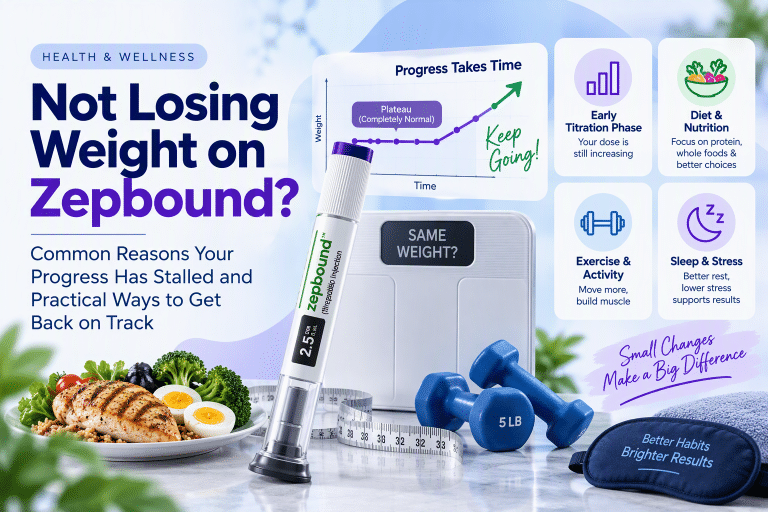
- Early in titration: If you are in the early titration phase where your dose is still increasing, you need to wait until the maintenance dose to experience full effect.
- Caloric intake: When you consume more calories, even if your appetite is less, you may have trouble losing weight.
- Low protein or muscle loss: When on Zepbound, insufficient protein intake can lead to muscle mass loss, which slows metabolism.
- Low physical activity: A lack of regular exercise, especially strength training, may have an adverse impact on fat loss and muscle preservation.
- Sleep and stress: Poor sleep quality and chronic stress are some additional factors that could hamper your weight loss journey because these factors increase hunger hormones and fat storage.
- Normal weight loss plateau: The body naturally slows weight loss as it adjusts to changes.
With adherence to the dose, a balanced diet, regular exercise, and a healthy lifestyle, you can witness maximum weight loss results. Do not make changes to the dosage without consulting with your healthcare provider to ensure maximum dose efficiency.
You May Still Be Early in Titration
As discussed, many individuals start expecting significant weight loss results early in the titration phase. During this phase, the Zepbound dose is low and you are still moving towards the maintenance dose, which means you will get to see the full effect of the medication once you move past the initial phase.
During the initial phase of the treatment, your body is still adjusting to the medication and its side effects. Through the gradual dose titration, your prescriber ensures that your body is responding to the medicine safely. However, you need to have patience during this phase and throughout the treatment to achieve better body composition over time.
Diet, Protein, and Activity
Weight loss on Zepbound is directly related to your eating habits, physical activity, lifestyle, and protein intake. Even if you are not eating much, you still need to ensure that you are not eating food rich in calories. Besides that, having adequate protein is important to prevent lean muscle loss, which helps support metabolism during weight loss.
In addition to that, low physical activity further slows fat loss and muscle maintenance. Along with that, hidden calories from liquid sources such as alcohol or sugary drinks can impact your calorie deficit, which can hinder your weight management journey.
Here are some simple adjustments that can help you achieve maximum results from Zepbound:
- Make sure that you are not eating back all the calories that you have lost through appetite suppression.
- Increase your protein intake to protect lean muscle during weight loss.
- Make sure that you incorporate regular physical activity in your daily schedule, including strength training.
- Limit taking liquid calories such as alcohol and sugary beverages, as they are high in calories. We also recommend you to consider Zepbound diet to achieve better results.
Plateaus, Sleep, and Stress
Weight loss may slow down naturally during treatment, which creates plateaus and inconsistent weight loss graphs that can sometimes feel frustrating. However, this is not something to worry about, as this is common among patients taking Zepbound and other GLP-1 medications.
Poor sleep and chronic stress can further hinder the progress and results of the medication, as they disrupt appetite control and create hormonal imbalance, leading to increased hunger and fat storage.
If you consistently notice that you are not losing weight, even at the maintenance dose, this is something that needs a discussion with your healthcare provider. He will guide you with necessary strategies that you must implement to achieve your desired weight goals.
When to Talk to Your Prescriber
If you are experiencing one of the following conditions, then you must speak to your prescriber and get necessary guidance to make necessary changes to your weight loss approach:
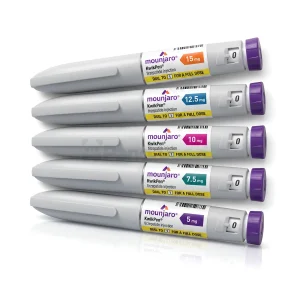
- No results even after reaching the maximum dose, i.e., 15 mg weekly.
- If your weight plateau remains the same for 4 to 8 weeks.
- In case your doctor has not titrated up your dose as per the schedule.
- If the side effects of Zepbound are so severe that you could not tolerate a dose increase.
- You have consistently missed the dose and now you are confused about how to make up for the missed dose.
- Immediate medical attention is necessary if you experience severe symptoms such as constant abdominal pain or repeated vomiting.
How US Patients Access Zepbound
US patients who are willing to buy Zepbound or any other GLP-1 medications at an affordable price can source these medications from prescription referral services such as pandameds.com. Our platform offers these medications at a lower price and sends your orders through tracked cold-chain shipping to make sure that your medication does not lose its effectiveness.
First-time users can get a guaranteed discount using the PANDA10 code during the checkout process. Placing your order is extremely simple on our platform wherein uploading the prescription is a necessary part of the process.