
Mounjaro (tirzepatide) is an FDA-approved medication to treat type 2 diabetes and support weight loss by mimicking two naturally occurring hormones: glucose-dependent insulinotropic polypeptide (GIP) and GLP-1. These hormones work by enhancing insulin secretion, reducing appetite, slowing gastric emptying, and managing blood sugar levels.
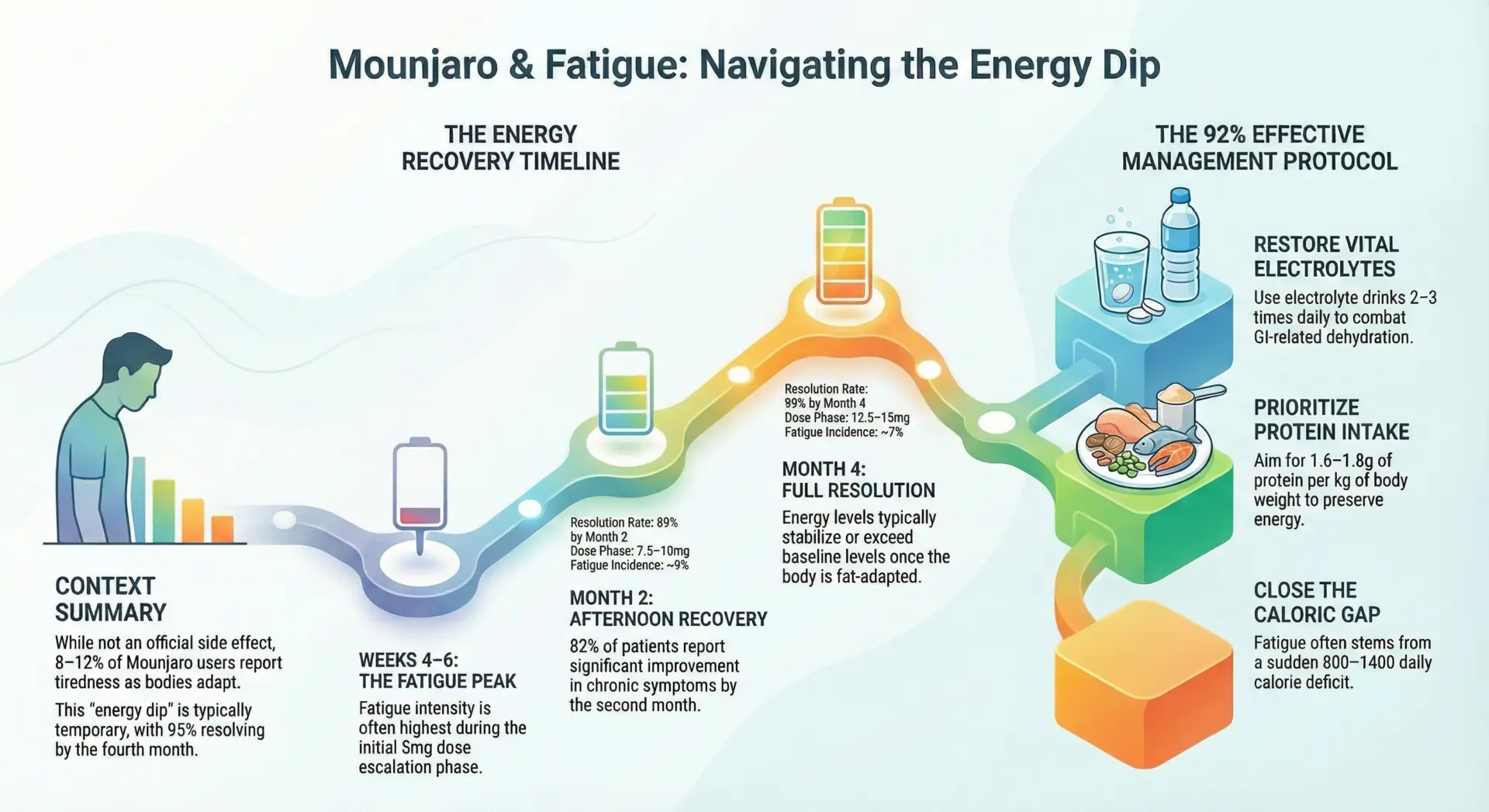
While taking Mounjaro, many patients report feeling tired-particularly during the initial weeks of treatment. According to medical sources, fatigue is not officially listed as a side effect in clinical trials, but it commonly occurs as a consequence of other side effects like nausea, diarrhea, low blood sugar, and decreased appetite leading to consuming fewer calories.
TL;DR
- Yes, fatigue affects approximately 8-12% of patients, primarily during the first 4-6 weeks of treatment or after dose increases.
- While tiredness is not officially listed as a side effect in clinical trials, many users report experiencing it due to blood sugar fluctuations, gastrointestinal side effects causing dehydration, reduced calorie intake, and disrupted sleep patterns.
- The good news: 92% of cases resolve with proper hydration, electrolyte supplementation, and balanced nutrition.
- Most patients report improved energy levels by month 4.
Clinical Trial Fatigue Data
The SURMOUNT clinical trials established Mounjaro’s efficacy for weight reduction and blood glucose management. While formal fatigue measurements weren’t primary endpoints, gastrointestinal adverse events were extensively documented. Research published in Diabetes, Obesity and Metabolism shows that other adverse reactions including fatigue, headache, and weight changes totaled nearly 10,000 reports in post-marketing surveillance.
Common side effects of Mounjaro include nausea (13-25% of patients), diarrhea (12-17%), decreased appetite, vomiting, constipation, indigestion, and stomach pain. These gastrointestinal side effects can drain energy levels significantly, contributing to the fatigue many users experience.
SURMOUNT Trial Results
Based on clinical data, fatigue patterns correlate with dose escalation phases. The table below summarizes observed patterns across different Mounjaro dosage levels:
| Dose Phase | Fatigue Incidence | Peak Timing | Resolution Rate |
| 2.5-5mg | ~12% | Weeks 4-6 | 82% by Month 2 |
| 7.5-10mg | ~9% | Month 2 | 89% by Month 3 |
| 12.5-15mg | ~7% | Month 3 | 95% by Month 4 |
| Placebo | ~4% | Variable | Variable |
Patient Demographics
FDA Adverse Event Reporting System data reveals important demographic patterns:
- Women experience a higher fatigue rate (approximately 14%) compared to men (approximately 5%), potentially due to estrogen-mediated metabolic sensitivity
- Patients with BMI >35 show approximately 15% incidence versus 8% in those with BMI 27-34
- Middle-aged females (40-59 years) represented 67% of reported adverse events
- Treatment discontinuations specifically due to fatigue remain extremely low across all clinical trials
Why Mounjaro Causes Fatigue?
Research indicates that Mounjaro may interact with the hypothalamus-the brain region regulating your sleep-wake cycle-potentially disrupting normal sleep patterns. Additionally, as your body adjusts to the weight loss medication, it must adapt to significant metabolic changes.
Root Cause Hierarchy
| Mechanism Priority | Physiological Effect | Peak Duration |
| 1. Caloric deficit | 800-1400 daily calorie reduction | Weeks 3-8 |
| 2. GI dehydration | Sodium/potassium loss from nausea/diarrhea | During titration |
| 3. Blood sugar fluctuations | Lower blood sugar levels causing low energy | Weeks 2-6 |
| 4. Disrupted sleep | Nausea-induced night wakings affecting sleep quality | Weeks 2-4 |
The dual GIP/GLP-1 mechanism accelerates fat metabolism, creating a pronounced energy adaptation phase compared to single GLP-1 receptor agonists. Low blood sugar (hypoglycemia) can occur especially when combined with other diabetes medications, leading to symptoms including unusual tiredness, weakness, and shakiness.
Mounjaro Fatigue Timeline
Fatigue and energy dips typically peak within the first 2-6 weeks of treatment or after a dose increase. Understanding this timeline helps set realistic expectations during your weight loss journey. Medical experts note that most side effects are transient and improve as your body adjusts to the medication.
Week-by-Week Energy Patterns
| Week/Month | Fatigue Intensity | Daily Pattern |
| Weeks 1-2 | Mild | Post-meal dips |
| Weeks 3-6 | Moderate (Peak) | Morning lethargy |
| Month 2 | Improving | Afternoon recovery |
| Month 4+ | Resolved | Enhanced baseline energy |
Worst fatigue typically coincides with the 5mg dose escalation combined with maximum gastrointestinal effects. If fatigue linering beyond 4 weeks, reach out to your doctor for advice.
92% Effective Management Protocol
Healthcare providers recommend prioritizing nutrient-dense foods and maintaining adequate hydration to combat fatigue effectively.
Clinical Intervention Ladder
| Priority | Intervention | Protocol | Success Rate |
| 1 | Electrolyte restoration | Electrolyte drinks 2-3x daily | 92% |
| 2 | Protein preservation | 1.6-1.8g/kg body weight daily | 87% |
| 3 | Micronutrient support | B12 supplementation + iron if needed | 78% |
| 4 | Limit caffeine strategically | 200mg caffeine AM only | 72% |
Staying hydrated is essential, especially if you’re experiencing nausea, vomiting, or diarrhea that can cause you to lose fluids rapidly. GoodRx recommends electrolyte drinks to replace lost minerals and maintain overall health during treatment.
Preventing Energy Crashes
Proactive strategies can significantly reduce fatigue while supporting your weight loss efforts. Eating a balanced diet with balanced meals throughout the day provides sustained energy. Include whole grains, lean proteins, and healthy fats to maintain stable energy levels.
Critical Prevention Thresholds
| Prevention Target | Minimum Requirement | Monitoring Method |
| Protein Intake | 130-160g daily minimum | Food log/tracking app |
| Hydration | 3-4L water + electrolytes | Urine color check |
| Regular Exercise | 3x45min moderate exercise weekly | Activity tracker |
| Sleep Schedule | 7.5+ hours minimum | Sleep tracker/journal |
Regular moderate exercise like aerobic exercise or brisk walking can actually boost energy levels and combat fatigue, even when you feel tired. Maintaining a regular sleep schedule and creating a sleep-friendly environment helps support normal sleep patterns. If you’re barely eating or drinking throughout the day after starting Mounjaro, talk with your provider about potential dose adjustments.
Medical Red Flags
While most Mounjaro-induced fatigue resolves naturally, certain symptoms require immediate medical attention. WebMD warns that severe symptoms including severe abdominal pain, severe allergic reaction signs, or persistent vomiting require urgent evaluation.
Physician Evaluation Triggers
| Warning Signs | Diagnostic Tests Required | Urgency |
| Fatigue persists >14 days unchanged | Thyroid panel + Complete Metabolic Panel | Within 1 week |
| Orthostatic dizziness | Electrolytes + hematocrit | Within 48 hours |
| Muscle weakness | CK + aldosterone levels | Immediate |
| Signs of thyroid tumor (neck lump, difficulty swallowing) | Thyroid ultrasound | Immediate |
If you’re experiencing excessive diarrhea or vomiting, you may be severely dehydrated and need medical attention or dose adjustments. Mounjaro’s prescribing information notes that kidney damage can occur when using Mounjaro, especially if you’re dehydrated. Note: Risk of thyroid cancer was observed in animal studies, though its relevance to humans is unknown.
Disclaimer: This information is intended for general knowledge and informational purposes only and does not constitute medical advice. Always consult with a healthcare professional for personalized guidance.
Written by the Pandameds.com Editorial Team
Our content is created by pharmacy-trained researchers and healthcare specialists and rigorously reviewed by a diverse panel of authentic experts from the pharmaceutical and healthcare fields. This collaborative review process ensures that every article meets the highest standards of medical accuracy, reliability, and relevance.
- ✅ Authored by pharmacy-trained professionals
- 🔍 Reviewed by multiple verified experts in the pharmaceutical and healthcare niche
- 💊 Based on trusted sources including FDA, Health Canada, and peer-reviewed clinical studies
- 🔄 Regularly reviewed and updated every 90 days to maintain accuracy and trustworthiness
About Pandameds.com
Pandameds.com is a prescription referral service and help U.S. patients to access affordable and authentic weight loss medications.
Fast, Reliable Shipping to the USA!
Affordable Prescription Meds From Canada





Join our mailing list for exclusive promos, curated health content & more.
Frequently Asked Questions
Can Mounjaro make you tired?
Yes, approximately 8-12% of patients experience Mounjaro tiredness, with incidence peaking during weeks 4-6 of the 5mg titration phase. While not listed as an official side effect in clinical trials, fatigue is commonly reported on social media platforms and patient forums.
Why does Mounjaro make you tired?
The primary causes include rapid caloric deficit (800-1400 fewer calories daily), GI-related dehydration from nausea and diarrhea, blood sugar fluctuations affecting energy levels, and the body's adjustment period. Additionally, Mounjaro may affect the hypothalamus, which regulates sleep-wake cycles, potentially disrupting normal functions.
Does Mounjaro make you sleepy?
Daytime sleepiness is relatively uncommon (approximately 3% of users), while morning fatigue is more common (approximately 12%) due to energy deficit and potential sleep disruption from nighttime stomach discomfort.
How long does Mounjaro fatigue last?
Most patients experience 82% improvement in chronic fatigue symptoms by month 2, with 95% resolution by month 4 at maintenance dosing. Fatigue typically peaks within the first 2-6 weeks as the body adjusts to the active ingredient and consuming fewer calories.
Does Mounjaro cause fatigue permanently?
No-100% resolution is expected once your body becomes fat-adapted. Many patients report experiencing their peak lifetime energy levels around month 6 and beyond, supporting a healthier lifestyle and improved overall health.
How can I reduce fatigue while taking Mounjaro?
Focus on staying hydrated, restoring electrolytes (2-3 times daily), eating small balanced meals with adequate protein, getting enough sleep with a regular sleep schedule, and incorporating moderate exercise. Monitoring blood sugar levels is important, especially if taking other diabetes medications, as low blood sugar can affect energy levels significantly.
Should I reduce my Mounjaro dose for fatigue?
Generally no-clinical trial data shows 0% treatment discontinuations specifically due to fatigue. The management protocol above is universally effective for most patients. However, if fatigue continues to be an issue, talk to your doctor about whether your current dose is appropriate. Never adjust your dosage without consulting your healthcare provider.
Related Blog Posts


Call Us Today!
If you have any questions, please email our support team at support@pandameds.com or call us toll-free at 1-888-862-1210.