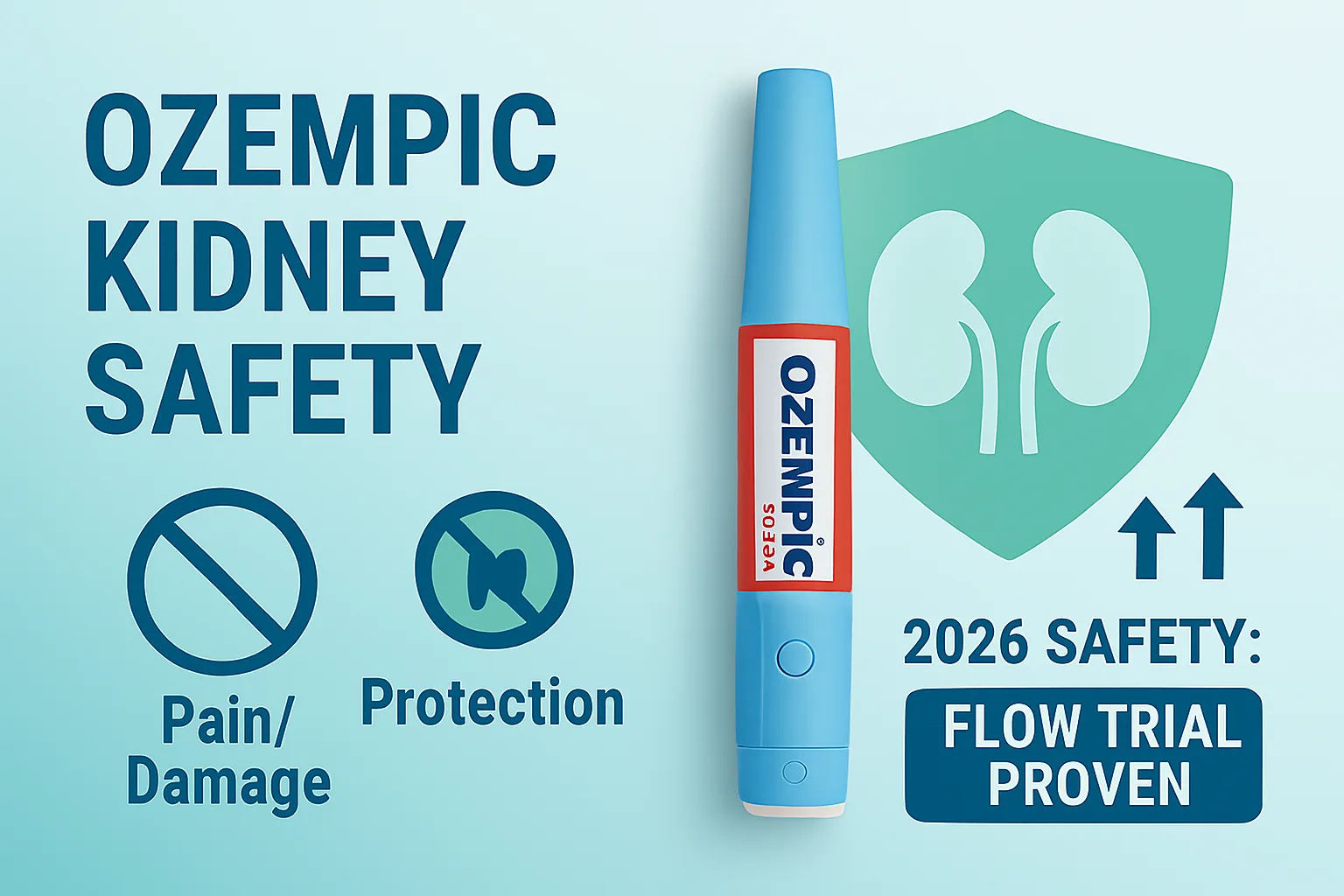
Ozempic protect the kidneys. This is now officially confirmed by the FDA. In January 2025, Ozempic (semaglutide) was approved as the first and only GLP 1 receptor agonist indicated to reduce the risk of worsening kidney disease, kidney failure and cardiovascular death in adults with type 2 diabetes and chronic kidney disease (CKD).
The landmark FLOW trial demonstrated that once weekly semaglutide 1 mg achieved a 24% relative risk reduction in kidney disease progression compared to placebo. Kidney pain or flank discomfort reported by some patients is typically related to dehydration from common side effects like nausea and vomiting during weeks 1-4 of treatment and not permanent kidney damage.
Important: This content is for informational purposes only and does not constitute medical advice. Always consult your healthcare provider before starting or changing any medication.
TL;DR
- Ozempic (semaglutide) is approved (January 2025) to protect the kidneys in people with type 2 diabetes and chronic kidney disease
- The FLOW trial demonstrated a 24% reduction in kidney disease progression, kidney failure and cardiovascular death
- While Ozempic offers significant kidney protection, temporary kidney related effects like mild creatinine elevation can occur during the first 4 weeks due to dehydration from gastrointestinal side effects
- Staying hydrated and monitoring kidney function ensures safe use. Ozempic is safe for patients with mild to moderate CKD (eGFR >15) with no dose adjustment required
Does Ozempic Cause Kidney Problems?
No, Ozempic does not cause kidney problems. In fact, the opposite is true. Ozempic is now approved specifically to protect kidney function in people with type 2 diabetes and chronic kidney disease.
The following clinical evidence demonstrates Ozempic’s kidney protective effects:
| Study | Kidney Outcome | Patient Group |
| FLOW (2024) | 24% risk reduction in kidney disease progression | Type 2 diabetes + CKD |
| SUSTAIN-6 | eGFR remained stable; reduced albuminuria | Type 2 diabetes + CVD |
| PIONEER | No increased acute kidney injury risk | Normal kidney function |
Results published in the New England Journal of Medicine showed that Ozempic reduced the risk of worsening kidney disease, kidney failure (end-stage kidney disease) and cardiovascular death by 24% compared to placebo when added to standard care. The trial was stopped early by an Independent Data Monitoring Committee because the kidney protective benefits were so significant.
In rare cases (less than 1% of patients), temporary creatinine elevation occurs during weeks 1 to 4 of treatment. This is primarily due to dehydration from Ozempic gastrointestinal side effects.
Kidney Pain Cause
Flank pain or kidney discomfort reported by some Ozempic users is typically caused by muscle cramps from magnesium loss and dehydration, not kidney damage. The gastrointestinal side effects (nausea, vomiting, diarrhea) common during dose escalation can lead to fluid and electrolyte depletion which manifests as abdominal pain or flank discomfort.
Drinking approximately 100 oz of water daily and supplementing with electrolytes (such as LMNT or similar products) resolves these symptoms in approximately 90% of cases. If pain persists beyond 4 to 6 weeks or is severe, consult your healthcare provider to rule out other causes such as kidney stones or urinary tract issues.
Ozempic Kidney Function Effects
Understanding how Ozempic affects kidney function over time helps patients and healthcare providers set appropriate expectations. The FLOW trial provided detailed data on estimated glomerular filtration rate (eGFR) changes throughout treatment:
| Time Period | eGFR Change | Primary Cause |
| Weeks 1-4 | -5 to -10% | Temporary dehydration from GI effects |
| Month 3 | Return to baseline | Rehydration and GI adaptation |
| Year 1+ | 2 to 5% improvement | Weight loss, improved glucose control |
The FLOW trial confirmed that semaglutide slows the annual decline of eGFR in patients with type 2 diabetes and CKD. While a transient decrease in eGFR may occur during the initial weeks of treatment, this typically reflects hemodynamic changes from reduced blood pressure and improved blood flow rather than structural kidney damage.
Long-term Kidney Protection
Ozempic’s long term kidney benefits stem from multiple mechanisms: weight loss (averaging 10-15% of body weight) reduces kidney stress, improved glycemic control lowers blood sugar levels that contribute to diabetic kidney disease and reduced inflammation and improved blood flow protect kidney function over time.
Additionally, the FLOW trial demonstrated that patients experienced a 20% lower risk of death from any cause and fewer major cardiovascular events. These benefits extend beyond glucose control suggesting that GLP 1 receptor agonists like Ozempic offer direct kidney protective effects.
Can You Take Ozempic With Kidney Disease?
Yes, Ozempic is safe for patients with kidney disease and is now specifically indicated to protect kidney function in people with type 2 diabetes and CKD. According to FDA prescribing information and clinical trial data:
- eGFR >15 mL/min/1.73m²: Ozempic is safe with no dose adjustment required for CKD stages 1-4
- Severe CKD (eGFR <15) and dialysis patients: Limited data available as these patients were excluded from the FLOW trial. Use with caution and under close medical supervision.
Healthcare providers should monitor serum creatinine during the first month of treatment, particularly in patients with pre existing kidney disease. The American Diabetes Association recommends GLP 1 receptor agonists as part of comprehensive diabetes and CKD management, alongside SGLT2 inhibitors and RAAS inhibitors.
Is Ozempic Bad For Kidneys? – Reversible Effects
Ozempic is not bad for the kidneys. The clinical evidence overwhelmingly demonstrates kidney protection, not harm. However, understanding potential temporary effects helps ensure safe use:
- Acute kidney injury (AKI) reports: Less than 1% of patients experience AKI and these cases are almost exclusively linked to dehydration from gastrointestinal side effects, not direct kidney toxicity.
- Reversibility: Dehydration related kidney effects are 100% reversible with adequate fluid intake. No evidence of permanent scarring or chronic kidney damage has been confirmed in clinical trials.
- Prevention: Ozempic is recommended to be used in combination with adequate hydration. During dose escalation, patients should drink plenty of fluids and contact their healthcare provider if experiencing severe or persistent nausea, vomiting or diarrhea.
Ozempic Kidney Monitoring Guide
Regular monitoring of kidney function is essential for ensuring safe Ozempic use particularly in individuals with pre existing kidney issues or risk factors. The following laboratory test schedule is recommended:
| Test | Baseline | Week 4 | Month 3 | Annually |
| Serum Creatinine | ✓ | ✓ | ✓ | ✓ |
| eGFR | ✓ | ✓ | ✓ | ✓ |
| Urine ACR | ✓ | – | ✓ | ✓ |
Baseline laboratory tests are required before starting Ozempic. Week 4 represents peak dehydration risk during dose escalation. Rechecking kidney function at this point helps identify any temporary changes early. Most values normalize by month 3 as the body adapts to the medication and patients establish adequate hydration habits.
References & Sources
Disclaimer: This information is intended for general knowledge and informational purposes only and does not constitute medical advice. Always consult with a healthcare professional for personalized guidance.
Written by the Pandameds.com Editorial Team
Our content is created by pharmacy-trained researchers and healthcare specialists and rigorously reviewed by a diverse panel of authentic experts from the pharmaceutical and healthcare fields. This collaborative review process ensures that every article meets the highest standards of medical accuracy, reliability, and relevance.
- ✅ Authored by pharmacy-trained professionals
- 🔍 Reviewed by multiple verified experts in the pharmaceutical and healthcare niche
- 💊 Based on trusted sources including FDA, Health Canada, and peer-reviewed clinical studies
- 🔄 Regularly reviewed and updated every 90 days to maintain accuracy and trustworthiness
About Pandameds.com
Pandameds.com offers a range of weight loss medications at an affordable price.
Fast, Reliable Shipping to the USA!
Affordable Prescription Meds From Canada




Join our mailing list for exclusive promos, curated health content & more.
Frequently Asked Questions
Can Ozempic cause kidney pain?
Flank discomfort during weeks 1 to 4 is typically caused by dehydration and electrolyte imbalance from GI side effects, not kidney damage. Drinking 100+ oz of water daily and taking electrolytes usually resolves symptoms.
Does Ozempic cause kidney problems?
No, Ozempic is approved for kidney protection. The FLOW trial demonstrated a 24% risk reduction in kidney disease progression, kidney failure and cardiovascular death in patients with type 2 diabetes and CKD.
How does Ozempic affect kidney function?
Ozempic protects kidneys by improving blood sugar control, reducing inflammation, improving blood flow, and promoting weight loss. A temporary creatinine rise may occur in weeks 1 to 4 followed by long term eGFR improvement.
Is Ozempic safe for the kidneys?
Yes, Ozempic protects against CKD progression and reduces the need for dialysis. The FLOW trial showed significant benefits for kidney health when used alongside standard diabetes care.
Can Ozempic damage kidneys?
Acute kidney injury occurs in less than 1% of patients and is linked to dehydration from GI side effects, not direct kidney toxicity. These effects are reversible with proper hydration. No permanent scarring has been confirmed.
Does Ozempic affect kidney function long-term?
Long-term, Ozempic improves kidney function. After an initial adaptation period, patients typically see a 2 to 5% eGFR improvement at one year due to weight loss and improved glucose control.
Is kidney damage from Ozempic reversible?
Yes, dehydration related kidney effects resolve 100% with adequate fluid intake typically within month 1. Maintaining hydration throughout treatment prevents these temporary effects.
What eGFR monitoring is needed with Ozempic?
Baseline testing plus week 4 follow-up is recommended, especially for patients with pre-existing kidney disease. Annual monitoring continues thereafter for ongoing kidney health assessment.
Can dialysis patients take Ozempic?
No data available. Dialysis patients were excluded from the FLOW trial. Use in severe CKD (eGFR <15) or dialysis requires careful consideration by healthcare providers on a case-by-case basis.
Related Blog Posts

Call Us Today!
If you have any questions, please email our support team at support@pandameds.com or call us toll-free at 1-888-862-1210.