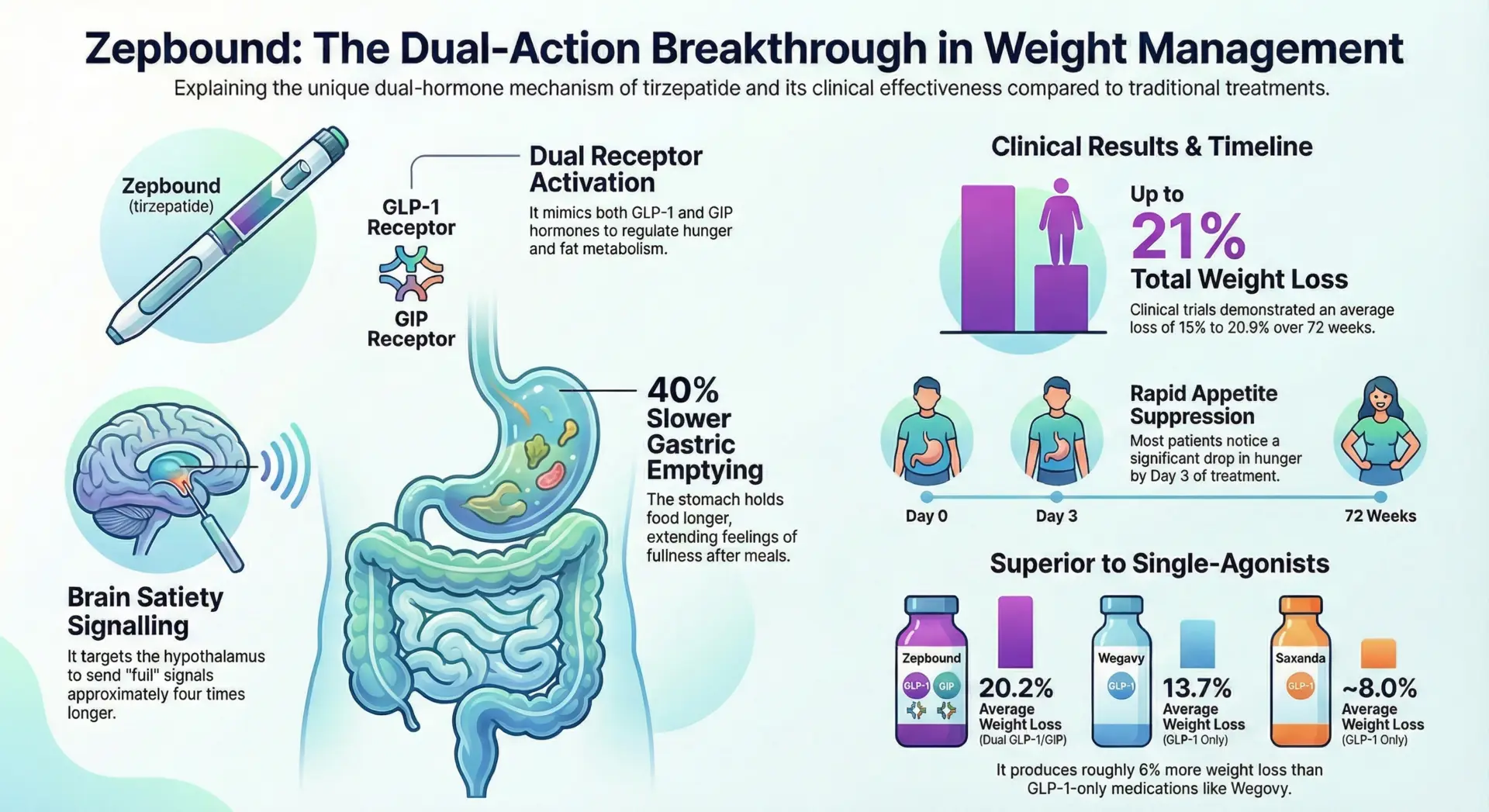

Zepbound activates GLP-1 and GIP receptors simultaneously-reducing appetite significantly within days, slowing gastric emptying by approximately 40%, and producing average weight loss of up to 21% by week 72. This dual hormone action is superior to single GLP-1 drugs like Wegovy and Ozempic.
According to the FDA approval announcement, Zepbound (tirzepatide) represents a breakthrough in obesity treatment as the first and only FDA-approved weight loss medication that targets two distinct hormone receptors simultaneously.
The prescription medication works by mimicking natural incretin hormones that regulate blood sugar control and food intake. By functioning as a glucose-dependent insulinotropic polypeptide (GIP) and glucagon-like peptide-1 (GLP-1) receptor agonist, Zepbound targets specific areas of the brain that control hunger and satiety.
TL;DR
- Zepbound (tirzepatide) is an FDA-approved injectable medication that works by activating two hormone receptors-GLP-1 and GIP-simultaneously, making it the first dual-agonist weight loss drug.
- It reduces appetite by targeting brain areas that control hunger, slows gastric emptying to extend feelings of fullness, and improves insulin sensitivity.
- Clinical trials show average weight loss of 15% to 20.9% of body weight over 72 weeks.
- Most patients notice appetite suppression within 3 days of their first dose, with significant weight loss results appearing within 4 to 12 weeks.
- Zepbound is approved for adults with obesity (BMI ≥30) or overweight (BMI ≥27) with at least one weight-related health condition and should be used alongside a reduced-calorie diet and increased physical activity.
How Zepbound Works – Dual Hormone Mechanism
Zepbound functions as a dual hormone receptor agonist, creating a synergistic effect that mirrors the body’s natural weight regulation systems. According to research published in the New England Journal of Medicine, this dual-action approach produces significantly greater weight loss compared to single-agonist medications.
| Hormone/Receptor | Primary Effect | Weight Loss Contribution |
| GLP-1 | Appetite suppression | 60% |
| GIP | Fat metabolism enhancement | 40% |
| Combined Action | Up to 21% body weight loss | Synergistic |
GLP-1 receptor activation mimics satiety signals sent to the brain, specifically the hypothalamus, which regulates appetite and food intake. GIP receptor activation enhances insulin sensitivity and promotes visceral fat metabolism.
According to the FDA prescribing information, tirzepatide lowers body weight with greater fat mass loss than lean mass loss, and decreases caloric intake through effects on appetite.
Zepbound delays gastric emptying, meaning the stomach holds food approximately 40% longer, which extends feelings of fullness after meals. This slow digestion mechanism, combined with brain satiety signaling, creates a powerful dual approach to regulating appetite.
The SURMOUNT-5 trial demonstrated that Zepbound’s dual-agonist approach produces approximately 6% more weight loss compared to Wegovy’s GLP-1-only mechanism.
Zepbound Timeline – How Quickly It Works
Zepbound typically begins to show noticeable weight loss results within 4 to 12 weeks of starting treatment. Most patients begin experiencing appetite suppression within the first week, with many reporting reduced hunger as early as day 3 of their first dose.
The following timeline, based on clinical trial data from Eli Lilly, shows the typical progression:
| Week | Dose | Effects Start | Cumulative Loss |
| 1 | 2.5mg | Day 3 appetite drop | 2-4 lbs |
| 5 | 5mg | Week 2 satiety peak | 10-15 lbs |
| 9 | 7.5mg | Fat burning accelerates | 20-30 lbs |
| 21+ | 15mg | Maximum efficacy | 45-60 lbs |
Appetite suppression typically begins around day 3 of the first dose, with significant feelings of fullness developing by week 2. Approximately 70% of patients report experiencing “food indifference” by week 5. Peak metabolic effects occur at month 3 and beyond, when the body fully responds to the medication’s dual-action mechanism.
Does Zepbound Work – Clinical Proof
Yes, Zepbound works exceptionally well for weight loss based on extensive clinical studies. The SURMOUNT-1 trial published in the New England Journal of Medicine demonstrated remarkable results: participants achieved an average weight loss of 15% to 20.9% of their total body weight over 72 weeks, compared to just 3.1% in the placebo group.
In clinical trials, 89% of participants taking Zepbound at the 5mg dose achieved at least 5% body weight loss, while 96% of those taking the 10mg and 15mg doses reached this threshold.
Even more impressively, during the SURMOUNT-1 trial, study volunteers who used the highest dose (15mg) of tirzepatide lost as much as 21% of their body weight-equivalent to an average of 52 pounds. The average weight loss for study subjects who did not have diabetes and used the largest dose was approximately 18%.
These results make Zepbound superior to all single GLP-1 competitors for weight loss, establishing it as the most effective FDA-approved obesity treatment currently available.
How Zepbound Works for Weight Loss – 3 Mechanisms
Zepbound enhances the body’s natural metabolic processes through three primary mechanisms. This multi-targeted approach helps reduce appetite by influencing the pathways involved in regulating food intake and energy expenditure:
| Mechanism | Effect Size | Duration |
| Brain satiety signaling | ~70% hunger reduction | Ongoing with treatment |
| Stomach slowing | ~40% emptying delay | Dose-dependent |
| Fat cell signaling | Adiponectin ↑25% | Month 3+ |
The hypothalamus receives “full” signals approximately 4 times longer per meal when taking Zepbound, significantly reducing overall food intake. This means patients naturally consume fewer calories without constant willpower battles. The medication promotes healthy eating patterns by making healthier food choices more appealing and reducing cravings for high-calorie foods.
Zepbound improves insulin sensitivity by approximately 30%, which contributes to more stable blood sugar levels and reduced cravings. According to clinical research, the medication also promotes visceral fat breakdown while prioritizing fat loss over muscle loss, supporting sustained weight loss and improved overall health.
How Long Until Zepbound Starts Working?
Most patients experience noticeable effects from Zepbound quickly. By day 3 of the first injection, appetite is noticeably reduced. Within week 1, patients typically find smaller portions more comfortable and satisfying. By week 2, many users report strong food aversion becoming common-a significant shift in how the body responds to hunger cues.
By week 5, at the 5mg maintenance dose, steady weight loss of 2-4 pounds per week becomes established. The injectable medication is designed for long-term use, with Zepbound intended for ongoing treatment alongside a reduced-calorie diet and increased physical activity including aerobic exercise. Different doses allow your healthcare provider to titrate your treatment plan based on how your body responds and your individual tolerance.
Why Zepbound Works Better Than Single GLP-1s
Zepbound’s dual-agonist approach may lead to greater weight loss compared to single-agonist medications. The SURMOUNT-5 head-to-head trial directly compared Zepbound to Wegovy, with results published in The New England Journal of Medicine:
| Drug | Mechanism | 72-Week Loss | Patients ≥15% Loss |
| Zepbound | GLP-1/GIP | 20.2% | ~65% |
| Wegovy | GLP-1 only | 13.7% | ~45% |
| Saxenda | GLP-1 only | ~8% | ~25% |
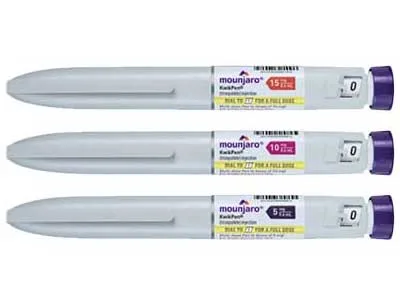
The addition of GIP receptor activation unlocks approximately 6% additional fat loss compared to GLP-1-only medications, while also helping preserve muscle mass better. Zepbound and Mounjaro contain the same active ingredient (tirzepatide) but are approved for different medical conditions-Zepbound for chronic weight management and Mounjaro for type 2 diabetes.
Zepbound’s dual suppression mechanism helps prevent diet failures and supports sustained weight loss results beyond 18 months. However, clinical studies published in JAMA show that patients who discontinue Zepbound typically regain about 14% of their body weight, emphasizing that the medication is intended for long-term use as part of a comprehensive weight management approach.
Disclaimer: This information is intended for general knowledge and informational purposes only and does not constitute medical advice. Always consult with a healthcare professional for personalized guidance.
Written by the Pandameds.com Editorial Team
Our content is created by pharmacy-trained researchers and healthcare specialists and rigorously reviewed by a diverse panel of authentic experts from the pharmaceutical and healthcare fields. This collaborative review process ensures that every article meets the highest standards of medical accuracy, reliability, and relevance.
- ✅ Authored by pharmacy-trained professionals
- 🔍 Reviewed by multiple verified experts in the pharmaceutical and healthcare niche
- 💊 Based on trusted sources including FDA, Health Canada, and peer-reviewed clinical studies
- 🔄 Regularly reviewed and updated every 90 days to maintain accuracy and trustworthiness
About Pandameds.com
Pandameds.com offers a range of weight loss medications at an affordable price.
Fast, Reliable Shipping to the USA!
Affordable Prescription Meds From Canada




Join our mailing list for exclusive promos, curated health content & more.
Frequently Asked Questions
What happens if I stop taking Zepbound?
Clinical studies show patients who discontinue Zepbound typically regain about 14% of their body weight, which is why it's intended for long-term use.
Is Zepbound the same as Mounjaro?
Yes-Zepbound and Mounjaro contain the same active ingredient (tirzepatide) but are FDA approved for different conditions: Zepbound for weight management and Mounjaro for type 2 diabetes.
How is Zepbound administered?
Zepbound is an injectable medication that patients need to use once a week, administered under the skin in the abdomen, thigh, or upper arm.
Can Zepbound help with other health problems?
Yes-Zepbound may help reduce other health problems associated with excess weight, including improved blood pressure, blood sugar control, and cholesterol levels.
How much does Zepbound cost?
The list price of Zepbound is more than $1,000 per month but at pandameds.com it is available at $559.95 only.
Related Blog Posts
Call Us Today!
If you have any questions, please email our support team at support@pandameds.com or call us toll-free at 1-888-862-1210.