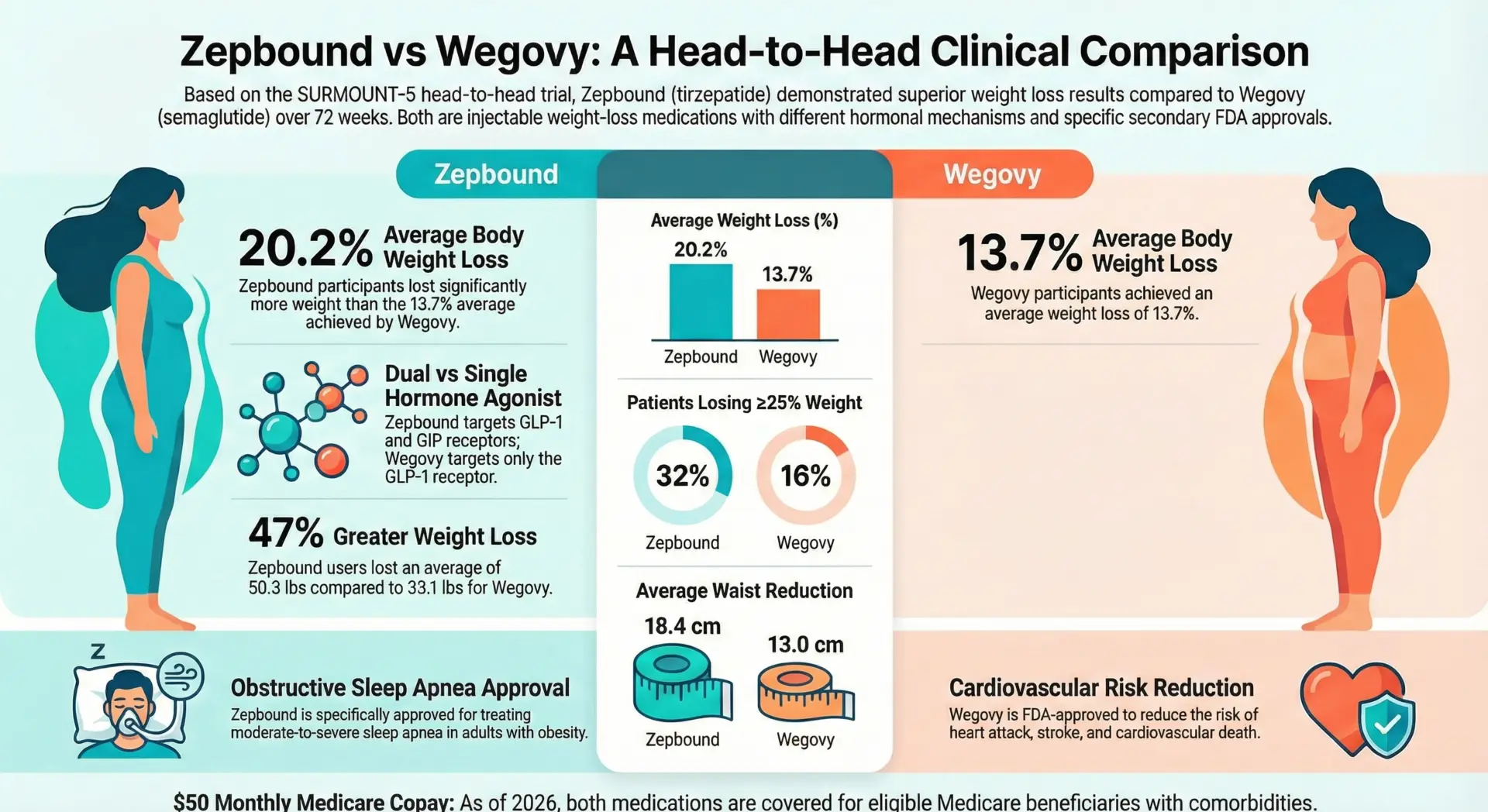

Zepbound beats Wegovy with 20.2% vs 13.7% body weight loss in the first-ever head-to-head trial (SURMOUNT-5), published in the New England Journal of Medicine. The key difference: Zepbound is a dual GLP-1 and GIP receptor agonist, while Wegovy targets only GLP-1. Both are FDA-approved injectable weight loss medications that require weekly injections alongside healthy eating and increased physical activity.
On average, participants on Zepbound lost 50.3 pounds compared to 33.1 pounds for those on Wegovy over 72 weeks. Approximately 32% of adults with obesity on Zepbound achieved at least 25% body weight reduction, double the 16% rate seen with Wegovy. However, Wegovy has unique FDA approval to reduce cardiovascular disease risk, while Zepbound is approved for treating moderate-to-severe obstructive sleep apnea.
TL;DR: Quick Summary
- Zepbound (tirzepatide) outperforms Wegovy (semaglutide) in the SURMOUNT-5 head-to-head clinical trial with 20.2% average body weight loss vs. 13.7% for Wegovy at 72 weeks.
- Zepbound’s dual GLP-1/GIP mechanism delivers 47% greater relative weight loss. Both FDA-approved for long-term weight management.
- Wegovy has cardiovascular protection approval; Zepbound has obstructive sleep apnea approval.
- Cost: ~$1,086/month (Zepbound) vs. ~$1,349/month (Wegovy) list price, but most pay $25-50 with insurance and savings programs.
- Zepbound is available at Pandameds.com for only $559.99, while Wegovy is available at $599.95.
Zepbound vs Wegovy Mechanism Differences
The fundamental difference between Zepbound and Wegovy lies in how they work at the receptor level. Zepbound (tirzepatide) is a dual agonist that mimics two hormones: glucagon-like peptide-1 (GLP-1) and glucose-dependent insulinotropic polypeptide (GIP). Wegovy (semaglutide) is a single agonist targeting only GLP-1.
Both GLP-1 and GIP receptors are found in brain areas important for appetite regulation. According to research from Eli Lilly, this dual-action approach helps decrease calorie intake more effectively by affecting appetite through two pathways. Both medications slow digestion and help regulate blood sugar levels, leading to decreased appetite and reduced food consumption.
Mechanism Comparison
| Feature | Zepbound (Tirzepatide) | Wegovy (Semaglutide) |
| Mechanism | GLP-1 + GIP dual agonist | GLP-1 only |
| Weight Loss (72 wks) | 20.2% | 13.7% |
| Maximum Dose | 15 mg weekly | 2.4 mg weekly |
| FDA Approvals | Weight loss + Sleep Apnea | Weight loss + Cardiovascular |
| Manufacturer | Eli Lilly | Novo Nordisk |
Source: FDA Prescribing Information
Weight Loss Results – Head-to-Head Trial
The SURMOUNT-5 trial published in the New England Journal of Medicine represents the first direct comparison between these new weight loss drugs. Led by Dr. Louis Aronne, director of the Comprehensive Weight Control Center at Weill Cornell Medicine, the 72-week study enrolled 751 adults with obesity or overweight with at least one weight-related health condition.
Results confirmed Zepbound’s superior efficacy. Participants treated with Zepbound lost an average of 50.3 pounds (22.8 kg), while those on Wegovy lost 33.1 pounds (15 kg). The trial demonstrated how much weight can be lost with each medication, with Zepbound helping people lose approximately 6.5% more body weight than Wegovy.
SURMOUNT-5 Clinical Results
| Metric | Zepbound | Wegovy | Significance |
| 72-Week Weight Loss | 20.2% | 13.7% | P<0.001 |
| Average Pounds Lost | 50.3 lbs | 33.1 lbs | 47% more |
| ≥25% Weight Loss | 32% | 16% | 2x superior |
| Waist Reduction | 18.4 cm | 13.0 cm | 42% more |
Source: Weill Cornell Medicine / NEJM May 2025
Side Effects Comparison – Identical GI Profile
The most common side effects of Zepbound and Wegovy are virtually identical, primarily gastrointestinal in nature. Both medications cause nausea, vomiting, diarrhea, constipation, and abdominal pain as the body adjusts to the medication. These side effects are generally mild to moderate and tend to resolve by week 12 as the dose is gradually increased.
Serious side effects may include pancreatitis, gallbladder problems, kidney problems, and severe allergic reactions. Both medications carry an FDA warning about a possible link to thyroid C-cell tumors, including medullary thyroid carcinoma. Patients with a family history of these conditions or multiple endocrine neoplasia syndrome type 2 should not use these medications.
Importantly, fewer patients on Zepbound discontinued treatment due to adverse events compared to Wegovy. Both may cause mood changes or suicidal ideation in rare cases. Zepbound may increase the risk of low blood sugar when taken with insulin or sulfonylureas and may reduce the effectiveness of oral contraceptives.
Safety Profile Comparison
| Side Effect | Zepbound | Wegovy |
| Nausea | 45% | 44% |
| Diarrhea | 23% | 20% |
| Constipation | 17% | 16% |
| Discontinuation Rate | ~7% | ~7% |
Note: Side effects are generally mild-moderate and resolve as dosage stabilizes. Source: SURMOUNT-5 Trial Data
Zepbound vs Wegovy Insurance Coverage 2026
Insurance coverage for GLP-1 weight loss medications varies widely. Wegovy generally has better commercial insurance acceptance due to its longer track record, though Zepbound is rapidly gaining ground. Major developments in late 2025 significantly changed the coverage landscape.
Key Coverage Update (November 2025): The federal government announced that Medicare will now cover Wegovy and Zepbound for beneficiaries with obesity and at least one weight-related comorbidity. Medicare beneficiaries pay approximately $50/month under the new program. Previously, Medicare did not cover weight-loss medications at all.
Medicaid coverage depends on your state. Some states, like California (Medi-Cal), cover Zepbound for weight management with no prior approval. Other states may only cover these medications for the obstructive sleep apnea indication or require step therapy.
Insurance Coverage Comparison
| Insurance Type | Zepbound Coverage | Wegovy Coverage |
| Commercial Plans | ~45% | ~55% |
| Medicare (2026) | Yes (with comorbidity) | Yes (with comorbidity) |
| Employer Plans | ~50% | ~65% |
Source: Lilly Coverage Information and White House GLP-1 Announcement
Cost Comparison – Near Identical List Prices
The list price of Zepbound is approximately $1,086 per month, while Wegovy costs around $1,349 per month. However, most patients won’t pay these full amounts thanks to insurance coverage and manufacturer savings programs.
With commercial insurance coverage, patients can pay as little as $25/month for Zepbound or $0 for Wegovy using manufacturer savings cards. Without insurance, LillyDirect offers Zepbound vials starting at $349/month (for 2.5mg) to $449/month (for higher doses). Novo Nordisk recently reduced cash prices for Wegovy to $349/month for existing patients.
Cost Comparison
| Pricing Scenario | Zepbound | Wegovy |
| List Price | $1,086/month | $1,349/month |
| Pandameds.com | $559.99 | $599.95 |
| With Savings Card | As low as $25 | As low as $0 |
| Cash (Direct) | $349-$449 (vials) | $349-$499 |
| Medicare (2026) | ~$50 copay | ~$50 copay |
Switching Between Zepbound ↔ Wegovy
Patients may need to switch between Zepbound and Wegovy for various reasons, including insurance changes, side effect management, or seeking better results. The good news: no washout period is required when switching between these medications.
When switching from Wegovy 2.4mg to Zepbound, healthcare providers typically start at 5mg. When switching from Zepbound to Wegovy, the usual starting dose is 1.0mg. Patients should expect 2-3 weeks of GI symptoms overlap as the body adjusts to the new medication. Blood sugar should be monitored closely during the first month, especially in patients who treat diabetes.
Switching Protocol
| Switch Direction | Starting Dose | Timing |
| Wegovy → Zepbound | 5 mg | Day 1 (no washout) |
| Zepbound → Wegovy | 1.0 mg | Day 1 (no washout) |
Note: Consult your healthcare provider before switching. Dose adjustments should be individualized.
FDA Approvals: Key Differences
Both Zepbound and Wegovy gained FDA approval for long-term weight management in adults with obesity (BMI ≥30) or overweight (BMI ≥27) with at least one weight-related comorbid condition. However, each has unique additional approvals:
Zepbound (December 2024): FDA approved as the first and only prescription medicine for treating moderate-to-severe obstructive sleep apnea in adults with obesity. This makes Zepbound a better option for individuals with sleep apnea.
Wegovy (March 2024): FDA approved to reduce the risk of major adverse cardiovascular events (heart attack, stroke, cardiovascular death) in adults with established cardiovascular disease and either obesity or overweight. This makes Wegovy more suitable for those with heart disease or high cardiovascular risk.
Which Is Right for You? Decision Framework
Zepbound may be better if you:
want maximum weight loss results, have obstructive sleep apnea, prefer a dual-hormone approach, or have tried GLP-1-only medications without sufficient results.
Wegovy may be better if you:
have cardiovascular disease or high heart risk, need better insurance coverage, prefer a medication with longer market history, or are focused on reducing risk of heart attack and stroke.
Both medications require healthy lifestyle changes including a reduced-calorie diet and regular physical activity for long-term weight management success. Neither is a standalone solution-stress management, healthy eating, and exercise remain essential components of treating obesity.
References & Sources
- SURMOUNT-5 Trial Results (2025). New England Journal of Medicine
- Eli Lilly Press Release (Dec 2024). SURMOUNT-5 Topline Results.
- FDA. Zepbound Prescribing Information (2024). accessdata.fda.gov.
- FDA. Wegovy Prescribing Information (2024). accessdata.fda.gov.
- Novo Nordisk (Mar 2024). Wegovy Cardiovascular Approval.
- Weill Cornell Medicine (May 2025). Head-to-Head Trial Results.
- Eli Lilly. Zepbound Savings Programs.
- White House (Nov 2025). GLP-1 Medicare Coverage Announcement.
Disclaimer: This information is intended for general knowledge and informational purposes only and does not constitute medical advice. Always consult with a healthcare professional for personalized guidance.
Written by the Pandameds.com Editorial Team
Our content is created by pharmacy-trained researchers and healthcare specialists and rigorously reviewed by a diverse panel of authentic experts from the pharmaceutical and healthcare fields. This collaborative review process ensures that every article meets the highest standards of medical accuracy, reliability, and relevance.
- ✅ Authored by pharmacy-trained professionals
- 🔍 Reviewed by multiple verified experts in the pharmaceutical and healthcare niche
- 💊 Based on trusted sources including FDA, Health Canada, and peer-reviewed clinical studies
- 🔄 Regularly reviewed and updated every 90 days to maintain accuracy and trustworthiness
About Pandameds.com
Pandameds.com offers a range of weight loss medications at an affordable price.
Fast, Reliable Shipping to the USA!
Affordable Prescription Meds From Canada




Join our mailing list for exclusive promos, curated health content & more.
Frequently Asked Questions
Which is more effective, Zepbound or Wegovy?
Zepbound showed 20.2% vs 13.7% weight loss in the head-to-head SURMOUNT-5 trial-47% greater relative weight loss than Wegovy.
How much weight can I lose on Zepbound vs Wegovy?
Zepbound users lost an average of 50.3 pounds; Wegovy users lost 33.1 pounds over 72 weeks. 32% of Zepbound patients lost ≥25% of body weight vs. 16% on Wegovy.
Is Zepbound better than Wegovy?
Zepbound delivers superior weight loss efficacy. However, Wegovy has better insurance acceptance and unique cardiovascular protection approval. The "better" choice depends on your health goals and medical conditions.
Can I switch from Wegovy to Zepbound?
Yes. Start Zepbound at 5mg after completing Wegovy 2.4mg-no washout period needed. Consult your healthcare provider for personalized guidance.
Are side effects different between Zepbound and Wegovy?
Side effects are nearly identical (44-45% nausea rate for both). Both cause GI symptoms that typically resolve by week 12. Fewer Zepbound patients discontinued treatment due to adverse events.
What is the cost difference between Zepbound and Wegovy?
List prices: Zepbound $1,086/month vs. Wegovy $1,349/month. With insurance + savings cards: as low as $25 (Zepbound) or $0 (Wegovy). Cash options: $349-$449/month for both.
Which has better insurance coverage?
Wegovy has ~55% commercial coverage vs. ~45% for Zepbound due to longer market presence. Medicare now covers both for weight loss with comorbidities (as of late 2025).
What's the difference in how Zepbound and Wegovy work?
Zepbound targets two hormones (GLP-1 + GIP); Wegovy targets only GLP-1. Both are weekly injections that slow digestion, reduce appetite, and help regulate blood sugar.
Should I choose Zepbound or Wegovy if I have heart disease?
Wegovy is FDA-approved to reduce cardiovascular events in patients with heart disease and obesity. It's generally preferred for patients with existing cardiovascular disease.
Should I choose Zepbound if I have sleep apnea?
Yes. Zepbound is FDA-approved for moderate-to-severe obstructive sleep apnea in adults with obesity-the only weight loss medication with this indication.
Can Zepbound replace Wegovy?
For patients prioritizing maximum weight loss (BMI ≥35), Zepbound offers superior efficacy. However, for cardiovascular risk reduction, Wegovy has specific FDA approval.
How are Zepbound and Wegovy administered?
Both require weekly subcutaneous injections (upper arm, thigh, or abdomen). Zepbound is available as a pre-filled pen or vial; Wegovy is only available as a pre-filled pen.
Related Blog Posts
Call Us Today!
If you have any questions, please email our support team at support@pandameds.com or call us toll-free at 1-888-862-1210.