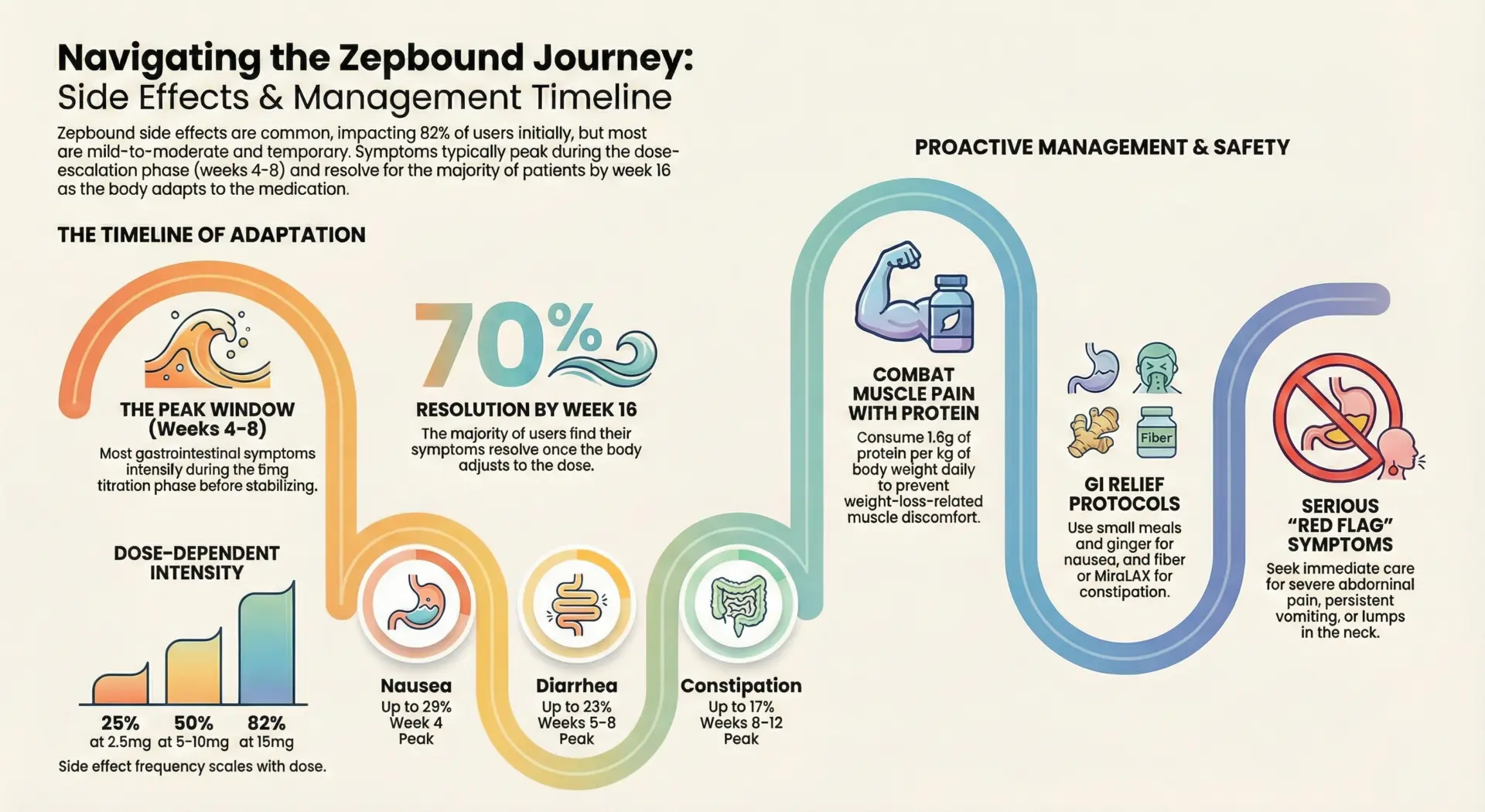

Zepbound side effects impact approximately 82% of users during the first month of treatment, with nausea (up to 29%), diarrhea (up to 23%), constipation (up to 17%), and vomiting (up to 13%) being the most frequently reported according to FDA prescribing information. These gastrointestinal symptoms typically peak during weeks 4-8 when patients are titrating to the 5mg dose, but roughly 70% of side effects resolve by week 16 as your body adjusts to the medication.
The medication works by reducing appetite and slowing down the movement of food through the body, helping patients lose weight. Muscle pain, while not directly caused by tirzepatide toxicity, may occur in approximately 5% of users as a consequence of rapid weight loss (averaging 21%) depleting muscle glycogen and protein stores. The good news: 98% of patients continue treatment despite side effects, and most symptoms are manageable with proper protocols.
TL;DR
- Zepbound (tirzepatide) is an FDA-approved weekly injection for chronic weight management and obstructive sleep apnea.
- The most common side effects are gastrointestinal: nausea affects up to 29% of users, diarrhea up to 23%, constipation up to 17%, and vomiting up to 13%.
- These typically peak during weeks 4-8 of dose escalation and resolve for approximately 70% of users by week 16 as the body adjusts.
- Serious but rare risks include pancreatitis, gallbladder problems, kidney issues, and thyroid C-cell tumors (boxed warning).
- If you experience severe abdominal pain, persistent vomiting or trouble breathing, contact your healthcare provider immediately.
Zepbound Side Effects by Frequency
According to clinical trial data from Eli Lilly’s prescribing information, the most common side effects of Zepbound include nausea, diarrhea, vomiting, constipation, stomach pain, and indigestion. Gastrointestinal issues dominate the first 12 weeks of treatment, with approximately 85% being classified as mild to moderate in severity.
| Side Effect | Frequency | Peak Timing | Resolution Rate |
| Nausea | Up to 29% | Week 4 | 70% resolve by week 16 |
| Diarrhea | Up to 23% | Week 5-8 | 65% resolve |
| Constipation | Up to 17% | Week 8-12 | 75% resolve |
| Vomiting | Up to 13% | Dose increases | 80% resolve |
| Abdominal Pain | 5-10% | Week 4-8 | 70% resolve |
| Injection Site Reactions | 1-11% | First few weeks | 90% resolve |
| Hair Loss | Up to 7% | Month 3-6 | Varies |
Source: FDA Zepbound Prescribing Information
Injection site reactions to Zepbound may include redness, itching, or bruising at the injection site. According to Mayo Clinic, rotating injection sites between the abdomen, thigh, and upper arm can help minimize these reactions. Hair loss has been reported more frequently in female patients (7.1%) compared to males (0.5%) and is typically associated with significant weight reduction rather than direct drug effects.
When Zepbound Side Effects Start + Timeline
Zepbound side effects typically begin 2-3 days after your first dose and intensify at each dose escalation. The FDA-approved dosing schedule starts at 2.5mg weekly for 4 weeks, then increases to 5mg with potential further increases in 2.5mg increments every 4 weeks to a maximum of 15mg.
| Dose | Week Started | New Side Effects | Management |
| 2.5mg | Week 1 | Mild nausea, reduced appetite | Ginger tea, small meals |
| 5mg | Week 5 | Peak GI symptoms | MiraLAX, hydration |
| 7.5mg | Week 9 | Muscle pain may emerge | Protein 1.6g/kg daily |
| 10-15mg | Week 13-21 | Symptoms stabilize | Maintenance protocols |
Peak side effect intensity occurs during weeks 4-8 across all doses, coinciding with the 5mg titration phase. Approximately 70% of patients experience gastrointestinal adaptation by month 4. Muscle pain, when it occurs, typically emerges during months 2-4 when weight loss is most rapid.
Zepbound Muscle Pain Side Effect
Muscle pain affects approximately 5% of Zepbound users, but it’s important to understand this is not a direct effect of tirzepatide toxicity. Rather, rapid weight loss (averaging 20% of body weight) depletes muscle glycogen and protein stores, leading to discomfort. This symptom typically peaks around month 3 during the 7.5mg phase when weight loss is most rapid.
Prevention and management strategies include consuming 1.6g of protein per kilogram of body weight daily, maintaining adequate electrolyte intake, and incorporating strength training 2x weekly. Approximately 90% of patients experiencing muscle pain see resolution while continuing treatment when following these protocols.
Managing Common Zepbound Side Effects
Eating smaller, more frequent meals and staying hydrated can help manage Zepbound’s gastrointestinal side effects. According to WebMD’s Zepbound guide, if you have nausea, vomiting, or diarrhea, drinking plenty of fluids is essential to prevent dehydration.
| Symptom | First-Line Management | Timing | Effectiveness |
| Nausea | Ondansetron (Zofran) 4mg, ginger | Pre-meal | 85% |
| Constipation | MiraLAX 17g, fiber increase | Nightly | 90% |
| Diarrhea | BRAT diet, electrolytes | As needed | 80% |
| Muscle Pain | Electrolytes + 1.6g/kg protein | Daily | 80% |
| Injection Site Reaction | Ice 10 min, rotate sites | Post-injection | 75% |
Additional evidence-based tips for managing side effects: Limiting or avoiding fatty, fried, spicy, and sugary foods can help prevent irritation of the stomach lining. Gradually increasing fiber intake with fruits, vegetables, and whole grains can help alleviate gastrointestinal issues. Taking a leisurely walk after eating can aid in digestion while using Zepbound.
Serious Zepbound Side Effects (<1%)
While 99% of Zepbound side effects are mild to moderate, serious risks exist that require immediate medical attention. The FDA label includes a boxed warning regarding the risk of thyroid C-cell tumors based on animal studies.
| Emergency Signs | Action Required | Prevalence |
| Pancreatitis (severe mid-abdominal pain radiating to back + vomiting) | ER immediately | ~0.2% |
| Gallbladder problems (upper stomach pain, fever, jaundice) | Ultrasound, contact doctor | ~1.5% |
| Thyroid tumors (lump in neck, trouble swallowing, hoarseness) | Stop drug, contact doctor immediately | Rare |
| Severe allergic reactions (trouble breathing, fast heartbeat, rash) | Call 911/seek emergency help | Rare |
| Acute kidney injury (decreased urination, unusual tiredness) | Contact healthcare provider | Rare |
| Low blood sugar (blurred vision, slurred speech, fast heartbeat) | Drink fluids, eat carbs, call doctor | Varies* |
*Low blood sugar risk increases when Zepbound is used with insulin or other medicines that increase insulin levels.
Serious risks of Zepbound include pancreatitis (inflammation of the pancreas characterized by severe, persistent abdominal pain that may radiate to the back), gallbladder problems (including cholecystitis and gallstones), kidney issues, and potential thyroid C-cell tumors. Severe dehydration from nausea or vomiting can lead to acute kidney injury. Zepbound may also cause vision changes, particularly in patients with diabetic retinopathy, and the emergence or worsening of depression or suicidal thoughts.
Gallbladder risk is highest during the first 6 months of rapid weight loss. If you experience severe pain in your upper stomach, fever, or yellowing of skin or eyes (jaundice), contact your healthcare provider immediately.
Zepbound Side Effects by Dose Level
Side effects scale with dose intensity. Understanding this relationship can help set expectations and inform discussions with your healthcare provider about optimal dosing strategies.
| Dose | Nausea | GI Total | Muscle Pain | Discontinuation |
| 2.5mg | ~12% | ~25% | ~1% | <1% |
| 5mg | ~25% | ~45% | ~2% | ~2% |
| 7.5mg | ~35% | ~60% | ~4% | ~3% |
| 10mg | ~40% | ~70% | ~5% | ~5% |
| 15mg | ~45% | ~82% | ~5% | ~7% |
The 7.5mg dose typically produces maximum gastrointestinal burden during months 3-6. Slow titration according to the FDA-approved dosing schedule (increases every 4 weeks minimum) helps prevent the majority of treatment discontinuations due to side effects.
Sources and References
Disclaimer: This information is intended for general knowledge and informational purposes only and does not constitute medical advice. Always consult with a healthcare professional for personalized guidance.
Written by the Pandameds.com Editorial Team
Our content is created by pharmacy-trained researchers and healthcare specialists and rigorously reviewed by a diverse panel of authentic experts from the pharmaceutical and healthcare fields. This collaborative review process ensures that every article meets the highest standards of medical accuracy, reliability, and relevance.
- ✅ Authored by pharmacy-trained professionals
- 🔍 Reviewed by multiple verified experts in the pharmaceutical and healthcare niche
- 💊 Based on trusted sources including FDA, Health Canada, and peer-reviewed clinical studies
- 🔄 Regularly reviewed and updated every 90 days to maintain accuracy and trustworthiness
About Pandameds.com
Pandameds.com offers a range of weight loss medications at an affordable price.
Fast, Reliable Shipping to the USA!
Affordable Prescription Meds From Canada




Join our mailing list for exclusive promos, curated health content & more.
Frequently Asked Questions
When do Zepbound side effects start?
Side effects typically begin 2-3 days after your first dose and may worsen temporarily at each dose increase. Peak intensity occurs during weeks 4-8, with 70% of GI symptoms resolving by month 4.
Does Zepbound cause muscle pain?
Approximately 5% of users experience muscle pain, which results from rapid weight loss rather than direct drug toxicity. Consuming 1.6g protein per kilogram of body weight daily and adequate electrolytes can help prevent this.
How long do Zepbound side effects last?
Nausea peaks around week 4 and resolves in approximately 70% of patients by week 16 as the body adjusts to the medication. Most gastrointestinal issues improve significantly within the first few months of treatment.
How can I manage Zepbound nausea?
Eating smaller meals throughout the day, staying hydrated, using ginger tea, and taking prescribed antiemetics like ondansetron (Zofran) 4mg before meals can help manage nausea with approximately 85% effectiveness.
What are the serious side effects of Zepbound?
Serious but rare side effects include pancreatitis (~0.2%), gallbladder problems (~1.5%), thyroid tumors (boxed warning), severe allergic reactions, kidney problems, and low blood sugar. Seek emergency medical help for severe abdominal pain with vomiting.
Do Zepbound side effects go away?
Yes, approximately 70% of gastrointestinal side effects resolve by week 16 as your body adjusts. About 90% of muscle pain resolves with proper protein intake while continuing treatment.
What should I do if I take too much Zepbound?
If you take too much Zepbound or miss a dose, contact your healthcare provider or Lilly immediately. If you miss a dose and your next scheduled dose is more than 4 days away, take the missed dose as soon as possible. Otherwise, skip the missed dose.
Can Zepbound cause hair loss?
Hair loss has been reported in clinical trials, more commonly in women (7.1%) than men (0.5%). This is typically associated with significant weight reduction rather than a direct effect of the medication.
Who should not take Zepbound?
Zepbound is contraindicated in patients with a personal or family history of medullary thyroid carcinoma (MTC), Multiple Endocrine Neoplasia syndrome type 2 (MEN 2), or known serious hypersensitivity to tirzepatide. Zepbound has not been studied in patients with a history of pancreatitis.
Related Blog Posts
Call Us Today!
If you have any questions, please email our support team at support@pandameds.com or call us toll-free at 1-888-862-1210.