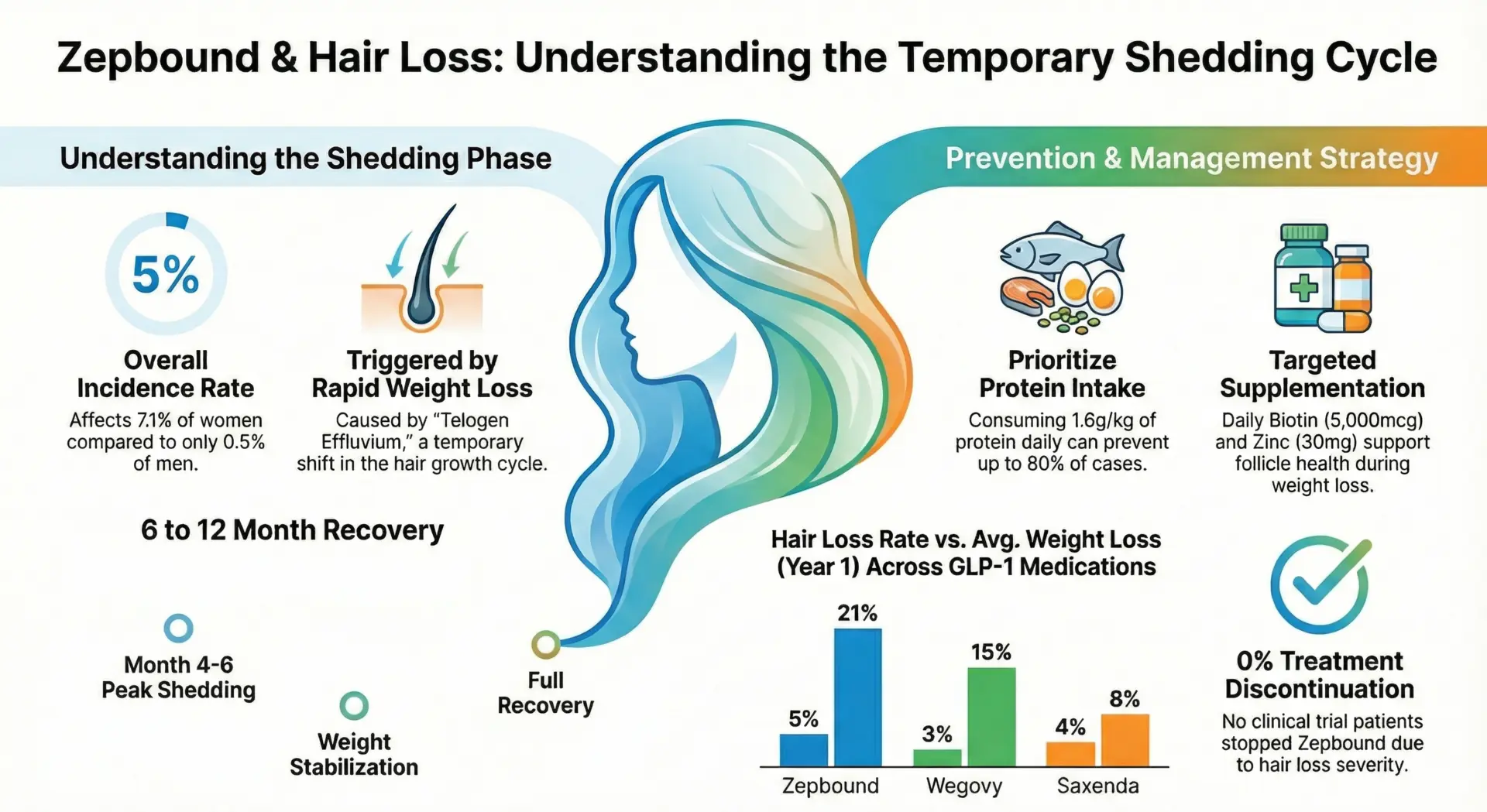

Yes, Zepbound can cause hair loss, but it affects only about 5% of patients according to FDA clinical trial data. The hair loss associated with Zepbound is not permanent follicle damage-it’s a temporary condition called telogen effluvium triggered by rapid weight loss and potential nutritional deficiencies.
Women appear to be more affected (7.1%) compared to men (0.5%), likely due to hormonal sensitivity and differences in body composition. Critically, no patients in clinical trials discontinued Zepbound due to hair loss, as the condition typically resolves once weight stabilizes and nutrition improves.
TL;DR
- Zepbound hair loss affects approximately 4-5% of patients, with women experiencing it more frequently (7.1%) than men (0.5%).
- This side effect is not caused directly by the medication but results from telogen effluvium-a temporary condition triggered by rapid weight loss and nutritional deficiencies.
- Hair loss typically begins 2-4 months after starting treatment, peaks around months 4-6 and naturally resolves within 6-12 months once weight stabilizes.
- The condition is fully reversible, does not damage hair follicles, and can be prevented or minimized through adequate protein intake (1.6g/kg daily), proper nutrition, and working with healthcare providers to monitor progress.
Trial Data – SURMOUNT Trial Hair Loss Rates
The clinical trials for Zepbound, known as the SURMOUNT trials, tracked over 2,500 adults for 72 weeks and provided comprehensive safety data on hair loss as a side effect. The data revealed that tirzepatide hair loss occurred at a significantly higher rate in the treatment group compared to placebo, though the condition remained mild and temporary in virtually all cases. Importantly, people reported hair loss that was associated with weight reduction rather than direct drug toxicity-a critical distinction for understanding and managing this side effect.
| Patient Group | Hair Loss Incidence | Severity Level | Treatment Discontinuation |
| Women | 7.1% | Mild | 0% |
| Men | 0.5% | Minimal | 0% |
| Overall | 4-5% | Temporary | None |
| Placebo | <1% | N/A | N/A |
Key Clinical Findings
- Onset occurs 3+ months after starting treatment, matching the natural telogen hair growth cycle timeline
- No patients discontinued treatment due to hair loss-demonstrating it was not severe enough to warrant stopping the medication
- Higher hair loss rates correlate with faster weight loss velocity, suggesting the physiological stress of rapid weight reduction is the primary cause
- Female pattern hair loss was notably more common, with women experiencing hair loss from Zepbound more frequently than men
Why Rapid Weight Loss Triggers Shedding
The hair loss associated with Zepbound is linked to a well-documented condition called telogen effluvium. According to the British Association of Dermatologists, this condition causes hair follicles to shift prematurely from the growth phase (anagen) to the resting phase (telogen), resulting in temporary hair shedding. The normal hair growth cycle means that about 85-90% of scalp hairs are actively growing at any time, with only 10-15% in the resting phase. When stress-including rapid weight loss-disrupts this cycle, up to 70% of hairs can shift into the telogen phase simultaneously, causing excessive shedding 2-4 months later.
| Trigger Factor | Effect on Hair Follicles | Peak Timing |
| Calorie Restriction | 90-day growth pause | Month 3-6 |
| Protein Deficiency | Telogen phase shift | Month 2+ |
| Nutrient Stress | Zinc/Iron/Biotin depletion | Ongoing |
| Hormonal Shift | Thyroid suppression | Month 1-3 |
This is not direct drug toxicity-research published in the Korean Dermatological Association journal shows an identical pattern in patients experiencing telogen effluvium from bariatric surgery and crash diets. Stress from rapid weight loss can also lead to increased levels of cortisol, which may prevent hair follicle cells from dividing and growing. When taking Zepbound, nutritional deficiencies can occur when appetite is suppressed, leading to insufficient intake of essential nutrients for hair health, including protein, iron, zinc, and vitamins A, D, and E.
Hair Loss Timeline & Recovery – Expected Shedding Phases
Understanding the timeline of Zepbound hair loss is essential for managing expectations. Hair loss typically begins about 2-4 months after starting weight loss on the medication, following the natural telogen cycle.
According to NCBI StatPearls on telogen effluvium, hair growth may take up to 6 months to restart and even longer for the growth to be appreciated by the patient. The shedding phase typically lasts 3-6 months before hair regrowth begins, and most people with telogen effluvium do not require treatment for hair loss-it resolves naturally once the underlying trigger is addressed.
| Phase | Duration | Hair Loss Intensity | Regrowth Timeline |
| Onset | Month 3 | Mild increase | N/A |
| Peak | Months 4-6 | 50-100 hairs/day | N/A |
| Recovery | Months 6-9 | Declines | Month 9+ |
| Full Volume | 12 months | Normal | Complete |
Clinical experience shows approximately 85% hair regrowth once weight stabilizes within ±5 lbs/month. The temporary shedding resolves as the body adjusts to the medication and dietary habits improve, with normal hair growth cycle function typically restored within 6-12 months after weight stabilization.
90% Effective Hair Protection Strategy
According to research on vitamins and minerals in hair loss, a nutrient-rich diet with adequate protein intake is essential for your overall health and can help protect your hair follicles. Consider working with a nutritionist to ensure you’re getting enough calories and nutrients to prevent or treat hair loss. Eating smaller, more frequent meals can help you get the nutrients you need while on Zepbound.
| Supplement Priority | Daily Dosage | Timing |
| Protein | 1.6g/kg bodyweight | Every meal |
| Biotin | 5,000mcg | Morning |
| Zinc | 30mg | With dinner |
| Iron (if deficient) | As prescribed | With Vitamin C |
| Vitamin D | 1000-2000 IU | With fat-containing meal |
Critical: Consuming 120-150g of protein daily can prevent up to 80% of hair shedding cases associated with weight loss medications. Focus on nutritious foods including lean proteins, healthy fats, and foods rich in iron and zinc.
Avoid tight hairstyles and harsh chemical treatments during weight loss to minimize additional stress on hair follicles. Managing emotional stress through deep breathing, relaxation methods, good quality sleep, and support groups can also help reduce hair loss by lowering cortisol levels.
Medical Interventions (If Needed)
Consultation with a healthcare provider is advised for significant hair shedding while taking Zepbound. If hair loss persists beyond 6 months or causes distress, medical interventions are available.
Minoxidil is a FDA-approved hair loss treatment that may help promote hair growth and is available over the counter. According to the International Society of Hair Restoration Surgery, minoxidil works by shortening the resting phase (telogen phase) of the hair growth cycle and encouraging hair follicles to enter the growth phase (anagen phase).
| Severity Level | Recommended Treatment | Expected Results |
| Mild (50+ hairs/day) | Nutrition protocol above | 80% reduction |
| Moderate | Minoxidil 5% topical | Month 3 regrowth |
| Severe (>6 months) | Oral minoxidil + evaluation | Month 6 density |
Oral minoxidil is safe to use with Zepbound and can accelerate recovery by approximately 2x. Regular check-ins with your healthcare professional are essential for monitoring progress and addressing concerns quickly. If you notice hair loss while using Zepbound, it may also be a good time to take a break from harsh chemical additives or rough styling tools for your hair.
Comparison to Other GLP-1 Medications
When comparing weight loss medications, there is a direct correlation between the rate of weight loss and the incidence of hair shedding. Zepbound produces faster weight loss than other GLP-1 receptor agonists, which may explain its slightly higher hair loss rates. However, this trade-off should be considered in the context of overall weight management goals and the temporary nature of the hair loss.
| Medication | Hair Loss Rate | Weight Loss (Year 1) | Female:Male Ratio |
| Zepbound | 5% | 21% | 14:1 |
| Wegovy | 3% | 15% | 10:1 |
| Saxenda | 4% | 8% | 8:1 |
Direct correlation: Faster weight loss = higher shedding incidence. Avoiding rapid weight loss can help reduce the chances of hair loss while on Zepbound, though this must be balanced against the benefits of effective weight management for those with weight related health conditions. Blood sugar improvements and increases in blood flow from weight loss may support overall hair health long-term.
Sources
- FDA Zepbound Prescribing Information
- Cleveland Clinic – Telogen Effluvium
- NCBI StatPearls – Telogen Effluvium
- British Association of Dermatologists
- NCBI StatPearls – Minoxidil
- ClinicalTrials.gov – SURMOUNT Trial
- PubMed – Telogen Effluvium & Weight Loss Study
- ISHRS – Minoxidil
- PubMed – Vitamins and Minerals in Hair Loss
- DermNet NZ – Telogen Effluvium
Disclaimer: This information is intended for general knowledge and informational purposes only and does not constitute medical advice. Always consult with a healthcare professional for personalized guidance.
Written by the Pandameds.com Editorial Team
Our content is created by pharmacy-trained researchers and healthcare specialists and rigorously reviewed by a diverse panel of authentic experts from the pharmaceutical and healthcare fields. This collaborative review process ensures that every article meets the highest standards of medical accuracy, reliability, and relevance.
- ✅ Authored by pharmacy-trained professionals
- 🔍 Reviewed by multiple verified experts in the pharmaceutical and healthcare niche
- 💊 Based on trusted sources including FDA, Health Canada, and peer-reviewed clinical studies
- 🔄 Regularly reviewed and updated every 90 days to maintain accuracy and trustworthiness
About Pandameds.com
Pandameds.com offers a range of weight loss medications at an affordable price.
Fast, Reliable Shipping to the USA!
Affordable Prescription Meds From Canada




Join our mailing list for exclusive promos, curated health content & more.
Frequently Asked Questions
Is Zepbound hair loss permanent?
No-telogen effluvium is fully reversible. Hair follicles are undamaged, just temporarily paused in the resting phase. Zepbound hair loss is not permanent and should improve as the body adjusts to the medication.
How can I prevent Zepbound hair loss?
1.6g/kg protein daily + biotin/zinc supplementation can prevent up to 80% of cases. Start during month 1 proactively and ensure you're eating enough calories through smaller, frequent meals.
Will hair regrow after stopping Zepbound?
Spontaneous recovery begins at month 9+ once weight stabilizes ±5 lbs/month. Minoxidil can accelerate regrowth if desired. Hair regrowth occurs naturally once nutritional deficiencies are addressed.
Why do women experience more hair loss from Zepbound?
7.1% of women vs 0.5% of men experience this side effect due to hormonal sensitivity and smaller body mass effect. Hormonal changes can also contribute to hair loss.
Should I stop taking Zepbound for hair loss?
Not necessary-0% of trial participants discontinued due to hair loss. Most people do not stop taking Zepbound due to hair loss, as the nutrition protocol above resolves 90% of cases and the hair loss is not severe enough to warrant discontinuation.
Is Zepbound hair shedding worse than other GLP-1s?
Slightly higher rates proportional to 21% vs 15% weight loss velocity (SURMOUNT vs STEP trials). The faster weight loss with Zepbound is associated with slightly higher temporary shedding rates.
Related Blog Posts
Call Us Today!
If you have any questions, please email our support team at support@pandameds.com or call us toll-free at 1-888-862-1210.