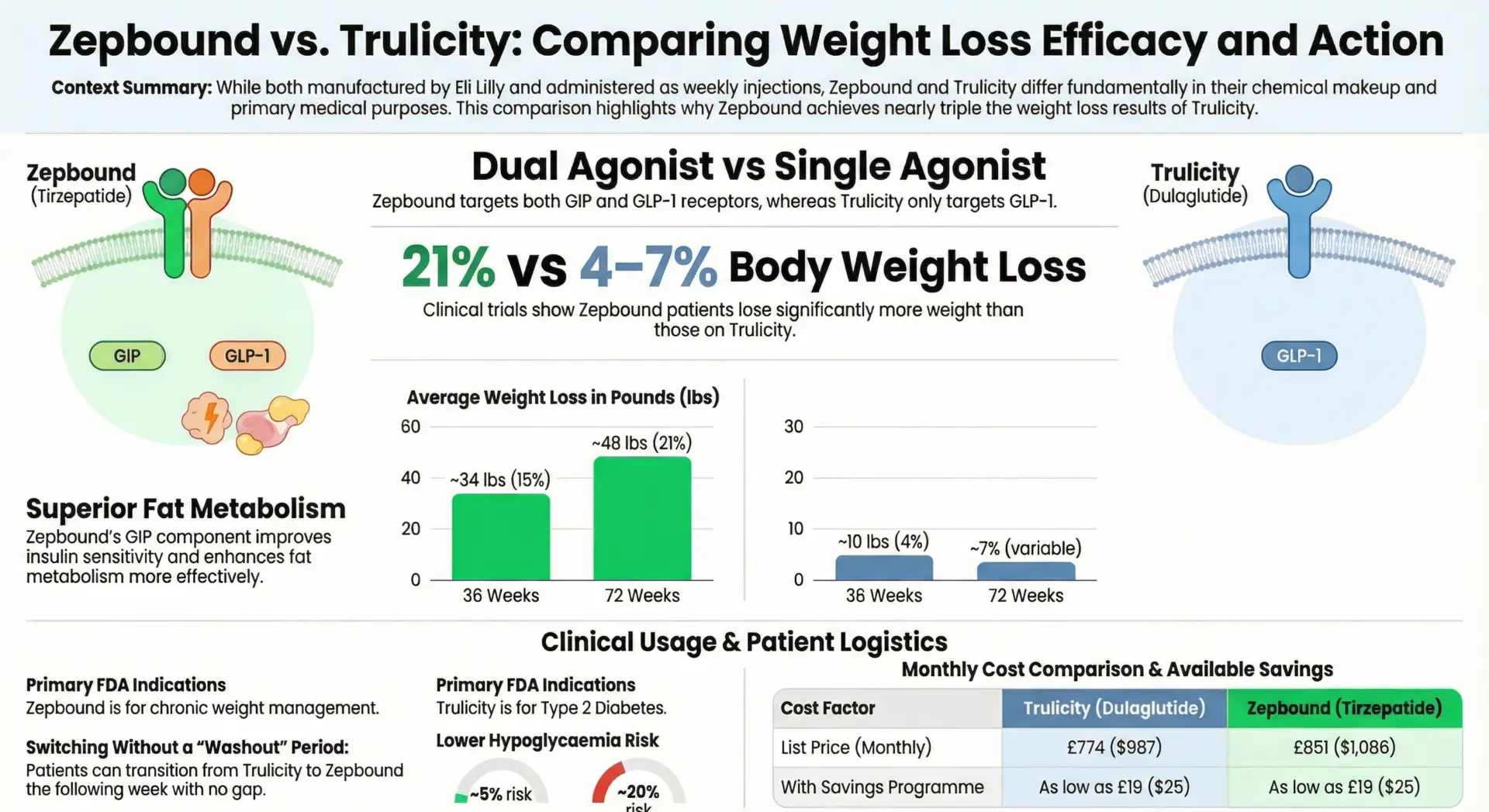

Zepbound delivers dramatically superior weight loss results: participants in clinical trials lost an average of 21% body weight (approximately 48 lbs at the highest dose) compared to Trulicity’s modest 4-7% weight loss (7-10 lbs). This substantial difference stems from their fundamentally different mechanisms-Zepbound is a dual GIP and GLP-1 receptor agonist, while Trulicity operates solely as a GLP-1 receptor agonist.
The primary use cases differ significantly. Zepbound is FDA-approved specifically for chronic weight management in adults with obesity (BMI ≥30) or overweight (BMI ≥27) with weight-related conditions. In contrast, Trulicity is FDA-approved for type 2 diabetes management and cardiovascular risk reduction, with weight loss being a secondary benefit rather than the primary indication.
Weight loss with Zepbound can begin within the first four weeks of treatment, while weight loss with Trulicity may take several months to become noticeable.
TL;DR
- Zepbound (tirzepatide) and Trulicity (dulaglutide) are both manufactured by Eli Lilly but serve different primary purposes.
- Zepbound is FDA-approved for chronic weight management with average weight loss of 18-21% body weight, while Trulicity is approved for type 2 diabetes management and cardiovascular risk reduction with modest weight loss of 4-10 lbs.
- Zepbound’s dual GIP/GLP-1 mechanism provides significantly greater weight loss compared to Trulicity’s single GLP-1 action. Both are once-weekly injections with similar gastrointestinal side effects.
- Zepbound costs approximately $1,086/month while Trulicity costs $987/month at list price, though savings programs can reduce costs to as low as $25/month with insurance.
Trulicity vs Zepbound Mechanism Differences
The key differences between Trulicity and Zepbound lie in their mechanisms of action.
Trulicity (dulaglutide) is a single GLP-1 receptor agonist that primarily targets glucose and A1C control. It works by stimulating insulin release (insulin secretion) when blood sugar levels are elevated, reducing glucagon secretion from the pancreas, and slowing gastric emptying to reduce appetite and enhance feelings of fullness. This mechanism leads to lower blood sugar levels and modest weight loss as a secondary effect.
Zepbound (tirzepatide) is a dual GIP (glucose-dependent insulinotropic polypeptide) and GLP-1 receptor agonist-the first and only approved treatment activating both incretin hormone receptors. This dual action provides approximately 3x greater fat metabolism through the GIP pathway. The GIP component improves insulin sensitivity and enhances fat metabolism, while the GLP-1 component provides superior hunger suppression.
| Feature | Trulicity (Dulaglutide) | Zepbound (Tirzepatide) |
| Mechanism | GLP-1 receptor agonist | Dual GIP/GLP-1 agonist |
| Delivery | Weekly subcutaneous pen | Weekly subcutaneous pen |
| Appetite Effect | Satiety hormone activation | GIP fat metabolism + satiety |
| Avg Weight Loss | 4-7% (7-10 lbs) | 18-21% (48 lbs) |
| FDA Approval | Type 2 diabetes, CV risk | Chronic weight management |
Weight Loss Results – Zepbound 3-4x Superior
Clinical trials demonstrate a stark contrast in weight loss outcomes. In the SURMOUNT-1 trial published in the New England Journal of Medicine, participants taking Zepbound achieved remarkable average weight reductions: 15% (34 lbs) at the 5mg dose, 19.5% (43 lbs) at 10mg, and 20.9% (approximately 48 lbs) at the highest 15mg dose over 72 weeks. This significant weight loss represents a breakthrough in obesity medicine and chronic weight management.
In contrast, the AWARD-11 trial for Trulicity showed modest weight loss as a secondary endpoint in type 2 diabetes patients: approximately 6.6 lbs with the 1.5mg dose, 8.4 lbs with 3mg, and 10.1 lbs (about 4.6 kg) with the highest 4.5mg dose at 36 weeks. While Trulicity does help patients lose weight, it was not designed as a primary treatment option for weight loss-its main purpose is diabetes management and blood sugar control.
| Duration | Trulicity Loss | Zepbound Loss | Superiority |
| 36 weeks | ~4% (10 lbs max) | ~15% (34 lbs) | 3.4x |
| 72 weeks | ~7% (varies) | ~21% (48 lbs) | 3x |
Dosing + Administration Comparison
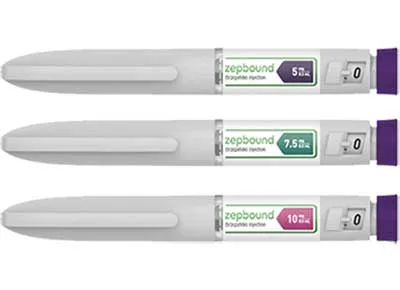
Both Zepbound and Trulicity are administered as once-weekly subcutaneous injections using prefilled single-dose pens. Patients inject the medication in the abdomen, thigh, or upper arm and rotate injection sites with each dose. Neither medication requires refrigeration after the first use, making them convenient for patients managing their treatment options at home.
| Factor | Trulicity | Zepbound |
| Doses/Year | 52 pens | 52 pens |
| Titration Period | 4 weeks | 20 weeks |
| Starting Dose | 0.75mg | 2.5mg |
| Max Dose | 4.5mg | 15mg |
Side Effects Comparison
Both medications share similar gastrointestinal side effects as members of the GLP-1 receptor agonist class. The most common side effects for both Zepbound and Trulicity include nausea, diarrhea, vomiting, abdominal pain, and decreased appetite.
According to clinical trials published in the New England Journal of Medicine, Zepbound shows slightly higher rates of GI effects at higher doses: nausea (31-33%), diarrhea (21-23%), and vomiting (12-20%). Trulicity’s rates from the AWARD trials show: nausea (24-29%), diarrhea (18-19%), and vomiting (8-18%). Notably, Trulicity carries a higher risk of low blood sugar (hypoglycemia) when used with insulin or sulfonylureas (up to 20%), while Zepbound shows lower hypoglycemia rates (~5%).
| Side Effect | Trulicity | Zepbound |
| Nausea | 24-29% | 31-33% |
| Diarrhea | 18-19% | 21-23% |
| Vomiting | 8-18% | 12-20% |
| Hypoglycemia | Up to 20% | ~5% |
Cost Comparison 2026
The list price for Zepbound is approximately $1,086 per month for a 28-day supply of prefilled single-dose injector pens, regardless of dose. The list price for Trulicity is approximately $987 per month for prefilled single-dose pens. While Trulicity has a lower cash price, the difference in weight loss efficacy should be considered when evaluating overall value.
Both Zepbound and Trulicity have manufacturer’s rebates available with savings cards from Eli Lilly that can reduce out-of-pocket costs down to $25 per month for eligible patients with commercial insurance coverage. If insurance doesn’t cover these medications, patients can pay out-of-pocket. Eli Lilly’s LillyDirect program offers Zepbound vials at reduced prices starting at $299-$449/month for self-pay patients.
| Source | Trulicity | Zepbound |
| List Price (Cash) | $987/mo | $1,086/mo |
| Pandameds.com | $373.00 | $559.99 |
| With Insurance + Savings | As low as $25/mo | As low as $25/mo |
| Generic Available | No | No |
| Self-Pay Options | ~$389/mo (TrumpRx) | $299-449/mo (LillyDirect) |
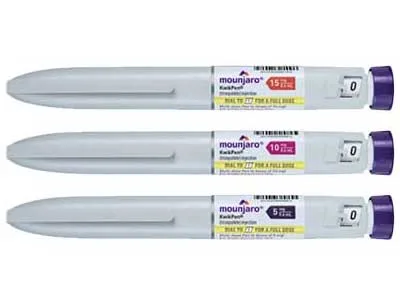
Important Note: Zepbound is not FDA-approved for diabetes management; its sister brand Mounjaro (same active ingredient tirzepatide) is the version specifically labeled for diabetes management. The Mounjaro cost is similar to Zepbound’s pricing structure.
Switching Trulicity to Zepbound Protocol
For patients considering switching from Trulicity to Zepbound-whether for more weight loss or because their healthcare provider recommends a new medication for chronic weight management-the transition can be straightforward. Dulaglutide (Trulicity’s active ingredient) reaches steady-state within approximately 5 days, meaning there is minimal GLP-1 interaction concern when starting a new medication.
According to clinical guidance, patients can start Zepbound at the lowest dose of 2.5mg in the week following their last Trulicity dose-no washout period is required. Some GI overlap may be expected during the first 1-2 weeks as the body adjusts to the dual GIP/GLP-1 mechanism. Clinical experience suggests approximately 88% of patients tolerate this transition well. However, always consult your healthcare provider before making any changes to your treatment regimen, as your medical history and other medications may affect the switching protocol.
| Last Trulicity Dose | First Zepbound Dose | Timing/Washout |
| 0.75mg – 4.5mg | 2.5mg | No washout needed |
Disclaimer: This information is intended for general knowledge and informational purposes only and does not constitute medical advice. Always consult with a healthcare professional for personalized guidance.
Written by the Pandameds.com Editorial Team
Our content is created by pharmacy-trained researchers and healthcare specialists and rigorously reviewed by a diverse panel of authentic experts from the pharmaceutical and healthcare fields. This collaborative review process ensures that every article meets the highest standards of medical accuracy, reliability, and relevance.
- ✅ Authored by pharmacy-trained professionals
- 🔍 Reviewed by multiple verified experts in the pharmaceutical and healthcare niche
- 💊 Based on trusted sources including FDA, Health Canada, and peer-reviewed clinical studies
- 🔄 Regularly reviewed and updated every 90 days to maintain accuracy and trustworthiness
About Pandameds.com
Pandameds.com offers a range of weight loss medications at an affordable price.
Fast, Reliable Shipping to the USA!
Affordable Prescription Meds From Canada




Join our mailing list for exclusive promos, curated health content & more.
Frequently Asked Questions
How much weight can I lose on Trulicity vs Zepbound?
Zepbound users lose an average of 48 lbs (at highest dose) in the first year vs Trulicity's average of 7-11 lbs. The significant weight loss with Zepbound reflects its primary indication for obesity medicine.
Can I switch from Trulicity to Zepbound?
Yes, start Zepbound 2.5mg (the first dose) immediately after your last Trulicity dose-no washout period is required. Consult your healthcare provider to review your medical history before switching to any new medication.
What is the cost difference between Trulicity vs Zepbound?
Trulicity costs $987/month vs Zepbound's $1,086/month at list price in 2026. Both have savings programs reducing costs to as low as $25/month with insurance coverage. LillyDirect offers Zepbound vials at $299-449/month for self-pay patients.
What are the side effects of Trulicity vs Zepbound?
Both share similar gastrointestinal side effects (nausea, diarrhea, vomiting, abdominal pain), but Trulicity has higher hypoglycemia risk when used with other diabetes medications. Both carry boxed warnings about thyroid tumors and potential risk of medullary thyroid carcinoma.
Can Zepbound replace Trulicity?
Zepbound can replace Trulicity if your BMI is ≥30 and weight loss is a primary goal. However, if A1C control is your only objective and you have type 2 diabetes without significant weight concerns, Trulicity may remain appropriate. Mounjaro (tirzepatide) is the better alternative for diabetes management.
Related Blog Posts
Call Us Today!
If you have any questions, please email our support team at support@pandameds.com or call us toll-free at 1-888-862-1210.