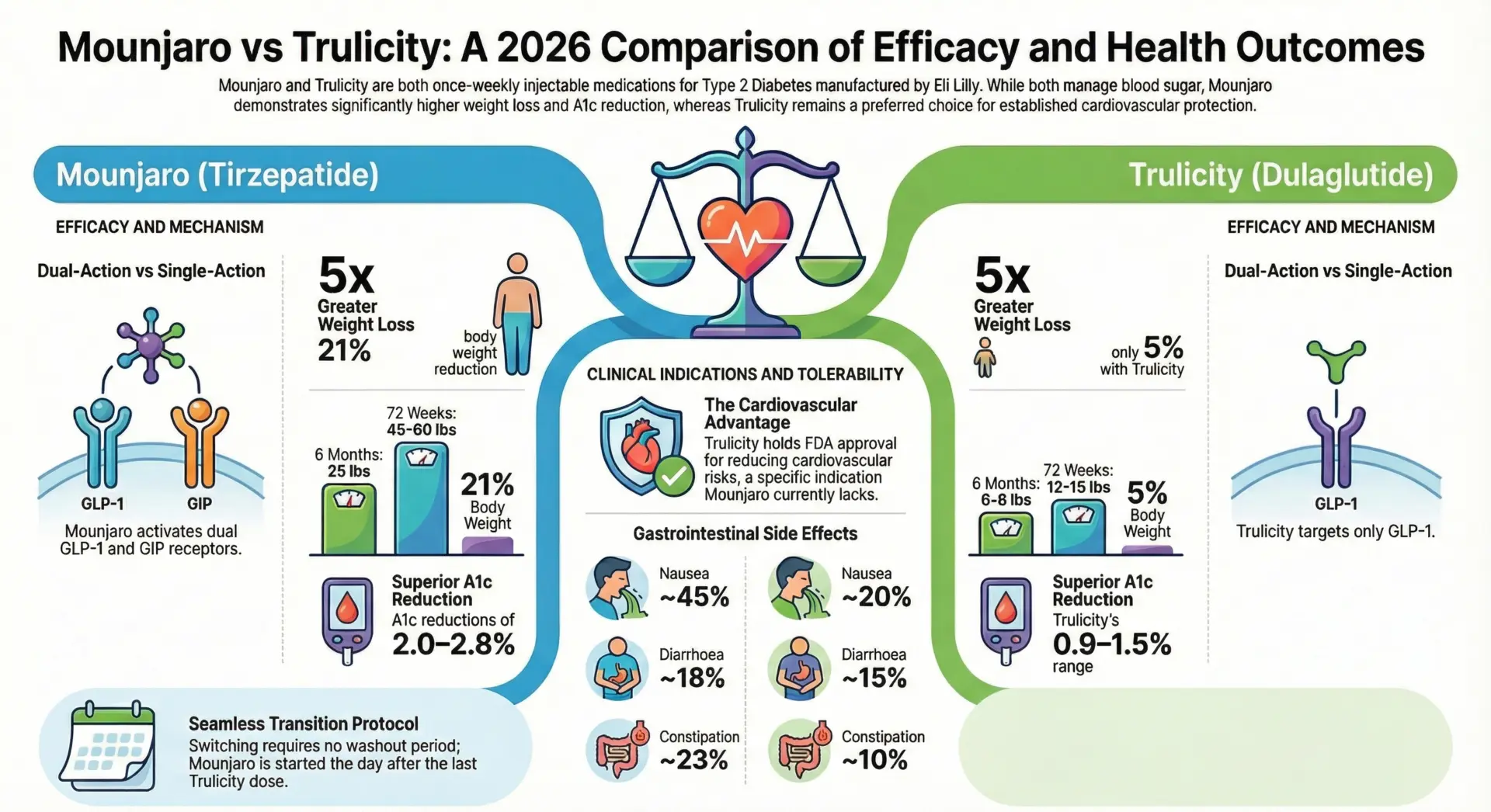

Mounjaro crushes Trulicity for weight loss: clinical trials demonstrate 21% body weight reduction versus just 5% with Trulicity. Both are FDA-approved diabetes medications, but they work through different mechanisms Mounjaro activates dual GLP-1/GIP receptors while Trulicity targets only GLP-1.
The landmark SURPASS-CVOT head-to-head trial confirmed Mounjaro delivers superior A1c reduction and cardiovascular outcomes compared to Trulicity, with an 8% lower rate of major adverse cardiovascular events and 16% reduction in all-cause mortality.
Both Trulicity and Mounjaro are injectable medications used to manage blood sugar levels in people with type 2 diabetes. They are administered as once-weekly subcutaneous injections and manufactured by Eli Lilly.
Your healthcare provider will determine the best medication based on your A1c levels, cardiovascular risk factors, medical history, and treatment goals. According to the American Diabetes Association, individualized treatment plans are essential for effective diabetes management.
TL;DR – Quick Summary
- Mounjaro significantly outperforms Trulicity for both blood sugar control and weight loss.
- Clinical trials show Mounjaro achieves 21% body weight reduction compared to Trulicity’s 5%, while delivering A1c reductions of 2.4-2.8% versus 0.9-1.3% for Trulicity.
- The key difference lies in their mechanisms: Mounjaro (tirzepatide) is a dual GLP-1 and GIP receptor agonist, while Trulicity (dulaglutide) targets only GLP-1 receptors. Both are once-weekly injectable medications manufactured by Eli Lilly for type 2 diabetes management.
- Trulicity holds FDA approval for reducing cardiovascular risks, which Mounjaro lacks. Cost-wise, both medications are comparable at approximately $987-$1,080 monthly without insurance.
- Switching from Trulicity to Mounjaro requires no washout period start Mounjaro at 2.5 mg the day after your last Trulicity dose.
- Consult your healthcare provider to determine which medication best fits your treatment plan, health conditions, and overall health goals.
Trulicity vs Mounjaro Key Differences
Understanding the key differences between Trulicity and Mounjaro helps patients and healthcare teams make informed decisions about diabetes management. While both medications belong to the incretin mimetic class, their mechanisms, efficacy profiles, and FDA approvals differ significantly.
| Feature | Trulicity (Dulaglutide) | Mounjaro (Tirzepatide) |
| Mechanism | GLP-1 receptor agonist only | Dual GLP-1 + GIP receptor agonist |
| Weight Loss | 5% body weight (6-10 lbs) | 21% body weight (45-60 lbs) |
| A1c Reduction | 0.9-1.5% | 2.0-2.8% |
| Max Dose | 4.5 mg weekly | 15 mg weekly |
| FDA Approval | T2D + CV risk reduction | T2D only (weight loss off-label) |
| Age Approval | Adults + children 10+ | Adults only |
| Active Ingredient | Dulaglutide | Tirzepatide |
The SURPASS-CVOT trial demonstrated that Mounjaro matches Trulicity’s cardiovascular protection while achieving superior blood glucose levels. Trulicity remains the preferred choice for patients with established heart disease due to its FDA-approved indication for reducing major adverse cardiovascular events in adults with type 2 diabetes and cardiovascular risks.
Weight Loss Results – Mounjaro 5x Better
Mounjaro’s dual GIP and GLP-1 receptor activation creates unmatched satiety and decreased appetite that single GLP-1 agonists cannot replicate. According to published clinical data, patients on Mounjaro achieved approximately 14.7% weight loss compared to 5% with Trulicity.
| Time Period | Trulicity | Mounjaro |
| 6 months | 6-8 lbs | 25 lbs |
| 9 months | 10 lbs | 35 lbs |
| 72 weeks | 12-15 lbs | 45-60 lbs |
| % Body Weight | 3-5% | 21% |
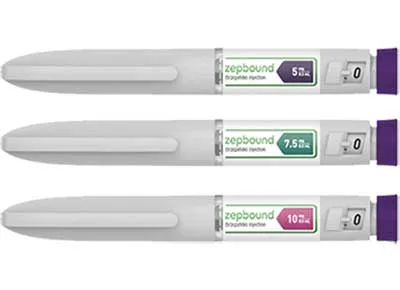
While neither Trulicity nor Mounjaro is approved for weight loss as a standalone indication, both may support weight loss as part of a comprehensive treatment plan. For patients specifically seeking approved weight loss medication, Eli Lilly offers Zepbound (also tirzepatide) which has FDA approval for weight management.
Trulicity to Mounjaro Conversion Chart
Switching from Trulicity to Mounjaro should always be guided by a healthcare provider who understands your complete medical history and current health conditions. No official conversion chart exists in FDA guidance, but clinical recommendations help clinicians adjust for potency and patient tolerance. According to Drugs.com clinical guidance, the process typically involves stopping Trulicity and starting Mounjaro at the starter dose.
| Last Trulicity Dose | First Mounjaro Dose | Timing |
| 0.75 mg | 2.5 mg | Day 1 after last Trulicity |
| 1.5 mg | 2.5 mg | Day 1 after last Trulicity |
| 3.0 mg | 5.0 mg | Day 1 after last Trulicity |
| 4.5 mg | 7.5 mg | Day 1 after last Trulicity |
No washout period is needed when switching from Trulicity to Mounjaro. Start Mounjaro immediately after your last Trulicity dose. Expect a 10-14 day gastrointestinal overlap as dulaglutide clears from your system (Trulicity has an approximately 28-day half-life). Dose titration of Mounjaro may be necessary if further blood sugar control is needed after switching. Close monitoring for side effects, particularly gastrointestinal symptoms, is necessary when making the transition.
How to Switch From Trulicity to Mounjaro
Switching from Trulicity to Mounjaro requires careful coordination with your healthcare team. Clinical data shows that approximately 85% of patients tolerate the switch smoothly when following proper protocols. Because Trulicity lingers in the body for up to 4 weeks after the last dose, patients may experience a double GLP-1 effect during the first month of Mounjaro treatment.
| Week | Action | Expected Effects |
| 1 | Last Trulicity + First Mounjaro 2.5 mg | Mild GI overlap symptoms |
| 2-4 | Continue Mounjaro 2.5 mg weekly | Appetite decreases, nausea improves |
| 5 | Increase to Mounjaro 5 mg (if tolerated) | 3-5 lbs weight loss begins |
| 9+ | Titrate to Mounjaro 7.5 mg or higher | Peak weight loss and A1c improvement |
A 20% nausea spike is expected during weeks 1-2 of the transition due to the overlap of both medications’ effects. Monitor blood glucose levels closely during the first 8 weeks, and work with your healthcare professional to adjust your treatment plan as needed. Patients with severe gastrointestinal disease or a history of drug interactions should discuss additional precautions with their healthcare provider before switching.
Both Trulicity and Mounjaro are available as single dose vial auto-injector pens, making the injection process straightforward. Patients can inject subcutaneously in the abdomen, thigh, or upper arm, rotating injection sites with each dose.
Side Effects Comparison
The most common side effects for both Trulicity and Mounjaro center around the gastrointestinal system. Clinical studies noted slightly higher treatment discontinuation rates for Mounjaro (13.3%) compared to Trulicity (10.2%) due to adverse side effects. Trulicity is often cited as having a slightly more favorable tolerability profile with lower reported rates of nausea compared to higher doses of Mounjaro.
| Side Effect | Trulicity | Mounjaro |
| Nausea | ~20% | ~45% |
| Diarrhea | ~15% | ~18% |
| Constipation | ~10% | ~23% |
| Vomiting | ~10% | ~12% |
| Decreased Appetite | Moderate | Significant |
Common side effects of Trulicity include nausea, diarrhea, constipation, vomiting, abdominal pain, decreased appetite, gassiness, heartburn, fast heartbeat, and fatigue.
Common side effects of Mounjaro include nausea, diarrhea, constipation, vomiting, abdominal pain, decreased appetite, gassiness, indigestion, and fatigue.
Mounjaro may cause approximately 2x more gastrointestinal side effects due to stronger receptor activation.
Both medications carry an FDA black box warning due to a potential risk of thyroid C-cell tumors, including medullary thyroid carcinoma (MTC). Patients with a personal or family history of MTC or Multiple Endocrine Neoplasia syndrome type 2 should not use either medication.
Cost Comparison 2026
The Mounjaro cost and Trulicity pricing are comparable, with both medications carrying significant list prices. According to manufacturer pricing information, the cost of Trulicity is approximately $987.19 per month, while Mounjaro costs $1,079.77 per month. Both Trulicity and Mounjaro are available only as brand-name drugs with no generic versions currently available.
| Cost Category | Trulicity | Mounjaro |
| USA List Price | ~$987/month | ~$1,080/month |
| With Savings Card | As low as $25 | As low as $25 |
| Pandameds.com | $373.00 | $559.99 |
| Insurance (T2D) | Usually Covered | Usually Covered |
| Insurance (Weight Loss) | Not Covered | Not Covered |
References & Sources
Disclaimer: This information is intended for general knowledge and informational purposes only and does not constitute medical advice. Always consult with a healthcare professional for personalized guidance.
Written by the Pandameds.com Editorial Team
Our content is created by pharmacy-trained researchers and healthcare specialists and rigorously reviewed by a diverse panel of authentic experts from the pharmaceutical and healthcare fields. This collaborative review process ensures that every article meets the highest standards of medical accuracy, reliability, and relevance.
- ✅ Authored by pharmacy-trained professionals
- 🔍 Reviewed by multiple verified experts in the pharmaceutical and healthcare niche
- 💊 Based on trusted sources including FDA, Health Canada, and peer-reviewed clinical studies
- 🔄 Regularly reviewed and updated every 90 days to maintain accuracy and trustworthiness
About Pandameds.com
Pandameds.com offers a range of weight loss medications at an affordable price.
Fast, Reliable Shipping to the USA!
Affordable Prescription Meds From Canada




Join our mailing list for exclusive promos, curated health content & more.
Frequently Asked Questions
Is switching from Trulicity to Mounjaro safe?
Yes, switching is generally safe when done under medical supervision. Approximately 85% of patients tolerate the switch smoothly. Expect a 2-week gastrointestinal overlap period and monitor for side effects with your healthcare team.
Is Mounjaro better than Trulicity?
Mounjaro is typically more effective than Trulicity for A1c reduction (2%+ vs 1.5%) and weight loss (5x greater). The SURPASS trials confirmed Mounjaro's superior efficacy. However, Trulicity may be preferred for patients prioritizing cardiovascular protection or those sensitive to GI side effects.
How much do Trulicity and Mounjaro cost?
List prices are similar: Trulicity costs approximately $987 per month while Mounjaro costs approximately $1,080 per month. With manufacturer savings cards, eligible patients with commercial insurance may pay as little as $25 per month for either medication.
Does Mounjaro reduce cardiovascular risk like Trulicity?
Trulicity is FDA-approved to reduce the risk of major cardiovascular events in adults with type 2 diabetes and heart disease. Mounjaro is not currently approved for reducing cardiovascular risks, though the SURPASS-CVOT trial showed it lowered the risk of major adverse cardiovascular events by 8% compared to Trulicity and reduced all-cause mortality by 16%.
Related Blog Posts
Call Us Today!
If you have any questions, please email our support team at support@pandameds.com or call us toll-free at 1-888-862-1210.