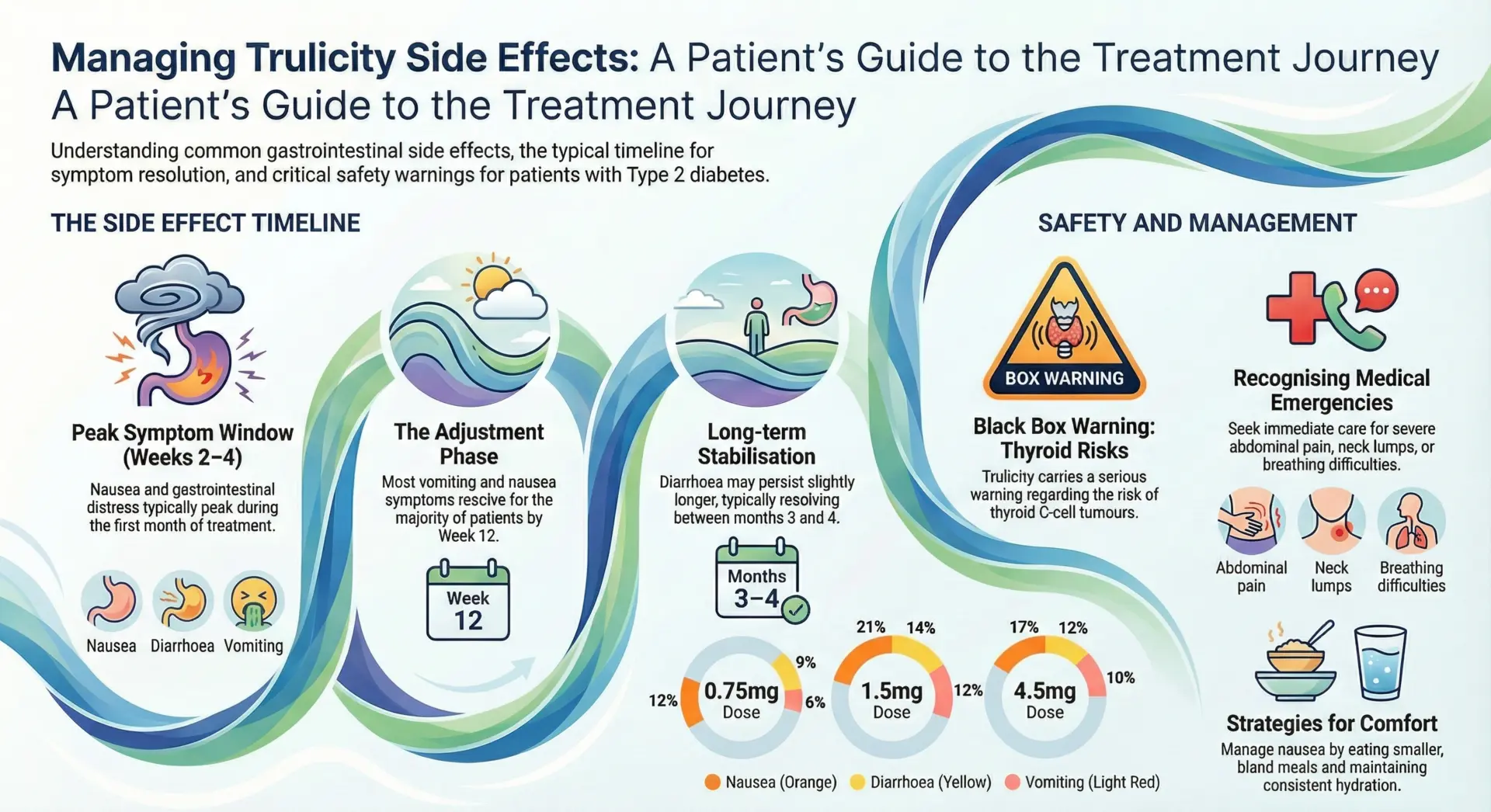

According to clinical trial data, gastrointestinal side effects are the most frequently reported adverse reactions with Trulicity (1.5 mg). Nausea affects up to 21.1% of patients, while diarrhea, vomiting, and abdominal pain each occur in 9-13% of users. These side effects of Trulicity are typically mild to moderate and tend to decrease over time as the body adjusts to the medication.
Importantly, Trulicity carries a boxed warning (black box warning) about the risk of thyroid C-cell tumors, including medullary thyroid carcinoma. This warning is based on animal studies showing increased thyroid tumors in rodents, though the relevance to humans has not been determined.
The medication is contraindicated in patients with a personal or family history of medullary thyroid carcinoma or Multiple Endocrine Neoplasia syndrome type 2 (MEN 2).
TL;DR: Trulicity Side Effects Summary
- Trulicity (dulaglutide) is a once-weekly GLP-1 receptor agonist used for type 2 diabetes that commonly causes gastrointestinal side effects.
- The most common adverse reactions include nausea (8-21%), diarrhea (8-14%), vomiting (6-12%), and abdominal pain (6-9%).
- Serious side effects include pancreatitis, thyroid tumors (black box warning), gallbladder disease, kidney problems, and severe allergic reactions.
- GI symptoms typically peak around week 4 and resolve for most patients by week 12.
- Trulicity is contraindicated in patients with personal or family history of medullary thyroid carcinoma (MTC) or Multiple Endocrine Neoplasia syndrome type 2 (MEN 2).
- Over 2,600 patients have filed lawsuits alleging inadequate warnings about gastroparesis and other severe GI injuries.
Clinical Side Effect Incidence
Data from the AWARD clinical trials program, which evaluated Trulicity across multiple studies, provides comprehensive information about side effect rates. According to the FDA prescribing information, the most common adverse reactions (occurring in 5% or more of patients) include nausea, diarrhea, vomiting, abdominal pain, decreased appetite, dyspepsia, and fatigue.
AWARD Trial Data by Dose
The AWARD-11 clinical trial evaluated higher doses of Trulicity (3.0 mg and 4.5 mg) compared to the 1.5 mg dose. Gastrointestinal side effects remained the most commonly reported adverse events across all dose groups.
| Side Effect | 0.75mg | 1.5mg | 3mg | 4.5mg | Placebo |
| Nausea | 12% | 21% | 18% | 17% | 5% |
| Diarrhea | 9% | 14% | 12% | 12% | 6% |
| Vomiting | 6% | 12% | 10% | 10% | 2% |
| Abdominal Pain | 6% | 9% | 8% | 9% | 4% |
| Decreased Appetite | 5% | 8% | 7% | 7% | 2% |
| Fatigue | 4% | 6% | 5% | 5% | 2% |
Source: FDA Trulicity Prescribing Information and AWARD-11 Clinical Trial Data
Discontinuation Rates
In clinical trials, gastrointestinal side effects were the most common reason for discontinuing Trulicity treatment. According to published data, approximately 1.4% of patients discontinued due to nausea, while 0.7% discontinued due to vomiting or diarrhea respectively.
| Reason | Trulicity | Placebo |
| GI Effects (Overall) | 2-6% | <2% |
| Pancreatitis | 0.15% | <0.1% |
| Hypoglycemia (with SU/insulin) | ~2% | ~1% |
Side Effect Timeline: How Long Do Trulicity Side Effects Last?
Understanding the timeline of Trulicity side effects helps patients and healthcare providers manage expectations. According to clinical research, gastrointestinal distress is most common when starting Trulicity or during dose escalation. In studies, nausea typically appeared within 2-3 days after the first dose and generally subsided after the first 2 weeks of treatment.
Duration by Severity
| Side Effect | Peak Timing | Resolution Timeline |
| Nausea | Week 2-4 | Most resolve by Week 12 |
| Vomiting | Week 2-6 | 90% resolve by Month 3 |
| Diarrhea | Week 4-8 | Month 3-4 |
| Injection Site Reactions | Day 1 | 24-48 hours |
GI effects typically decline after each dose escalation stabilizes. The highest incidences of nausea, vomiting, and diarrhea are primarily observed soon after initiation of treatment at the starting dose.
Worst Trulicity Side Effects: Serious Adverse Events
While most Trulicity side effects are mild to moderate, some patients experience serious adverse events that require immediate medical attention. These severe side effects, though rare, can be life-threatening and necessitate close monitoring by your health care team.
Serious Adverse Events (SAE)
| SAE Category | Incidence | Warning Signs |
| Pancreatitis | 0.15% | Severe abdominal pain radiating to back, with or without vomiting |
| Thyroid Cancer | Theoretical | Neck lump, hoarseness, trouble swallowing, shortness of breath |
| Gallbladder Disease | 1-2% | Severe upper stomach pain, especially after eating fat or fatty foods |
| Severe Hypoglycemia | ~2%* | Shakiness, sweating, rapid breathing, confusion, blurred vision |
| Serious Allergic Reactions | 0.5% | Skin rash, face/lip/tongue swelling, trouble breathing |
| Acute Kidney Injury | Rare | Decreased urination, unusual tiredness, swelling in legs/feet |
*With concomitant sulfonylureas or insulin
Trulicity Long-Term Side Effects
Some side effects of Trulicity may persist or develop with long-term use. According to post-marketing surveillance data and cardiovascular outcomes trials with follow-up periods exceeding 5 years, certain adverse events warrant ongoing monitoring.
2+ Year Safety Profile
| Long-Term Risk | Incidence | Monitoring |
| Gallbladder Disease | 1.5% by Year 2 | Annual ultrasound if risk factors present |
| Kidney Problems | Ongoing monitoring required | Regular blood and urine tests |
| Gastroparesis | Under investigation | Report persistent GI symptoms |
| Diabetic Retinopathy | May worsen existing | Regular eye exams |
Managing Trulicity Side Effects
Effective management of Trulicity side effects can significantly improve tolerability and treatment adherence. According to Harvard Health and the National Institute of Diabetes and Digestive and Kidney Diseases (NIDDK), several strategies can help minimize discomfort.
Effective GI Symptom Control
| Intervention | Protocol |
| 1. Slow Titration | Extend dose escalation intervals (4-6 weeks between increases) |
| 2. Smaller Meals | Eat smaller, more frequent meals; avoid fat or fatty foods |
| 3. Bland Foods | Choose bland foods (crackers, rice, toast) during episodes |
| 4. Stay Hydrated | Drink plenty of fluids; hydration is crucial to avoid kidney issues |
| 5. Ginger/Mint | Try ginger or mint-based foods/drinks for nausea relief |
| 6. Injection Site Rotation | Rotate injection site (abdomen, thigh, upper arm) to reduce reactions |
Risk Factor Stratification: Who Should Avoid Trulicity?
Understanding your medical history and risk factors is essential before starting Trulicity. Certain conditions significantly increase the risk of serious adverse events.
High-Risk Patient Profiles
| Risk Factor | Risk Level | Recommendation |
| Personal/Family History of MTC | CONTRAINDICATED | Do not use Trulicity |
| MEN 2 Syndrome | CONTRAINDICATED | Do not use Trulicity |
| History of Pancreatitis | HIGH CAUTION | Consider alternatives |
| Using Sulfonylureas/Insulin | MONITOR CLOSELY | May need dose adjustment |
| Severe Gastrointestinal Disease | NOT STUDIED | Discuss with provider |
| Pre-existing Kidney Problems | MONITOR CLOSELY | Stay hydrated; report GI issues |
If you have any of these risk factors, it is important to talk with your doctor or pharmacist before taking Trulicity. Your health care team can help determine if this diabetes medication is appropriate based on your complete medical history.
References
- FDA. Trulicity (dulaglutide) Prescribing Information. 2024
- Eli Lilly and Company. Trulicity Official Website
- Frias JP, et al. Gastrointestinal Tolerability of Once-Weekly Dulaglutide 3.0 mg and 4.5 mg. AWARD-11
- National Institute of Diabetes and Digestive and Kidney Diseases. Insulin, Medicines, & Other Diabetes Treatments
- Harvard Health Publishing. GLP-1 Drug Side Effects
- U.S. District Court, Eastern District of Pennsylvania. MDL 3094: GLP-1 RAs Products Liability Litigation
- Cleveland Clinic. GLP-1 Agonists
- Medscape. Dulaglutide Drug Information
Disclaimer: This information is intended for general knowledge and informational purposes only and does not constitute medical advice. Always consult with a healthcare professional for personalized guidance.
Written by the Pandameds.com Editorial Team
Our content is created by pharmacy-trained researchers and healthcare specialists and rigorously reviewed by a diverse panel of authentic experts from the pharmaceutical and healthcare fields. This collaborative review process ensures that every article meets the highest standards of medical accuracy, reliability, and relevance.
- ✅ Authored by pharmacy-trained professionals
- 🔍 Reviewed by multiple verified experts in the pharmaceutical and healthcare niche
- 💊 Based on trusted sources including FDA, Health Canada, and peer-reviewed clinical studies
- 🔄 Regularly reviewed and updated every 90 days to maintain accuracy and trustworthiness
About Pandameds.com
Pandameds.com offers a range of weight loss medications at an affordable price.
Fast, Reliable Shipping to the USA!
Affordable Prescription Meds From Canada




Join our mailing list for exclusive promos, curated health content & more.
Frequently Asked Questions
How long do Trulicity side effects last?
Nausea typically peaks around week 2-4 and resolves for most patients by week 12. Vomiting usually improves by month 3. Some side effects may last longer than a few days or weeks in certain individuals. If side effects persist or become severe, consult your healthcare provider.
Can Trulicity cause low blood sugar?
Trulicity does not cause hypoglycemia on its own. However, low blood sugar can occur when Trulicity is used with other diabetes medications that lower blood sugar levels, such as sulfonylureas or insulin.
What should I do if I experience severe stomach pain on Trulicity?
Severe stomach pain that will not go away, especially with vomiting, could be a sign of pancreatitis. Stop taking Trulicity and seek immediate medical attention. This is a medical emergency that requires evaluation by your health care team.
Are Trulicity side effects dose-dependent?
Yes, Trulicity side effects may vary depending on the dosage. Clinical trials show that higher doses generally lead to higher rates of gastrointestinal side effects, although the rates tend to plateau at doses above 1.5mg. Proper diabetes medicine dosing changes should be discussed with your healthcare provider.
What are injection site reactions with Trulicity?
Injection site reactions may include redness, itching, or skin rash at the injection site. These typically resolve within 24-48 hours. To minimize these reactions, rotate your injection site between the abdomen, thigh, and upper arm weekly. Never inject into the same spot consecutively.
Can I drink alcohol while taking Trulicity?
While Trulicity does not have a direct drug interaction with alcohol, drinking alcohol can affect blood sugar levels and may worsen some side effects like nausea or stomach upset. It is important to discuss alcohol consumption with your healthcare provider, especially if you take other diabetes medications that could cause low blood sugar.
When should I seek immediate medical attention?
Seek immediate medical attention if you experience: severe abdominal pain that won't go away (with or without vomiting), symptoms of a serious allergic reaction (swelling of face/lips/tongue, trouble breathing, severe skin rash), signs of thyroid tumors (lump in neck, hoarseness, trouble swallowing), symptoms of kidney problems (decreased urination, unusual tiredness), or signs of severe low blood sugar that don't improve with treatment.
Related Blog Posts

Call Us Today!
If you have any questions, please email our support team at support@pandameds.com or call us toll-free at 1-888-862-1210.