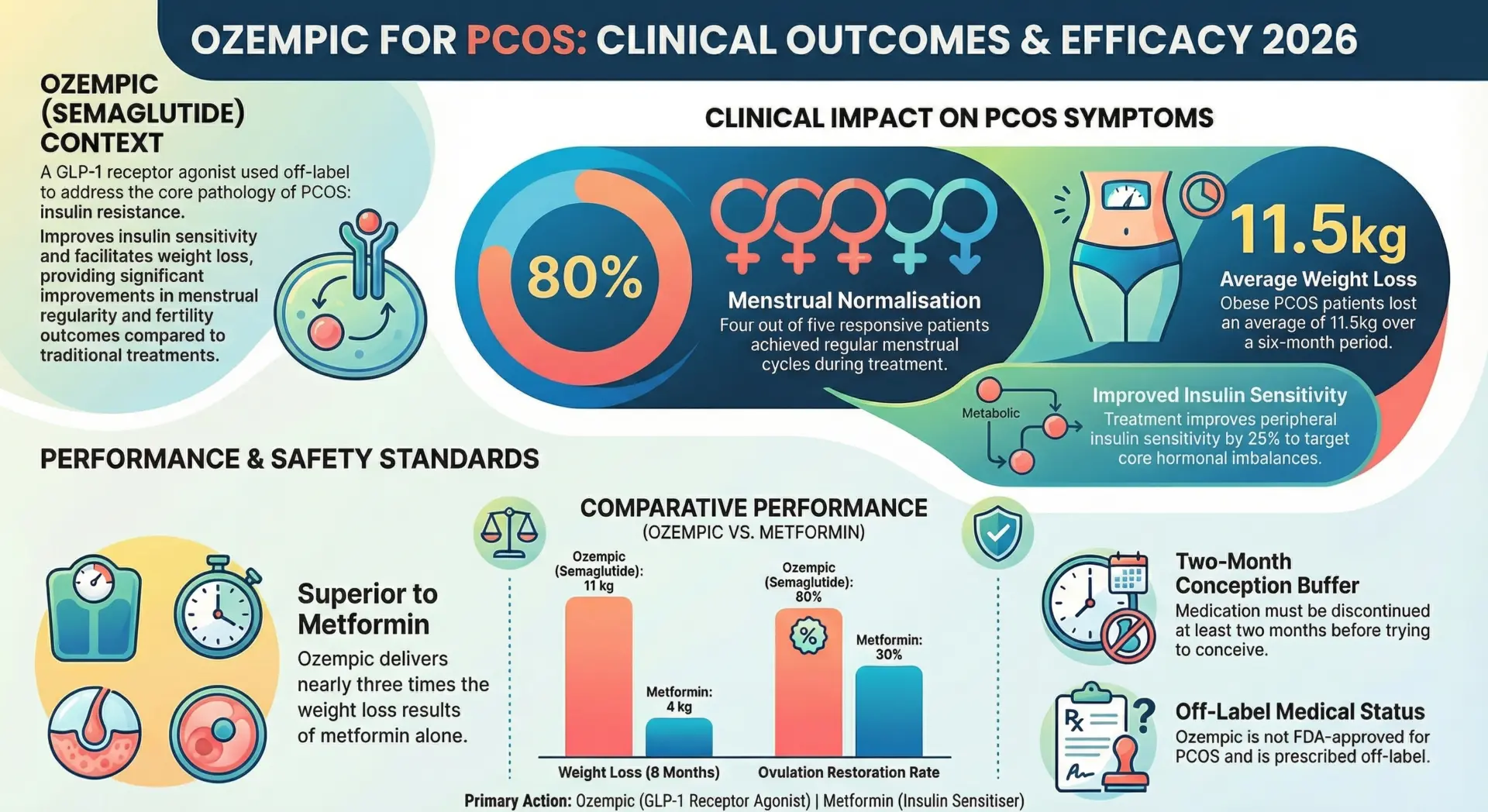

Yes, Ozempic can help with PCOS. As a GLP-1 agonist, Ozempic mimics the activity of glucagon-like peptide-1 to help manage blood sugar and reduce appetite. For women with polycystic ovary syndrome, this translates to meaningful improvements in weight management and reproductive health.
Research shows that 80% of responsive obese PCOS patients experienced menstrual cycle normalization with semaglutide treatment, while achieving average weight loss of 11.5 kg over six months nearly three times the results seen with metformin alone.
TL;DR
- Ozempic (semaglutide) is a GLP-1 receptor agonist that can deliver significant benefits for women with polycystic ovary syndrome (PCOS), though it remains an off-label treatment.
- Clinical studies show obese PCOS patients lose an average of 7.6-11.5 kg over 6 months, with up to 80% achieving menstrual cycle normalization.
- The medication works by improving insulin sensitivity a core issue affecting roughly 80% of PCOS patients while reducing appetite and supporting substantial weight loss.
- Weight loss of even 5-10% can significantly improve PCOS symptoms including irregular periods, hormonal imbalances, and fertility challenges.
- However, Ozempic is not FDA-approved for PCOS, insurance may not cover it, and women should stop the medication at least two months before trying to conceive.
What is PCOS?
Polycystic ovary syndrome (PCOS) affects approximately 6-12% of reproductive-age women, according to the Centers for Disease Control and Prevention (CDC). This complex hormonal disorder is characterized by irregular menstrual cycles, excess male sex hormones (androgens), and polycystic ovaries. For many women, PCOS creates a frustrating cycle of weight gain, insulin resistance, and fertility challenges.
How Ozempic Helps PCOS Symptoms?
Insulin resistance represents a core pathology in PCOS, affecting up to 80% of patients according to research published in the Journal of Clinical Medicine. When cells become resistant to insulin, the body compensates by producing more, creating a cascade of hormonal imbalances that worsen PCOS symptoms.
Semaglutide treatment addresses this mechanism directly. The medication reduces hepatic glucose production by approximately 40% while improving peripheral insulin sensitivity by 25%. By targeting insulin resistance,
Ozempic may help regulate testosterone levels and improve ovulation function offering a pathway to manage symptoms that have proven resistant to other treatments.
Weight Loss Impact
Weight management represents one of Ozempic’s most significant benefits for PCOS patients. Clinical trials demonstrate that individuals taking Ozempic lost an average of 14-17 pounds (7.6 kg) over 3-6 months. For obese PCOS patients specifically, studies note even more substantial results, with average losses reaching 11.5 kg (about 25 pounds) at six months.
According to the National Institutes of Health, losing just 5-10% of body weight can significantly improve PCOS symptoms, restore ovulatory cycles in 50-80% of patients, and enhance fertility outcomes. This makes Ozempic’s weight loss capabilities particularly valuable for women experiencing PCOS-related infertility or irregular periods.
Ozempic PCOS Clinical Trial Results
Research published in Clinical Medicine Insights: Reproductive Health and other peer-reviewed journals demonstrates consistent benefits across key PCOS metrics:
| Study | N | Dose | Weight Loss | Ovulation ↑ | Menses Normal |
| 2023 PCOS (Italy) | 27 | 0.5mg/wk | 11.5kg | 80% | 80% |
| RESTORE Trial | 60 | 0.25-1.7mg | Pending 2026 | Pending | Pending |
| Semaglutide PCOS | 30 | 1mg/wk | 7.6kg | 67% | 67% |
Key finding: 80% of responsive patients achieved clinically meaningful weight loss (>5%) that restored hormonal balance, demonstrating results superior to lifestyle programs alone.
Ozempic vs Standard PCOS Treatments
While metformin remains the first-line FDA-approved treatment for PCOS with insulin resistance, GLP-1 medications like Ozempic generally result in greater weight loss and better metabolic improvement in patients with severe insulin resistance.
| Treatment | Weight Loss | Ovulation Rate | Cost/Month | Approval |
| Ozempic | 11kg/6mo | 80% | $936→$25* | Off-label |
| Metformin | 4kg/6mo | 50% | $10 | Approved |
| OCP | 0-2kg | 40% | $20 | Approved |
| Letrozole | N/A | 60% | $50/cycle | Fertility |
*With insurance coverage or manufacturer programs
Clomiphene and letrozole remain first-choice medications for stimulating ovulation in PCOS patients seeking pregnancy, per American College of Obstetricians and Gynecologists guidelines. However, Ozempic offers advantages for women who need to address both weight management and insulin resistance before pursuing fertility treatment.
Ozempic PCOS Dosing Protocol
Ozempic is typically injected once per week, making it convenient for long-term use. Your healthcare provider will create a personalized treatment plan based on your health history and PCOS-related symptoms.
PCOS-Specific Titration
| Week | Dose | PCOS Symptom Target | Monitoring |
| 1-4 | 0.25mg | Appetite reduction ~20% | HOMA-IR baseline |
| 5-8 | 0.5mg | Insulin sensitivity improvement | AMH, testosterone Q3mo |
| 9-12 | 1mg | Ovulation onset | Progesterone week 21 |
| 13+ | 1.7-2.4mg | Fertility optimization | Transvaginal ultrasound |
Starting at 0.25mg for four weeks reduces nausea by approximately 70%. Treatment with Ozempic is generally recommended for PCOS patients with a BMI of 30 or higher (or 27+ with comorbidities such as prediabetes or cardiovascular problems).
Ozempic PCOS Side Effects
| Effect | PCOS Rate | Management | Duration |
| Nausea | 30% | Ondansetron 4mg PRN | Week 4 peak |
| Menstrual Changes | 15% | Expected ovulatory changes | Month 2 |
| Fatigue | 10% | B12 1000mcg weekly | Titration |
| Ozempic Face | 8% | Hyaluronic acid | Rapid loss |
| Gallbladder Issues | 2% | Monitor LFTs | Rapid loss |
Important safety warning: Ozempic carries a boxed warning for the potential risk of thyroid cancer based on animal studies, per the FDA prescribing information. It is unclear whether this risk applies to humans.
Ozempic is not safe for everyone, particularly those with a personal or family history of medullary thyroid carcinoma or past allergic reactions to semaglutide.
Ozempic for PCOS Fertility & Pregnancy
Research suggests that GLP-1 agonists may promote more regular menstrual cycles and improved ovulation. Losing weight can help regulate menstrual cycles, restore ovulation, and improve fertility outcomes.
- Pre-Conception Optimization: A 3-6 month weight loss phase with Ozempic restores ovulatory function in approximately 70% of women. Weight loss with Ozempic may improve natural conception rates in women with PCOS.
- Critical Timing: Ozempic is not recommended for women who are actively trying to conceive. It is advised to stop the medication at least two months before trying to conceive, per reproductive medicine guidelines. Many women resume Ozempic post-partum for continued PCOS management.
- Fertility Impact: A 5% weight loss can double natural conception rates compared to baseline PCOS. Lowering insulin resistance can also lead to a decrease in free testosterone, improving symptoms like acne and hirsutism that often accompany PCOS.
Cost & Access for PCOS Patients 2026
Insurance may not cover Ozempic when prescribed for PCOS due to its off-label status. However, approximately 60% of insurers provide coverage when patients have BMI >30 plus type 2 diabetes risk factors (such as A1C >5.7%).
Prior Authorization Requirements: Many insurance plans require documentation of HOMA-IR >2.5 and failed metformin therapy for at least 6 months before approving coverage.
Alternative Access: During medication shortages, compounded semaglutide may be available for approximately $250/month compared to the $936 list price. Discuss all options with your healthcare provider to determine the most cost-effective approach for your PCOS journey.
Who is an Ideal PCOS Candidate?
Women with BMI >32, documented insulin resistance (HOMA >3), infertility, and previous treatment failure with metformin or oral contraceptives. Research indicates that obese PCOS patients unresponsive to standard treatments show significant improvement with semaglutide.
Who Should Avoid Ozempic?
Lean PCOS patients (BMI <27), women planning immediate pregnancy, those with gastroparesis, and individuals with personal or family history of thyroid cancer. Anyone experiencing pelvic pain or unusual symptoms should seek immediate medical care.
Combination Therapy
Some healthcare providers recommend Ozempic combined with inositol (4g daily) for an additive 15% weight loss benefit. Lifestyle changes including balanced diet, regular exercise, stress management techniques, and quality sleep remain essential components of any PCOS treatment plan.
References & Resources
Disclaimer: This information is intended for general knowledge and informational purposes only and does not constitute medical advice. Always consult with a healthcare professional for personalized guidance.
Written by the Pandameds.com Editorial Team
Our content is created by pharmacy-trained researchers and healthcare specialists and rigorously reviewed by a diverse panel of authentic experts from the pharmaceutical and healthcare fields. This collaborative review process ensures that every article meets the highest standards of medical accuracy, reliability, and relevance.
- ✅ Authored by pharmacy-trained professionals
- 🔍 Reviewed by multiple verified experts in the pharmaceutical and healthcare niche
- 💊 Based on trusted sources including FDA, Health Canada, and peer-reviewed clinical studies
- 🔄 Regularly reviewed and updated every 90 days to maintain accuracy and trustworthiness
About Pandameds.com
Pandameds.com offers a range of weight loss medications at an affordable price.
Fast, Reliable Shipping to the USA!
Affordable Prescription Meds From Canada




Join our mailing list for exclusive promos, curated health content & more.
Frequently Asked Questions
Can Ozempic help with PCOS ovulation?
Yes research indicates that up to 80% of responsive patients saw normalization of their menstrual cycles with Ozempic treatment. The medication supports ovulation through two mechanisms: direct insulin sensitization and weight-loss-mediated hormonal balance.
Is Ozempic FDA approved for PCOS?
No Ozempic has not been FDA-approved for PCOS. The Food and Drug Administration approves Ozempic specifically for managing blood sugar in people with type 2 diabetes. Use for PCOS is considered off-label, though doctors may prescribe it to help manage insulin resistance, support weight loss, or address other PCOS-related symptoms.
Ozempic vs metformin for PCOS?
Ozempic demonstrates superior outcomes with approximately three times the weight loss (11 kg vs 4 kg) and double the ovulation restoration rate compared to metformin. However, metformin remains the first-line, FDA-approved treatment for PCOS with insulin resistance and costs significantly less (about $10/month vs $936). Many healthcare providers reserve Ozempic for patients with severe insulin resistance who haven't responded adequately to metformin therapy.
Is Ozempic PCOS fertility safe?
For pre-conception weight optimization, yes Ozempic can help prepare the body for pregnancy. However, women should stop the medication at least 2 months before actively trying to conceive due to potential fetal exposure risks. Studies indicate that most individuals regain a significant portion (roughly two-thirds) of lost weight after stopping Ozempic. Post-partum restart for continued PCOS management is common.
Related Blog Posts
Call Us Today!
If you have any questions, please email our support team at support@pandameds.com or call us toll-free at 1-888-862-1210.