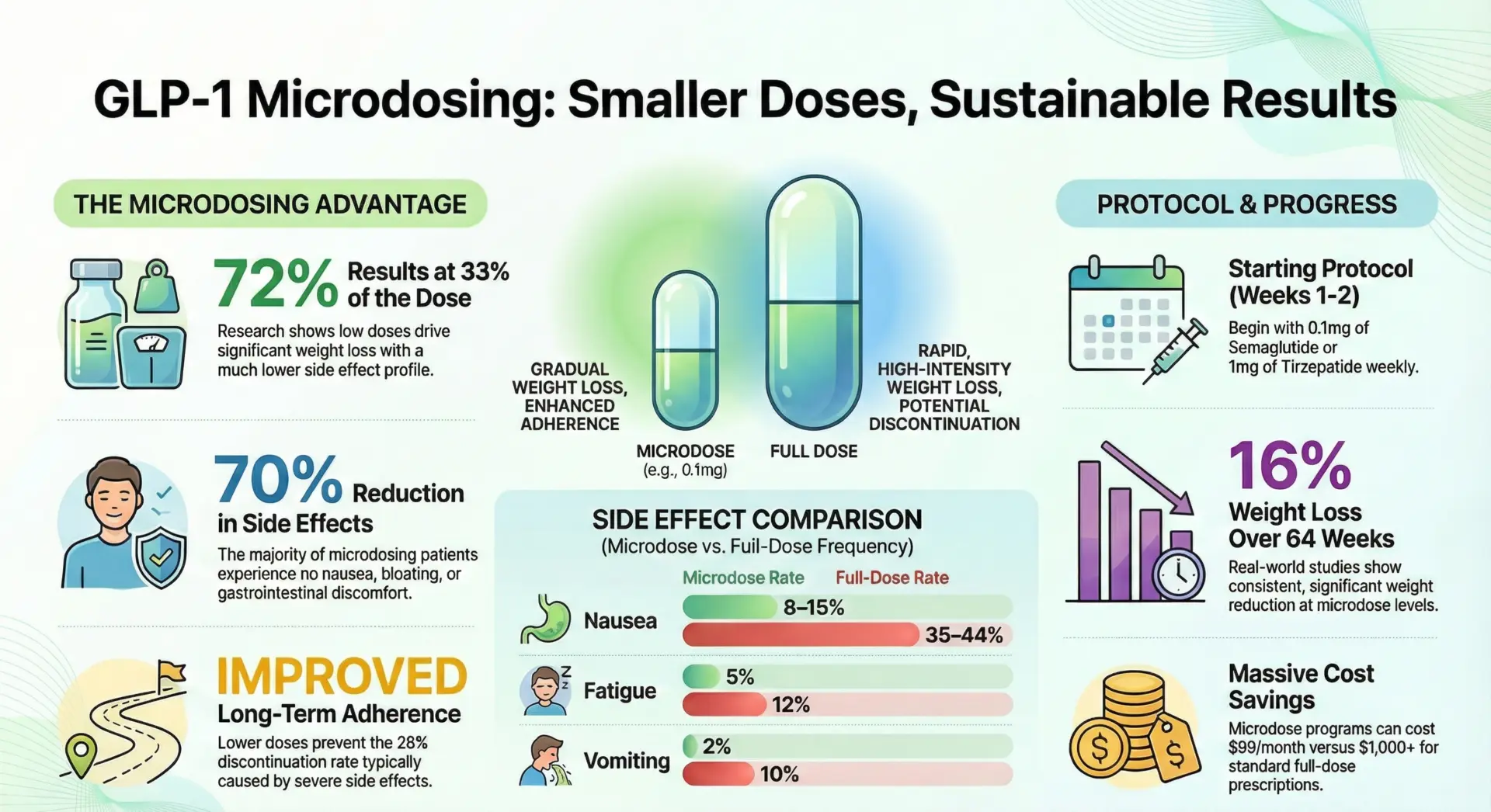

GLP-1 microdosing is an emerging practice where individuals take sub-therapeutic doses of GLP-1 medications typically 0.05 to 0.25mg of semaglutide weekly versus the standard 0.25 to 2.4mg to minimize side effects while achieving gradual weight loss and metabolic benefits.
According to research published in Diabetes Care, microdosing offers a tailored solution to maximize therapeutic benefit, minimize adverse effects, and address medication availability concerns. GLP-1 medications mimic the effects of the natural hormone GLP-1, which regulates appetite, digestion, and blood sugar levels.
While this approach can support sustainable weight management with fewer side effects, it remains off-label and lacks robust clinical data.
TL;DR
- GLP-1 microdosing involves taking significantly lower doses of medications like semaglutide (0.05-0.25mg weekly) compared to standard therapeutic doses (0.25-2.4mg).
- This approach may reduce gastrointestinal side effects by up to 70%, improve medication tolerability, and lower monthly costs.
- However, microdosing is considered an off-label practice with limited clinical research, and professional organizations including the American Diabetes Association do not formally endorse it.
- Always work with a qualified healthcare provider before adjusting GLP-1 dosing.
What is GLP-1 Microdosing?
GLP-1 microdosing uses sub-therapeutic doses (0.05-0.25mg semaglutide weekly vs standard 0.25-2.4mg) to minimize gastrointestinal side effects while achieving mild appetite suppression.
The FDA-approved starting dose for Ozempic and Wegovy is 0.25mg weekly, with therapeutic doses ranging from 0.5mg to 2.4mg. Microdoses are dramatically below any clinically tested level, sometimes as low as 0.05 to 0.1mg.
This off-label practice extends medication supply during shortages and improves adherence for sensitive patients.
Programs like Noom’s Microdose GLP-1Rx Program target metabolic reset over rapid weight loss, using doses at 25% or less of standard maintenance dosing. The body responds to consistency, not intensity a principle that microdosing honors.
How GLP-1 Microdosing Works
Low-dose GLP-1 maintains partial receptor activation enough for insulin sensitivity improvement and mild satiety without causing gastric paralysis or severe nausea.
Before GLP-1s like Ozempic were approved, earlier trials tested a range of doses and found that lower doses produced some weight loss and blood sugar improvements.
GLP-1 medications work by mimicking the natural hormone that reduces appetite, slows digestion so you feel full longer, and helps regulate blood sugar levels.
Benefits Timeline
Week 1-2: Food noise reduction, quieting of cravings begins
Month 1: 2-4 pound loss typical, nausea under 10% for microdosers
Month 3: 5-8% total body weight loss sustained
Microdosing can support natural satiety and mindful eating, making it easier to build sustainable healthy habits rather than relying solely on the medication. Research suggests microdosing may help correct blood sugar instability and insulin sensitivity even before significant weight loss occurs.
GLP-1 Microdosing Chart & Schedule
According to a 2,700-person real-world study presented at the 2025 European Congress on Obesity, participants achieved an average 16% weight loss over 64 weeks at microdose levels of semaglutide:
| Week | Semaglutide (Ozempic) | Tirzepatide (Zepbound) | Symptoms Managed | Weight Loss |
| 1-2 | 0.1mg weekly | 1mg weekly | Appetite ↓ 20% | 1-2lb |
| 3-4 | 0.15mg weekly | 1.5mg weekly | Cravings ↓ 35% | 3-5lb |
| 5-8 | 0.25mg weekly | 2mg weekly | Satiety ↑ | 5-8lb |
| 9+ | Titrate to 0.5mg | 2.5mg maintenance | Metabolic reset | 8-12lb |
Microdosing GLP-1 Weight Loss Results
Microdose GLP-1 yields 5-10% body weight loss in year one versus 15-20% with full-dose treatment plans. A study in The New England Journal of Medicine found that just 33% of the dose drove 72% of the weight loss at week 72 with a lower side effect profile.
The reduced caloric deficit (300-500 calories versus 800 calories with higher doses) results in more gradual but sustainable weight management.
Sustained adherence represents a major advantage: according to research from Northwestern Medicine, 50-75% of people who start taking standard-dose GLP-1 medications stop using them within a year.
Noom reports 70% of microdosing members experience no side effects, potentially improving long-term adherence. GLP-1 medications can lead to significant weight loss, especially when paired with healthy eating and regular physical activity as part of comprehensive lifestyle changes.
GLP-1 Microdosing Side Effects
Side Effects Comparison Table
| Effect | Microdose Rate | Full-Dose Rate | Management |
| Nausea | 8-15% | 35-44% | Ginger 1g daily |
| Fatigue | 5% | 12% | B12 1000mcg weekly |
| Constipation | 10% | 20% | Miralax 17g daily |
| Diarrhea | 5% | 15% | Dietary adjustment |
| Vomiting | 2% | 10% | Smaller, frequent meals |
Higher doses of GLP-1s are more likely to cause gastrointestinal discomfort such as nausea, bloating, diarrhea, or constipation.
According to Truveta Research presented at ISPOR 2025, side effects were the leading reason patients stopped taking GLP-1 medications, accounting for 28.2% of all discontinuations. Minimizing side effects through lower doses can improve tolerability and adherence to treatment plans.
Noom Microdose GLP-1 Protocol
Noom Med’s GLP-1 microdosing program uses compounded semaglutide starting at 0.1-0.2mg combined with behavioral coaching. Cost starts at $99/month (medication included) versus $1,000+ for standard full-dose FDA approved drugs without insurance.
The program layers GLP-1s with lifestyle changes rather than relying solely on the medication. Every two weeks, a clinician assesses progress and determines whether the dose should stay the same, increase slightly, or decrease based on how the body responds. This approach allows patients to achieve their weight loss goals while building sustainable healthy habits.
Microdosing GLP-1 for Autoimmune Conditions
According to a comprehensive systematic review published in 2024, treatment with GLP-1 receptor agonists results in significant reductions in disease severity among patients with psoriasis. GLP-1 receptors are expressed on immune cells, potentially reducing pro-inflammatory cytokines.
Microdosing may be particularly beneficial for women with PCOS, perimenopausal weight gain, or metabolic sluggishness. Women going through hormonal transitions often need a more nuanced approach, which microdosing can provide.
However, this use remains off-label and requires specialist supervision from a qualified healthcare provider familiar with your health history.
GLP-1 Microdosing Risks & Warnings
- Medical Consensus
Microdosing is experimental the FDA approves only standard titration protocols. The safety of microdosing GLP-1 medications is not well-established, and there is limited scientific research on long-term safety or effectiveness. Professional organizations such as the American Diabetes Association do not endorse microdosing GLP-1 medications.
- Potential Risks
Sub-therapeutic dosing may delay A1C control for diabetic patients. Microdosing may lead to unpredictable side effects and interactions with other medications. As of April 2025, the FDA received over 1,000 adverse event reports related to compounded semaglutide and tirzepatide.
- Compounded Medication Concerns
Compounded GLP-1 medications are not approved by the FDA for safety or efficacy. There is a risk of contamination and overdosing due to the lack of standardization. Adjusting or dividing doses without professional medical supervision from a licensed pharmacist or physician carries significant risks.
- Doctor Requirement
Baseline A1C, liver function tests, and amylase monitoring are recommended. Microdosing should only be considered and managed under the direct supervision of a qualified healthcare professional who can review your complete health history and other medications.
Disclaimer: This information is intended for general knowledge and informational purposes only and does not constitute medical advice. Always consult with a healthcare professional for personalized guidance.
Written by the Pandameds.com Editorial Team
Our content is created by pharmacy-trained researchers and healthcare specialists and rigorously reviewed by a diverse panel of authentic experts from the pharmaceutical and healthcare fields. This collaborative review process ensures that every article meets the highest standards of medical accuracy, reliability, and relevance.
- ✅ Authored by pharmacy-trained professionals
- 🔍 Reviewed by multiple verified experts in the pharmaceutical and healthcare niche
- 💊 Based on trusted sources including FDA, Health Canada, and peer-reviewed clinical studies
- 🔄 Regularly reviewed and updated every 90 days to maintain accuracy and trustworthiness
About Pandameds.com
Pandameds.com offers a range of weight loss medications at an affordable price.
Fast, Reliable Shipping to the USA!
Affordable Prescription Meds From Canada




Join our mailing list for exclusive promos, curated health content & more.
Frequently Asked Questions
GLP-1 microdosing chart for beginners?
For beginners, typical protocols start at 0.1mg semaglutide weekly for weeks 1-4. If tolerated with minimal side effects, increase by 0.05mg every 4-6 weeks based on how your body responds. Always work with a healthcare provider to determine the appropriate dosage for your weight loss goals and health history.
Is GLP-1 microdosing safe for autoimmune conditions?
Early research shows promising data with potential 20%+ reduction in inflammatory markers, but this remains off-label use. Specialist supervision is required, and patients should discuss potential risks and interactions with their physician before starting any GLP-1 microdosing protocol.
Noom microdose GLP-1 vs full dose?
Noom's microdose program uses 0.1-0.6mg doses (up to 25% of standard maintenance) combined with behavioral coaching. The program costs $99-199/month versus $1,000+ for standard FDA approved drugs without insurance. Noom reports 70% of members experience no side effects versus higher rates with full-dose treatment, potentially improving medication adherence and allowing patients to stick with their treatment plans longer.
Related Blog Posts
Call Us Today!
If you have any questions, please email our support team at support@pandameds.com or call us toll-free at 1-888-862-1210.