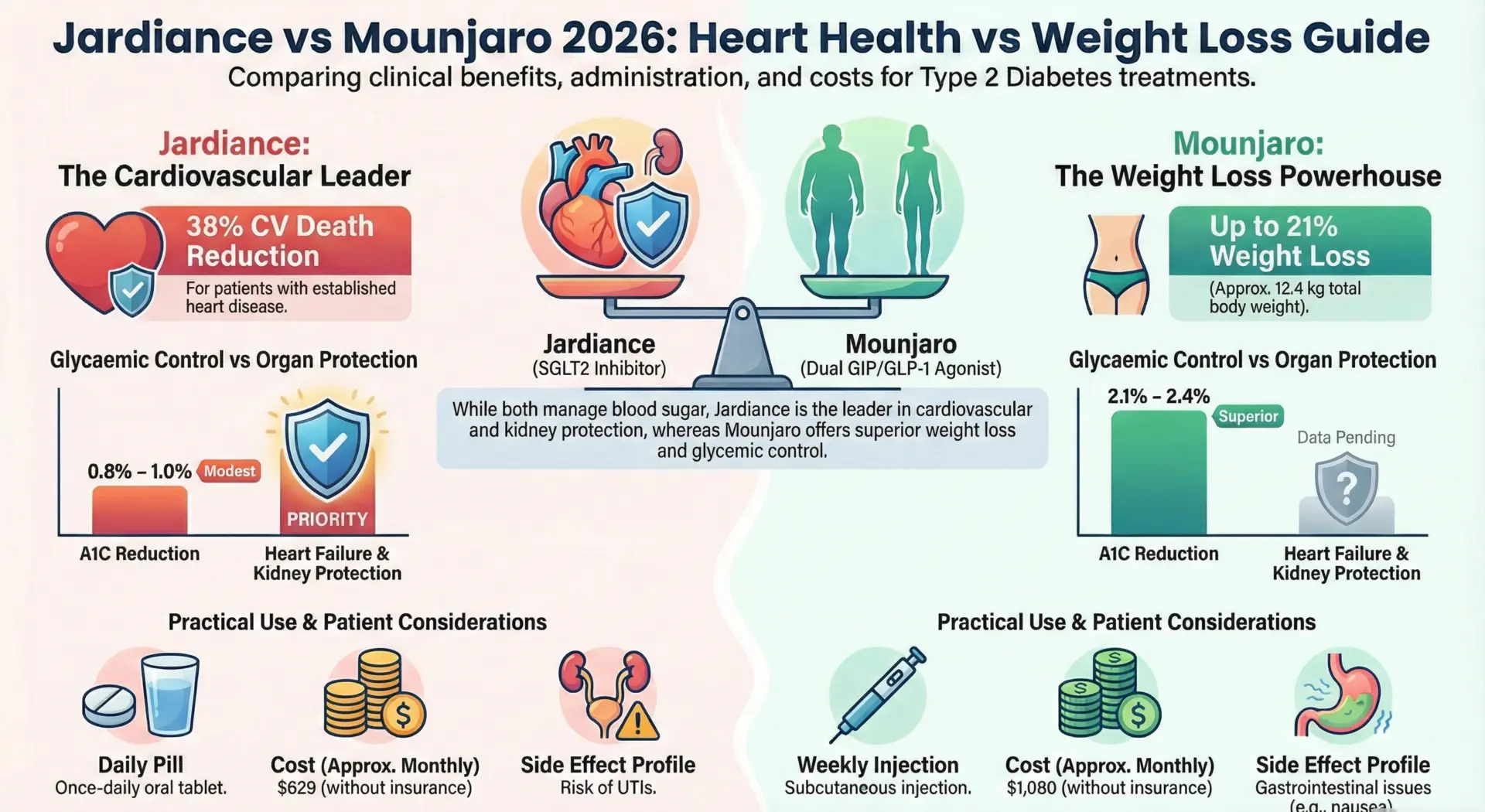

Jardiance (empagliflozin), an SGLT2 inhibitor, and Mounjaro (tirzepatide), a dual GIP/GLP-1 receptor agonist, represent two fundamentally different approaches to treating type 2 diabetes. According to the EMPA-REG OUTCOME trial published in the New England Journal of Medicine, Jardiance achieved a 38% reduction in cardiovascular mortality in patients with established heart disease. Meanwhile, the SURPASS-2 trial demonstrated Mounjaro’s superior glycemic control with up to 2.3% A1C reduction and significant weight loss of up to 12.4 kg (approximately 27 lbs).
This comprehensive guide compares these diabetes medications across efficacy, side effects, cost, and patient selection criteria for 2026, helping you and your doctor determine which treatment best fits your medical history and health goals.
TL;DR: Jardiance vs Mounjaro Quick Summary
Jardiance (empagliflozin) and Mounjaro (tirzepatide) are both FDA-approved for type 2 diabetes but serve different primary purposes. Choose Jardiance if you have heart failure, chronic kidney disease, or established cardiovascular disease—it reduces CV death by 38% (EMPA-REG trial) and costs approximately $629/month. Choose Mounjaro if significant weight loss is your priority—it delivers up to 21% body weight reduction and 2.3% A1C improvement but costs around $1,080/month. Jardiance is a daily pill with UTI/yeast infection risks; Mounjaro is a weekly injection with GI side effects. Neither is approved for type 1 diabetes.
Mechanism: SGLT2 vs GIP/GLP-1 Action
While both these medications lower blood sugar levels, their mechanisms target completely different physiological pathways.
Jardiance (Empagliflozin)
Jardiance is an SGLT2 (sodium-glucose cotransporter 2) inhibitor that works by blocking glucose reabsorption in the kidneys. According to the FDA prescribing information, this active ingredient (empagliflozin) causes the kidneys to excrete 50-90 grams of extra glucose daily through urine, creating a caloric deficit of 200-300 calories. This mechanism also promotes osmotic diuresis, which helps lower blood pressure by approximately 4/2 mmHg and reduces fluid retention—providing direct kidney benefits and kidney protection for patients with chronic kidney disease.
Jardiance is an oral tablet (daily pill) available in 10 mg and 25 mg doses, taken once daily with or without food. It’s approved for adults and pediatric patients aged 10 years and older with type 2 diabetes, as well as for heart failure and chronic kidney disease treatment regardless of diabetes status.
Mounjaro (Tirzepatide)
Mounjaro contains tirzepatide, a dual glucose-dependent insulinotropic polypeptide (GIP) and GLP-1 receptor agonist. Per the Mounjaro prescribing information from Eli Lilly, this novel medication slows gastric emptying by approximately 40%, suppresses appetite, and increases insulin secretion in a glucose-dependent manner. The dual-action approach targets both incretin hormone receptors, potentially doubling the postprandial insulin response while promoting weight loss through reduced food intake and increased satiety.
Mounjaro is administered as a once weekly injection in the abdomen, thigh, or upper arm. The dosage starts at 2.5 mg and can be titrated up to a maximum of 15 mg. It helps the pancreas make more insulin to lower blood glucose while simultaneously reducing body weight and appetite.
Key Difference: Jardiance works metabolically through kidney glucose excretion and diuresis; Mounjaro works hormonally through appetite suppression, delayed gastric emptying, and enhanced insulin secretion.
Efficacy Comparison Table
Clinical trials provide the most reliable evidence for comparing jardiance vs mounjaro effectiveness. The table below summarizes key outcomes from landmark studies including EMPA-REG OUTCOME, SURPASS-2, and the EMPEROR trials.
| Metric | Jardiance 25mg | Mounjaro 15mg | Winner | Trial Source |
| A1C Reduction | 0.8-1.0% | 2.1-2.4% | Mounjaro | SURPASS-2 |
| Weight Loss (1 yr) | 3-5% (3-4 kg) | 21% (12.4 kg) | Mounjaro | SURPASS-2 |
| CV Death Reduction | 38% | Data pending | Jardiance | EMPA-REG |
| HF Hospitalization | 35% reduction | Data pending | Jardiance | EMPEROR |
| Kidney Protection | 39% nephropathy | Minimal data | Jardiance | EMPA-KIDNEY |
Summary: Mounjaro dominates in glycemic control and weight loss metrics, while Jardiance has unmatched cardiovascular and renal endpoints with proven outcomes data.
Jardiance vs Mounjaro Weight Loss
When comparing jardiance vs mounjaro weight loss outcomes, Mounjaro demonstrates substantially greater effectiveness. In the SURPASS-2 trial, patients treated with Mounjaro 15mg achieved approximately 21% body weight reduction (average of 12.4 kg or 27 lbs), compared to Jardiance’s more modest 3-5% weight loss (3-4 kg) that typically plateaus around month 6.
The weight loss mechanisms differ significantly. Jardiance promotes weight loss primarily through caloric loss via increased urination (allowing excess sugar to be excreted), with initial weight loss of 2-3 kg often representing water weight. Mounjaro, however, directly reduces appetite and slows gastric emptying, leading to reduced food intake and more significant weight loss that targets visceral fat (up to 40% reduction in some studies).
For patients where losing weight is a primary goal alongside blood sugar control, Mounjaro offers a clear advantage. Some clinical trials suggest combination therapy with both SGLT2 inhibitors and GLP-1 agonists may provide up to 27% total weight loss, though this approach requires careful medical supervision.
Side Effects Comparison
Both diabetes medications can cause serious side effects, but their profiles differ substantially. Understanding these common adverse reactions helps patients and doctors make informed decisions.
| Side Effect | Jardiance | Mounjaro | Peak Timeline | Management |
| UTI/Yeast Infections | 10-15% | 2% | Week 2-8 | Antifungals, hygiene |
| Nausea/Vomiting | 2-3% | 18-25% | Dose titration | Slow titration, anti-nausea |
| Diarrhea | Rare | Up to 17% | Early weeks | Usually resolves |
| Dehydration | 6-8% | Rare | Hot weather | Increased fluid intake |
| Hypoglycemia Risk | 4% (with insulin) | <1% | With secretagogues | Dose adjustment |
Both medications can increase the risk of low blood sugar when taken with insulin or sulfonylureas. Jardiance has fewer gastrointestinal side effects compared to Mounjaro, while Mounjaro may reduce the efficacy of oral hormonal contraceptives due to delayed gastric emptying.
Cost Comparison 2026
There are significant differences in monthly expenses:
| Cost Category | Jardiance | Mounjaro |
| Monthly (No Insurance) | ~$629 | ~$1,080 |
| Annual List Price | ~$7,548 | ~$12,960 |
| With Savings Card | As low as $10 | As low as $25 |
| Pandameds.com | $144.00 | $559.99 |
Medicare typically covers Jardiance for type 2 diabetes, heart failure and chronic kidney disease, while Mounjaro coverage for diabetes is increasingly available but may require prior authorization. Patients can reduce costs using prescription coupons from platforms like GoodRx or SingleCare.
Jardiance vs Mounjaro Heart Failure
The EMPEROR-Reduced trial demonstrated that Jardiance reduced the combined risk of cardiovascular death or hospitalization for heart failure by 25% in patients with heart failure with reduced ejection fraction (HFrEF).
| Endpoint | Jardiance | Mounjaro | Trial Source |
| HF Hospitalization Reduction | 35% RRR | Pending CVOT | EMPEROR-Reduced |
| CV Death + HF Composite | 25% reduction | Unknown | EMPEROR-Preserved |
| eGFR Decline | 47% slower | Neutral | EMPA-KIDNEY |
Jardiance is FDA approved to reduce the risk of cardiovascular death in adults with type 2 diabetes and established heart disease. The EMPEROR-Preserved trial made history as the first successful trial for heart failure with preserved ejection fraction (HFpEF), a condition previously considered untreatable.
Jardiance can help reduce blood pressure, which provides added heart benefits and kidney protection. The SURPASS-CVOT trial for Mounjaro cardiovascular outcomes is ongoing, with data expected by 2029.
Dosing & Administration Guide
Jardiance Schedule
Jardiance is a daily pill taken once daily, with or without food. The starting dose is typically 10 mg, which may be increased to 25 mg if additional glycemic control is needed. No dosage adjustment is required based on kidney problems for most patients, though it may be less effective for blood sugar lowering in severe kidney disease (eGFR below 30 mL/min/1.73m²). The medication can be taken at any time of day.
Mounjaro Titration
Mounjaro is administered as a once weekly injection subcutaneously in the abdomen, thigh, or upper arm. The dosage starts at 2.5 mg for the first 4 weeks, then increases in a step-wise approach: 5 mg → 7.5 mg → 10 mg → 12.5 mg → 15 mg (maximum). Each dose level is maintained for at least 4 weeks before increasing. Injection sites should be rotated with each dose. The medication can be taken at any time of day, with or without food.
Patient Selection: Jardiance vs Mounjaro
Choose Jardiance if you have:
Heart failure or established cardiovascular disease, chronic kidney disease (eGFR 20-90), need for kidney protection, blood pressure concerns, cost sensitivity, or are an elderly patient. Avoid Jardiance if: You have recurrent urinary tract infections or genital yeast infections, or are prone to dehydration.
Choose Mounjaro if:
Significant weight loss is a priority, you have BMI >35 with obesity as a major concern, A1C >9% requiring aggressive glycemic control, or you are a younger patient without cardiovascular disease. Avoid Mounjaro if: You have gastroparesis, history of thyroid cancer (especially medullary thyroid cancer), Multiple Endocrine Neoplasia syndrome type 2 (MEN 2), or cannot tolerate gastrointestinal side effects.
Combination Therapy: For patients with established cardiovascular disease AND obesity, combination therapy with both medications may provide optimal benefits—up to 1.8% additional A1C reduction and 25% weight loss. However, this approach requires careful monitoring by your doctor and consideration of your complete medical history.
Important: Neither Mounjaro nor Jardiance is approved for type 1 diabetes. Both medications can be combined with other diabetes drugs but have different risk profiles. Mounjaro is linked to risks during pregnancy, including potential adverse effects on the fetus. Consult your doctor before starting either medication.
EMPA-REG vs SURPASS Clinical Trial Data
EMPA-REG OUTCOME (n=7,020): This landmark cardiovascular outcomes trial, published in The New England Journal of Medicine, randomized patients with type 2 diabetes and established cardiovascular disease to Jardiance or placebo. Results showed a 38% relative risk reduction in cardiovascular death, 35% reduction in hospitalization for heart failure, and 32% reduction in all-cause mortality—despite only modest A1C reduction of 0.5-0.8%.
SURPASS-2 (n=1,879): This head-to-head trial compared tirzepatide (Mounjaro) against semaglutide (Ozempic) in adults with type 2 diabetes. According to results published in NEJM, Mounjaro achieved A1C reductions of 2.01% (5mg), 2.24% (10mg), and 2.30% (15mg) versus 1.86% with semaglutide 1mg. Weight loss was 7.6 kg, 9.3 kg, and 11.2 kg with tirzepatide doses versus 5.7 kg with semaglutide.
Head-to-Head Limitation: No direct comparator trial exists between Jardiance and Mounjaro. Network meta-analysis suggests Mounjaro is superior for A1C and weight reduction, while Jardiance demonstrates unmatched cardiovascular mortality benefits. The choice depends on individual patient priorities and risk factors.
References
- Zinman B, et al. Empagliflozin, Cardiovascular Outcomes, and Mortality in Type 2 Diabetes – N Engl J Med. 2015;373:2117-28
- Frías JP, et al. Tirzepatide versus Semaglutide Once Weekly in Patients with Type 2 Diabetes – N Engl J Med. 2021;385:503-515
- Packer M, et al. Cardiovascular and Renal Outcomes with Empagliflozin in Heart Failure – N Engl J Med. 2020;383:1413-1424
- Anker SD, et al. Empagliflozin in Heart Failure with a Preserved Ejection Fraction – N Engl J Med. 2021;385:1451-1461
- FDA Prescribing Information – Jardiance | Mounjaro
- American College of Cardiology Clinical Trial Summaries – EMPA-REG OUTCOME | EMPEROR-Reduced
Disclaimer: This information is intended for general knowledge and informational purposes only and does not constitute medical advice. Always consult with a healthcare professional for personalized guidance.
Written by the Pandameds.com Editorial Team
Our content is created by pharmacy-trained researchers and healthcare specialists and rigorously reviewed by a diverse panel of authentic experts from the pharmaceutical and healthcare fields. This collaborative review process ensures that every article meets the highest standards of medical accuracy, reliability, and relevance.
- ✅ Authored by pharmacy-trained professionals
- 🔍 Reviewed by multiple verified experts in the pharmaceutical and healthcare niche
- 💊 Based on trusted sources including FDA, Health Canada, and peer-reviewed clinical studies
- 🔄 Regularly reviewed and updated every 90 days to maintain accuracy and trustworthiness
About Pandameds.com
Pandameds.com offers a range of weight loss medications at an affordable price.
Fast, Reliable Shipping to the USA!
Affordable Prescription Meds From Canada




Join our mailing list for exclusive promos, curated health content & more.
Frequently Asked Questions
Jardiance vs Mounjaro A1C reduction: Which is more effective?
Mounjaro is superior for blood sugar control. In clinical trials, Mounjaro achieved A1C reductions of 2.1-2.4% (with up to 51% of patients reaching normal A1C levels below 5.7%), compared to Jardiance's 0.8-1.0% reduction. Mounjaro helps the pancreas make more insulin to improve blood sugar control, making it the clear winner for glycemic control.
Which is best for heart failure protection?
Jardiance is the clear choice for heart failure. Jardiance is FDA approved to reduce the risk of cardiovascular death and has proven 35% reduction in heart failure hospitalization (EMPEROR trials). It's approved for added heart and kidney health benefits even in patients without diabetes. Mounjaro cardiovascular outcomes data is still pending (SURPASS-CVOT expected 2029).
Is Jardiance cheaper than Mounjaro?
Yes, Jardiance is more affordable. Without insurance, Jardiance costs approximately $629/month versus Mounjaro's $1,080/month—making Jardiance about 42% less expensive. Annual savings can exceed $5,400. Both manufacturers offer savings programs: Jardiance as low as $10/month and Mounjaro as low as $25/month with eligible commercial insurance coverage.
Can you take Jardiance and Mounjaro together?
Yes, combination therapy is possible under medical supervision. Many patients with established cardiovascular disease and obesity benefit from combining both medications. Research suggests additive effects: approximately 1.8% additional A1C reduction and up to 25% total weight loss. Jardiance provides cardiovascular protection that complements Mounjaro's metabolic benefits. However, this combination requires careful monitoring by your doctor for potential side effects and drug interactions.
Related Blog Posts
Call Us Today!
If you have any questions, please email our support team at support@pandameds.com or call us toll-free at 1-888-862-1210.