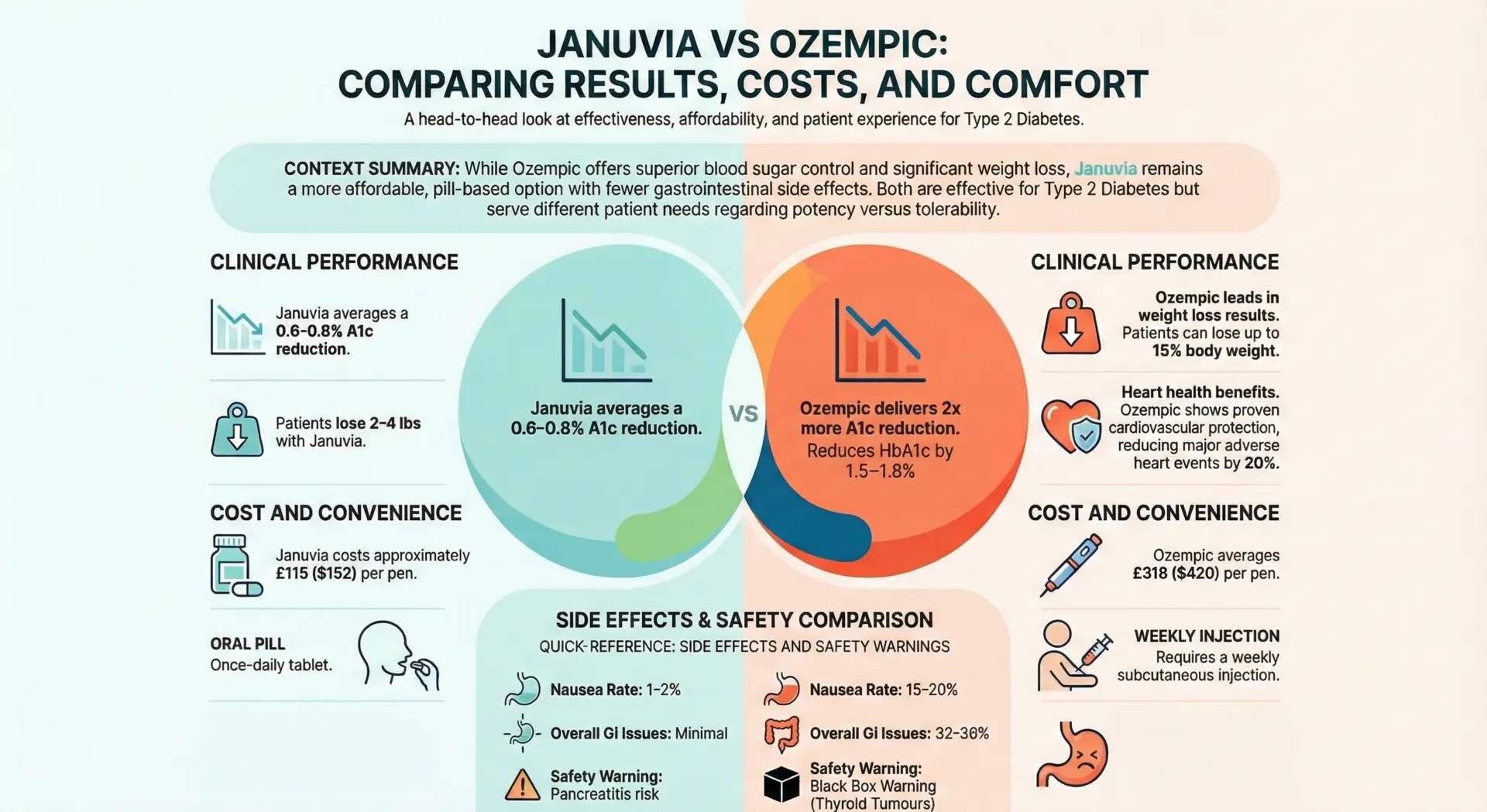

When comparing Januvia vs Ozempic, the differences are significant: Ozempic (semaglutide) crushes Januvia (sitagliptin) for weight loss achieving up to 15% body weight reduction compared to Januvia’s modest 2 to 4 pounds but Januvia remains substantially cheaper and causes virtually no gastrointestinal side effects.
Clinical trials demonstrate Ozempic’s superior A1c reduction (1.5-1.8%) compared to Januvia (0.6-0.8%). For many patients seeking both glycemic control and significant weight loss, Ozempic emerges as the stronger option. However, Januvia offers distinct advantages: oral administration versus injection, lower cost, and fewer gastrointestinal side effects.
TL;DR
- Ozempic delivers superior results for weight loss (up to 15% body weight reduction vs Januvia’s 2-4 lbs) and HbA1c reduction (1.5-1.8% vs 0.6-0.8%).
- However, Januvia is significantly cheaper than Ozempic. At Pandameds, Januvia costs $140 – $151.90 for 30 tablets (25mg, 50mg, 100mg) while Ozempic pens cost about $419.95 for one pen (4 weekly doses). Januvia causes fewer gastrointestinal side effects as well
- Januvia is an oral once daily DPP 4 inhibitor pill while Ozempic is a weekly GLP 1 receptor agonist injection.
- Choose Ozempic if weight loss and aggressive blood sugar control are priorities
- Choose Januvia if cost, convenience and avoiding GI issues matter most.
- Both are approved for type 2 diabetes and work best alongside diet and exercise
Januvia vs Ozempic Mechanism Comparison
Understanding how these diabetes medications work reveals why their effectiveness differs so dramatically. Januvia (sitagliptin) is a DPP 4 inhibitor that works by blocking the enzyme dipeptidyl peptidase 4 which normally breaks down incretin hormones like GLP 1 and GIP.
By preserving these natural hormones, Januvia indirectly increases insulin release when blood glucose levels are elevated and reduces glucagon secretion. Januvia is taken orally once daily, typically at 100mg making it convenient for patients who prefer pills over injections.
Ozempic (semaglutide) takes more powerful approach as GLP 1 receptor agonist. Rather than preserving existing hormones, Ozempic directly activates GLP 1 receptors throughout the body, approximately 50 times more potently than natural GLP 1. Ozempic is administered as a weekly injection which some patients find more convenient than daily pills.
The key difference in their mechanisms explains the dual benefit of Ozempic. It provides blood sugar control and also significantly impacts body weight through delayed gastric emptying and enhanced satiety signaling in the brain.
| Feature | Januvia (Sitagliptin) | Ozempic (Semaglutide) |
| Drug Class | DPP 4 Inhibitor | GLP 1 Receptor Agonist |
| Administration | Daily oral pill | Weekly injection |
| A1c Reduction | 0.6 to 0.8% | 1.5 to 1.8% |
| Weight Effect | Weight neutral (2 to 4 lb loss) | Up to 15% body weight |
Weight Loss Results – Ozempic 7x Superior
For patients who need to lose weight alongside managing blood sugar, the contrast between these medications is stark. Ozempic produces clinically significant weight loss, while Januvia is considered weight-neutral.
Research published in the New England Journal of Medicine demonstrates that semaglutide achieves remarkable weight reduction: participants lost an average of 14.9% of their body weight at 68 weeks with half achieving at least 15% weight loss and nearly one third losing 20% or more. This rivals outcomes from bariatric surgery for many patients.
In contrast, Januvia’s effect on body weight is minimal. Clinical trials show only modest, incidental weight loss of 2 to 4 pounds primarily attributed to mild appetite suppression from preserved GLP 1. According to studies published in Diabetologia, sitagliptin has a ‘neutral effect on body weight’ making it suitable for patients who don’t need weight reduction but want effective blood sugar control without weight gain.
For adults with type 2 diabetes and obesity, Ozempic’s ability to address both conditions simultaneously makes it a compelling choice, though the weight loss drug benefits come with more gastrointestinal side effects during the initial weeks.
| Metric | Januvia | Ozempic |
| 12-Month Weight Loss | 2-4 lbs | 25-35 lbs |
| % Body Weight Lost | 1-2% | 10-15% |
| Weight Maintenance | Minimal change | 80% maintained at 4 years |
A1c Reduction Comparison
Both Januvia and Ozempic have shown effectiveness in lowering HbA1c, the key marker used to gauge long-term blood glucose control. However, Ozempic delivers approximately 2.2 times greater glycemic control.
According to SUSTAIN clinical trial data, Ozempic typically achieves HbA1c reductions of 1.5% to 1.8% at the 1mg dose with the newer 2mg dose showing reductions up to 2.1%. The American Diabetes Association published research showing Januvia achieves more modest reductions of 0.6-0.8% in clinical trials.
Both medications are cardiovascular safe but Ozempic has demonstrated proven heart protection. The SELECT trial showed a 20% reduction in major adverse cardiovascular events in patients with established heart disease, making Ozempic particularly valuable for patients with cardiovascular risk factors.
| Study Duration | Januvia A1c Reduction | Ozempic A1c Reduction |
| 6 Months | -0.6% to -0.7% | -1.5% to -1.6% |
| 12 Months | -0.7% to -0.8% | -1.8% to -2.1% |
Januvia vs Ozempic Side Effects
The safety profiles of these medications differ significantly, particularly regarding gastrointestinal side effects. Januvia is generally well tolerated with minimal GI effects. Common side effects of Januvia include upper respiratory infections, headaches and nausea with nausea occurring in only about 1-2% of patients.
Januvia is not typically associated with hypoglycemia unless combined with other diabetes medications like sulfonylureas or insulin. Serious side effects of Januvia may include pancreatitis and kidney dysfunction and the FDA has warned about severe and disabling joint pain in some patients.
Ozempic’s GI profile is substantially more challenging. Clinical trial data shows gastrointestinal adverse reactions occurred in 32-36% of Ozempic patients versus 15% on placebo. Nausea affects approximately 15-20% of patients, with vomiting (5-9%), diarrhea (8%) and abdominal pain (6-7%) also common. However, these effects typically improve after 12 weeks as the body adjusts.
Critically, Ozempic carries a Boxed Warning regarding the potential risk of thyroid C-cell tumors, including medullary thyroid carcinoma, based on rodent studies. Patients with a personal or family history of thyroid tumors or Multiple Endocrine Neoplasia syndrome type 2 should not use Ozempic. Both medications carry a risk of pancreatitis as a serious side effect.
| Side Effect | Januvia | Ozempic |
| Nausea | 1-2% | 15-20% |
| Pancreatitis Risk | Rare | 0.2-0.3% |
| GI Issues Overall | Minimal | 32-36% (first month) |
| Hypoglycemia Risk | Low (unless combined) | Very low |
Cost Comparison 2026 – Januvia vs Ozempic
Cost represents one of the most significant differences between these diabetes treatments and this factor alone influences many patients’ treatment choices.
Januvia’s retail price in the U.S. ranges from $299-$711 per month without insurance though generic sitagliptin became available in 2023 through Zydus Pharmaceuticals under the brand Zituvio bringing costs down to approximately $80-$109 per month with discount programs. Full generic competition is expected in late 2026 when Merck’s key patent expires which should further reduce prices.
Ozempic remains significantly more expensive. Retail pricing exceeds $1,000 per month, and as of 2026, no generic alternatives exist. Insurance coverage patterns differ substantially, with many plans requiring prior authorization for Ozempic due to its higher cost. Medicare recipients may benefit from the Inflation Reduction Act’s negotiated drug prices, but out of pocket costs still vary by plan.
For patients seeking cost savings, ordering through verified Canadian pharmacies can provide substantial discounts while maintaining medication quality and safety standards with potential savings of 50-80% compared to U.S. retail prices.
| Source | Januvia/Sitagliptin | Ozempic |
| Cash Price (Retail) | ~$109-$330 | ~$1,000+ |
| With Insurance | $5-$50 | $25-$150 |
| Generic Available | Yes (Zituvio/sitagliptin) | No (patent until ~2031) |
| Pandameds Price | $151.90 | $419.95 |
Switching Januvia to Ozempic Protocol
Many patients begin with Januvia and later consider switching to Ozempic for improved glycemic control or weight reduction. Understanding the transition process helps ensure a smooth medication change. The good news is no washout period is required when switching from Januvia to Ozempic.
Januvia’s half life is approximately 12 hours meaning it clears the system quickly. Patients can begin Ozempic at the standard starting dose of 0.25mg the day after their last Januvia dose or even on the same day. However, patients should expect gastrointestinal side effects during the first weeks on Ozempic even if they tolerated Januvia well.
Ozempic dosing follows a titration schedule: start at 0.25mg weekly for 4 weeks, then increase to 0.5mg. If needed, further increases to 1mg and potentially 2mg occur at 4-week intervals based on your healthcare provider’s guidance. This gradual escalation helps minimize gastrointestinal side effects while achieving optimal blood sugar control.
| Last Januvia Dose | First Ozempic Dose | Timing |
| Any dose (25-100mg) | 0.25mg | Day 1 (no washout needed) |
References & Resources
Disclaimer: This information is intended for general knowledge and informational purposes only and does not constitute medical advice. Always consult with a healthcare professional for personalized guidance.
Written by the Pandameds.com Editorial Team
Our content is created by pharmacy-trained researchers and healthcare specialists and rigorously reviewed by a diverse panel of authentic experts from the pharmaceutical and healthcare fields. This collaborative review process ensures that every article meets the highest standards of medical accuracy, reliability, and relevance.
- ✅ Authored by pharmacy-trained professionals
- 🔍 Reviewed by multiple verified experts in the pharmaceutical and healthcare niche
- 💊 Based on trusted sources including FDA, Health Canada, and peer-reviewed clinical studies
- 🔄 Regularly reviewed and updated every 90 days to maintain accuracy and trustworthiness
About Pandameds.com
Pandameds.com offers a range of weight loss medications at an affordable price.
Fast, Reliable Shipping to the USA!
Affordable Prescription Meds From Canada




Join our mailing list for exclusive promos, curated health content & more.
Frequently Asked Questions
What is better, Januvia or Ozempic?
Ozempic is superior for weight loss (up to 15% body weight) and A1c reduction (1.5-1.8%). Januvia is better for cost savings, pill convenience, and avoiding gastrointestinal side effects. The best choice depends on your individual health goals and preferences.
Can I switch from Januvia to Ozempic?
Yes, you can switch directly. Start Ozempic at 0.25mg on Day 1 after your last Januvia dose. No washout period is needed since Januvia clears the system within 12-24 hours. Expect some GI adjustment during the first few weeks.
What are Januvia vs Ozempic side effects?
Januvia has minimal GI effects (nausea in 1-2% of patients) but may cause joint pain. Ozempic causes nausea in 15-20% and overall GI issues in 32-36% initially, but these typically resolve after 12 weeks. Both carry pancreatitis risk.
Can you take Januvia and Ozempic together?
Generally not recommended. Both target the incretin pathway through similar mechanisms, so combining them increases side effects without providing additional benefit. Your healthcare provider may recommend other medication combinations instead.
Is Januvia cheaper than Ozempic?
Yes, substantially. Generic sitagliptin costs $80-$109/month with discounts while brand Januvia runs $299-$330/month. Ozempic exceeds $1,000/month with no generic available until approximately 2031.
Which is better for type 2 diabetes: Januvia or Ozempic?
Ozempic provides more aggressive glycemic control and cardiovascular protection for patients with heart disease. Januvia works well for maintenance therapy in patients with mild-to-moderate diabetes who tolerate it well. Your endocrinologist can help determine the best fit.
Does Ozempic have a black box warning that Januvia doesn't?
Yes. Ozempic has a Boxed Warning about thyroid C-cell tumors based on rodent studies. It's contraindicated in patients with personal or family history of medullary thyroid carcinoma or MEN 2 syndrome. Januvia does not carry this warning.
Related Blog Posts




Call Us Today!
If you have any questions, please email our support team at support@pandameds.com or call us toll-free at 1-888-862-1210.