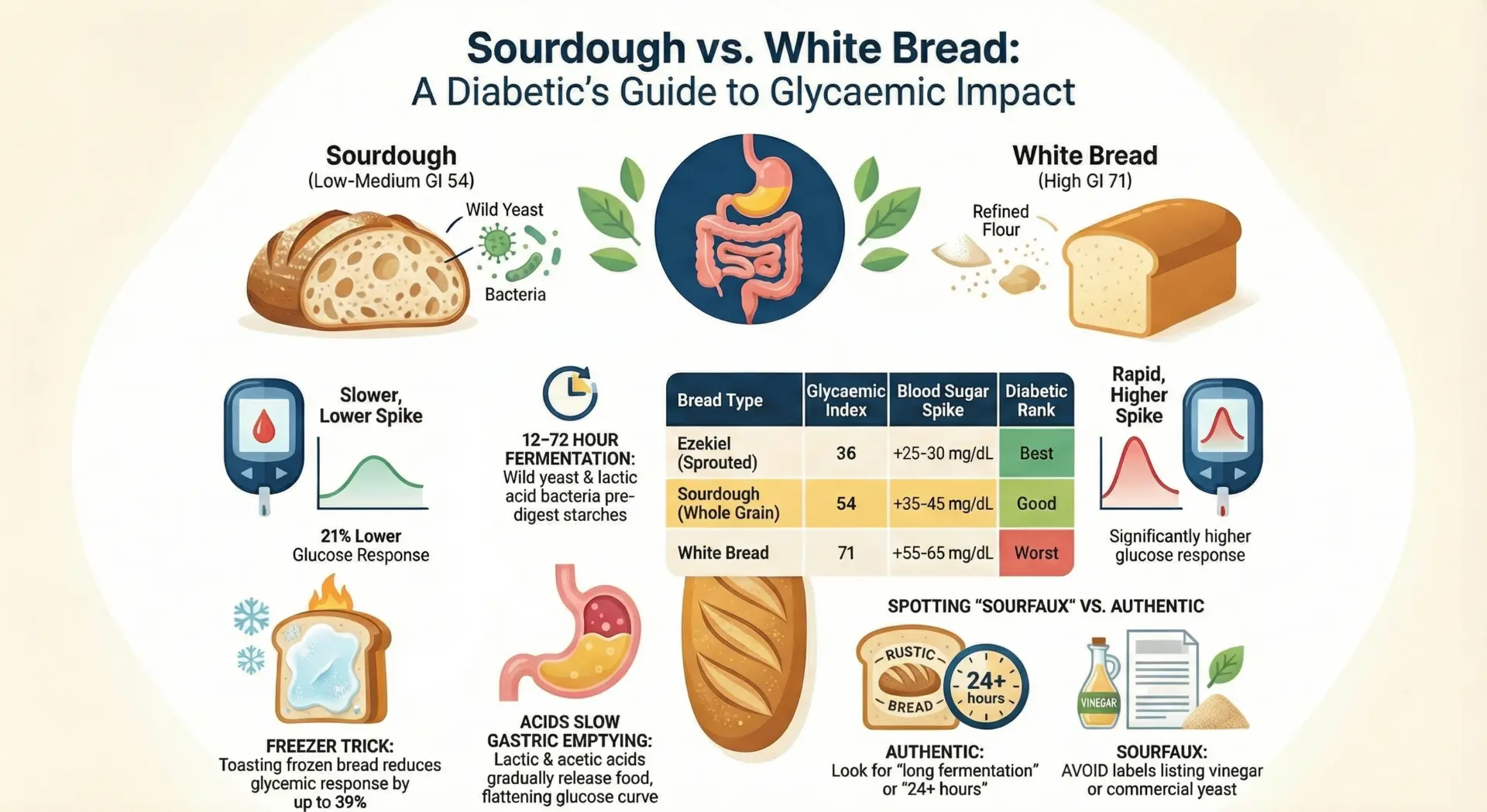

Yes. Sourdough bread produces a smaller blood sugar spike than white bread or standard whole wheat. The difference comes from fermentation, not marketing.
During the 12 to 72 hour process, lactic acid bacteria and wild yeast break down starches before you eat them. Your digestive system absorbs the remaining carbohydrates more slowly, and blood glucose rises less sharply.
This does not make sourdough a free pass. It still contains carbohydrates. One slice has 15 to 20 grams. People with diabetes need to count these carbs and monitor their blood sugar response when they eat bread. But among breads, sourdough sits in a better position than most commercial loaves.
TL;DR
- Sourdough bread is a reasonable choice for people managing diabetes. It has a glycemic index around 54, compared to 71 for white bread and 68 for standard whole wheat.
- The natural fermentation process, which takes 12 to 72 hours using wild yeast and lactic acid bacteria, changes the starch structure and slows digestion.
- A 2024 systematic review in Critical Reviews in Food Science and Nutrition found that sourdough bread produced lower postprandial glucose compared to commercially fermented bread.
- One slice contains 15 to 20 grams of carbohydrates. Pair it with protein and fat, stick to 1 to 2 slices per meal, and choose whole grain versions when possible.
- Sprouted grain bread like Ezekiel (GI 36) remains the lowest glycemic option among breads.
Sourdough glycemic index: 54 vs white bread 71
The glycemic index measures how quickly carbohydrates raise blood sugar on a scale of 0 to 100, with pure glucose at 100.
According to the International Tables of Glycemic Index and Glycemic Load Values, sourdough bread scores around 54, placing it in the low-medium range. White bread scores 71. Standard whole wheat bread scores 68. The gap matters for blood sugar management.
| Bread Type | Glycemic Index | 1 Slice Carbs | Blood Sugar Spike |
| Sourdough | 54 (Low-Medium) | 15-20g | +35-45 mg/dL |
| White Bread | 71 (High) | 15g | +55-65 mg/dL |
| Whole Wheat | 68 | 17g | +50-60 mg/dL |
| 100% Whole Grain | 51 | 18g | +30-40 mg/dL |
The fermentation process explains the lower glycemic response. Lactic acid bacteria predigest starches during the long rise.
A 2024 meta-analysis from Brazil reviewed 18 clinical trials and found sourdough bread produced measurably lower postprandial glucose compared to industrially fermented bread. The analysis reported a mean difference of approximately 0.29 mmol/L lower blood glucose at the 60-minute mark.
These numbers matter, but context matters more. Sourdough is still bread. It still contains carbohydrates. Eating three slices will spike your blood sugar regardless of the fermentation method.
Can diabetics eat sourdough bread? Yes, with portion control
People with diabetes can include sourdough bread in their diet. The key is treating it like any other carbohydrate source: count the grams, stick to reasonable portions, and pair it with protein or fat to further slow absorption.
Portion guidelines:
| Meal | Max Sourdough | Total Carbs | Example Pairing |
| Breakfast | 1 slice (15g carbs) | 30g with eggs | 2 eggs, avocado |
| Lunch | 2 slices (30g carbs) | 45g with turkey | Turkey, cheese, greens |
| Dinner | 1 slice (15g carbs) | 25g with protein | Grilled fish, vegetables |
When making sourdough bread, three mechanisms make it a better choice than white bread for blood sugar management.
- First, the acetic and lactic acids produced during fermentation slow gastric emptying, meaning food leaves your stomach more gradually.
- Second, the long fermentation breaks down phytic acid, which improves mineral absorption, particularly iron, zinc, and magnesium.
- Third, sourdough has a prebiotic effect. According to research from the University of Florida Extension, the fermentation produces non-digestible fibers that feed beneficial gut bacteria.
A healthy gut microbiome is linked to improved insulin sensitivity, which is particularly relevant for people with type 2 diabetes.
If you use a continuous glucose monitor, you will typically see sourdough peak at 90 to 120 minutes after eating, with a lower valley compared to white bread consumed at the same portion size.
Sourdough fermentation vs commercial bread
The difference between real sourdough and commercial bread lies in time and microbiology.
Sourdough Fermentation
True sourdough ferments for 24 to 72 hours using a starter culture that contains wild yeast and lactic acid bacteria, primarily Lactobacillus species. This slow process transforms the flour.
During fermentation, the starter culture converts starches into maltose, then into lactic acid. The pH drops to between 3.8 and 4.2. This acidic environment activates phytase enzymes that break down phytic acid.
According to a 2021 review in Microorganisms, sourdough fermentation reduces phytate content by approximately 62%, compared to only 38% reduction with conventional yeast fermentation. The remaining starch structure becomes more resistant to rapid digestion.
Commercial bread
Commercial bread takes a different path. Manufacturers use commercial yeast plus sugar for rapid fermentation, typically completing the process in 2 hours or less. Preservatives extend shelf life. The result is bread with a glycemic index between 71 and 85, depending on the specific formulation.
Many commercial breads labeled as sourdough use a shortcut. They add vinegar or citric acid for flavor without the long fermentation. This produces the taste but not the metabolic benefits.
Check the ingredient list. If you see commercial yeast listed alongside the sourdough starter, or if vinegar appears, the bread likely did not undergo traditional fermentation. Also, keep in mind that the sourdough is not gluten free bread.
Does sourdough bread raise blood sugar less? Study data
Clinical trials consistently show sourdough helps more with blood sugar regulation in comparison to traditional bread, though the magnitude varies by study design and sourdough type.
| Study | Sourdough BG Peak | White Bread BG Peak | Difference |
| Brazil Meta-Analysis 2024 | +2.1 mmol/L | +2.4 mmol/L | -0.3 mmol/L |
| Whole Wheat Sourdough | +1.9 mmol/L | +2.6 mmol/L | -0.7 mmol/L |
A 2023 review in Frontiers in Nutrition examined the clinical evidence for sourdough health claims. The authors noted that while in vitro and mechanistic studies strongly support glycemic benefits, translating these into consistent human health outcomes is more complex.
The European Food Safety Authority has not approved health claims for sourdough bread because supporting studies demonstrated reduced glycemic response relative to glucose solutions but not always relative to comparable bread produced without sourdough.
A 2024 study published in Applied Sciences tested 23 different functional breads on 209 healthy volunteers following the ISO 26642:2010 glycemic index methodology. Most breads composed mainly of rye, oats, or buckwheat flour with a sourdough starter showed low glycemic index values.
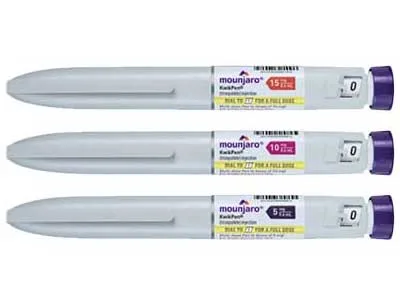
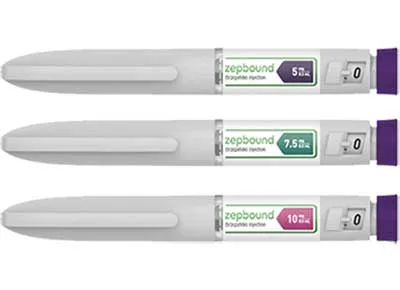
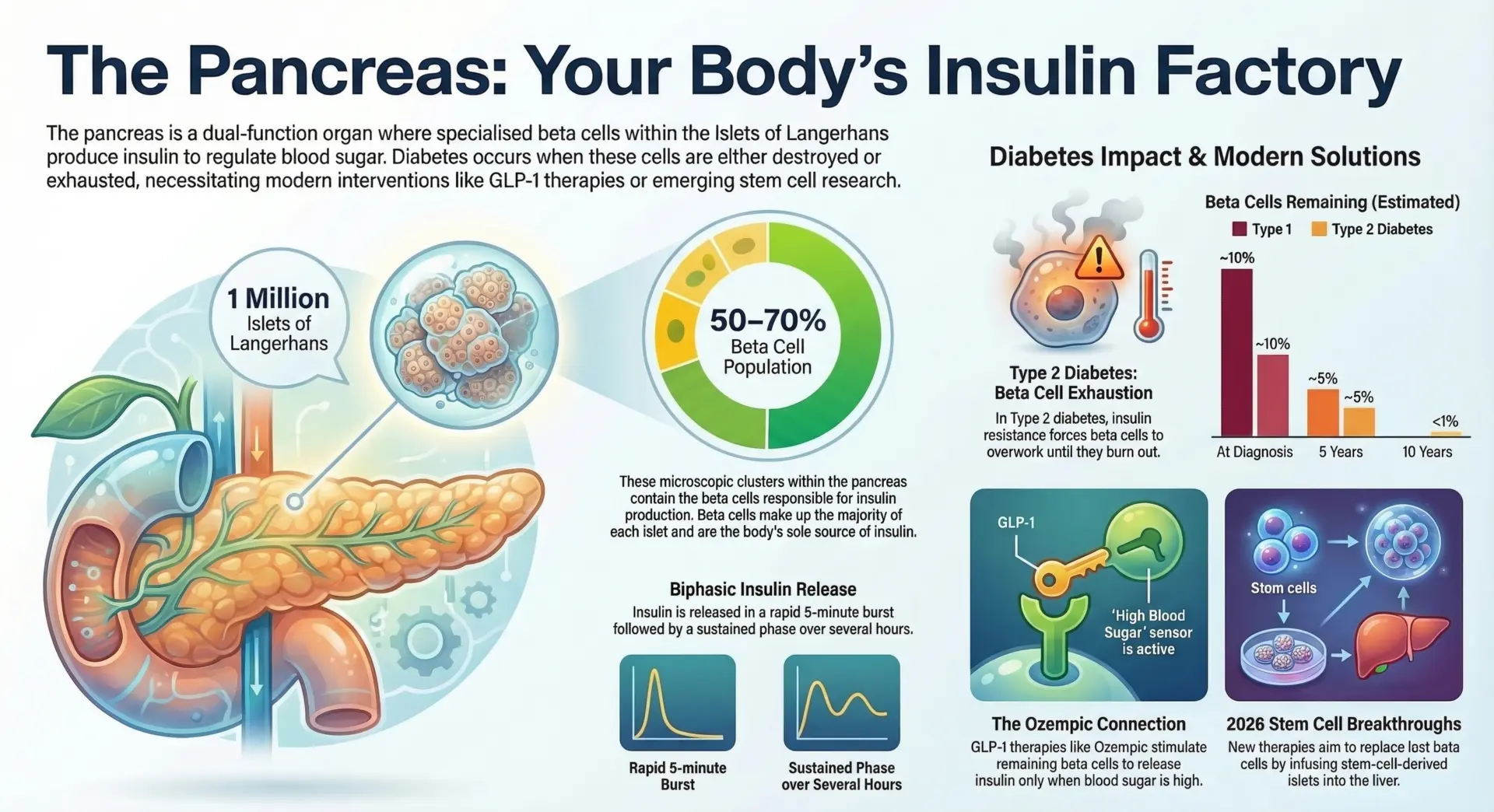
For people taking GLP-1 receptor agonists like semaglutide (Ozempic, Wegovy) or tirzepatide (Mounjaro, Zepbound), the benefit compounds. These medications slow gastric emptying. Combined with the slower digestion from sourdough fermentation, the glucose curve flattens further. At the 120-minute postprandial mark, sourdough typically shows approximately 21% lower glucose compared to control bread.
Best sourdough for diabetics: check these labels
Not all sourdough delivers equal metabolic benefits. Labels often mislead. Here is what to look for.
Green flags: Look for the words long fermentation or 24+ hours on the label. The ingredient list should show whole grain flour as the first item. Added sugar should be under 2 grams per slice. Seeds or nuts add fiber and healthy fats, further slowing glucose absorption. The best loaves come from artisan bakeries or are homemade, because these are less likely to contain preservatives or shortcuts.
Red flags: Watch for vinegar in the ingredients, which indicates the manufacturer faked the sour flavor instead of fermenting the bread properly. High fructose corn syrup or excessive added sugars defeat the purpose. If enriched flour appears as the only flour, the bread lacks the fiber benefits of whole grain versions. These products are sometimes called sourfaux by bread enthusiasts.
True sourdough has a crackling crust and a chewy, slightly dense interior with irregular air holes. If the interior feels cottony and uniform like commercial sandwich bread, the fermentation was likely abbreviated or supplemented with commercial yeast.
Sourdough vs other breads: GI ranking
| Bread Type | GI | Carbs/Slice | Fiber/Slice | Diabetic Rank |
| Ezekiel (Sprouted) | 36 | 12-15g | 3g | Best |
| 100% Whole Grain | 51 | 18-20g | 2-3g | 2nd |
| Sourdough (Whole Grain) | 54 | 15-18g | 2g | 3rd |
| Whole Wheat | 68 | 17g | 2g | 4th |
| White Bread | 71 | 14-15g | <1g | Worst |
| Honey Wheat | 68-72 | 22-26g | 1-2g | Avoid |
Ezekiel bread and other sprouted grain breads have the lowest glycemic impact. According to Food for Life, the company that produces Ezekiel bread, independent testing showed a glycemic index of 36. The sprouting process breaks down antinutrients and converts some starches to simple sugars before baking, making the remaining carbohydrates easier to digest and less impactful on blood sugar. The Glycemic Research Institute has awarded Ezekiel bread a Diabetic Friendly Seal.
Sourdough ranks third among these options. It beats standard wheat bread and white bread, but falls short of sprouted grain and 100% whole grain varieties. The practical takeaway: if you can find whole grain sourdough, you get benefits from both the fermentation and the intact grain structure.
Perfect sourdough pairings for blood sugar control
What you eat with sourdough matters as much as the bread itself. Fat and protein slow carbohydrate absorption. Fiber from vegetables adds bulk and further moderates the glucose curve.
Low-spike breakfast combinations
One slice of sourdough toast with 2 eggs and half an avocado totals approximately 25 grams of carbohydrates. The eggs provide protein. The avocado adds healthy monounsaturated fat. Both slow gastric emptying.
One slice of sourdough with natural peanut butter and chia seeds totals approximately 22 grams of carbohydrates. The nut butter provides fat and protein. Chia seeds add fiber.
A turkey and cheese sandwich on sourdough with lettuce and tomato totals approximately 30 to 35 grams of carbohydrates. The turkey provides lean protein. Cheese adds fat. Vegetables contribute fiber.
Order of eating
Research suggests eating vegetables or salad before consuming starchy foods can slow carbohydrate absorption. Start your meal with a side salad, then eat your sourdough.
For insulin users: Pre-bolus 15 minutes before eating with rapid-acting insulin like lispro (Humalog) or aspart (Novolog, Fiasp). Check your blood sugar at the 2-hour mark. Adjust timing based on your continuous glucose monitor data.
Freezing and toasting tip
A 2008 study in the European Journal of Clinical Nutrition found that freezing bread and then toasting it reduced the glycemic response by up to 39% compared to fresh bread. The freezing and reheating process converts some digestible starch to resistant starch, which behaves more like fiber. If you buy sourdough, slice it and freeze individual slices. Toast from frozen when ready to eat. This simple step may further reduce the blood sugar impact.
Sources
- Consumption of sourdough bread and changes in the glycemic control and satiety: A systematic review – PubMed
- Does sourdough bread provide clinically relevant health benefits?
- Sourdough Microbiome Comparison and Benefits – PMC
- The impact of freezing and toasting on the glycaemic response of white bread – PubMed
- International tables of glycemic index and glycemic load values: 2008 – PubMed
Disclaimer: This information is intended for general knowledge and informational purposes only and does not constitute medical advice. Always consult with a healthcare professional for personalized guidance.
Written by the Pandameds.com Editorial Team
Our content is created by pharmacy-trained researchers and healthcare specialists and rigorously reviewed by a diverse panel of authentic experts from the pharmaceutical and healthcare fields. This collaborative review process ensures that every article meets the highest standards of medical accuracy, reliability, and relevance.
- ✅ Authored by pharmacy-trained professionals
- 🔍 Reviewed by multiple verified experts in the pharmaceutical and healthcare niche
- 💊 Based on trusted sources including FDA, Health Canada, and peer-reviewed clinical studies
- 🔄 Regularly reviewed and updated every 90 days to maintain accuracy and trustworthiness
About Pandameds.com
Pandameds.com offers a range of weight loss medications at an affordable price.
Fast, Reliable Shipping to the USA!
Affordable Prescription Meds From Canada




Join our mailing list for exclusive promos, curated health content & more.
Frequently Asked Questions
Does sourdough bread spike blood sugar?
Sourdough produces a smaller blood sugar spike than white bread. A typical response is +35 to 45 mg/dL per slice, compared to +55 to 65 mg/dL for white bread. Sourdough is still a carbohydrate source. People using insulin still need to bolus appropriately.
What is the glycemic index of sourdough vs other breads?
Sourdough has a glycemic index of approximately 54. White bread scores 71. Standard whole wheat scores 68. Ezekiel sprouted grain bread scores 36. Sourdough performs better than most commercial breads but does not match sprouted grain options.
Is sourdough bread healthy for diabetics?
Sourdough is a better bread choice for diabetics compared to white or standard wheat bread. The lower glycemic index reduces blood sugar spikes. The fermentation produces prebiotic fiber that supports gut health, which is linked to improved insulin sensitivity. Sourdough should still be consumed in moderation as part of a balanced diet.
Related Blog Posts


Call Us Today!
If you have any questions, please email our support team at support@pandameds.com or call us toll-free at 1-888-862-1210.