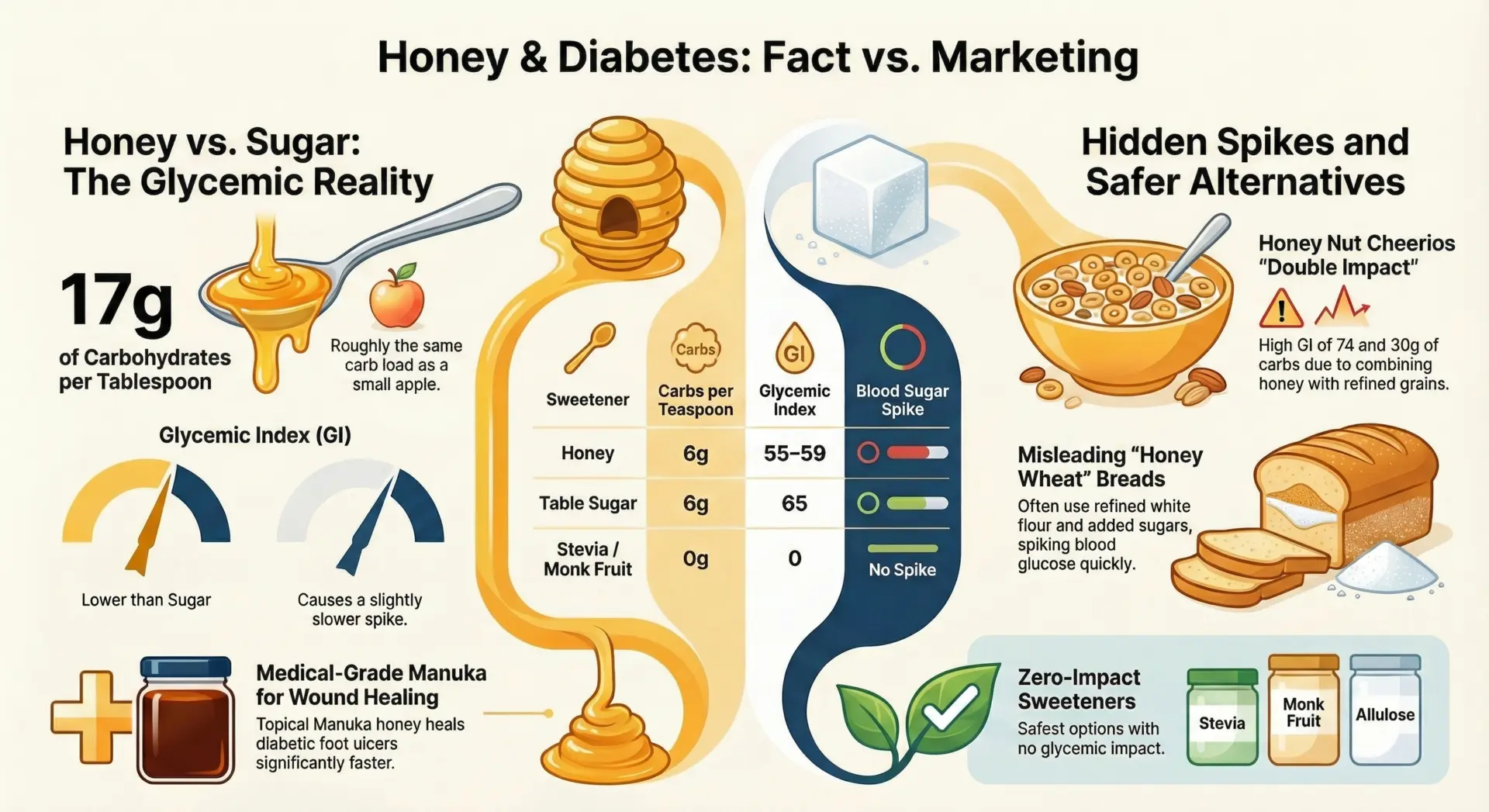

Honey is not significantly better than sugar for people with diabetes. Both sweeteners contain similar carbohydrate loads that affect blood glucose, though honey’s slightly lower glycemic index means it raises blood sugar somewhat more slowly.
There is generally no advantage to substituting honey for sugar in a diabetes eating plan. One tablespoon of honey contains approximately 17 grams of carbohydrates and 64 calories, and the FDA classifies honey as an added sugar, the same category as table sugar.
That said, honey does have a more complex composition than refined sugar. It contains fructose and glucose in ratios that vary by floral source, along with trace amounts of vitamins, minerals, and antioxidants that table sugar lacks entirely. For people whose diabetes is well-controlled and who want to use honey occasionally, the key is treating it exactly like any other carbohydrate source: measure it, count it, and adjust portions accordingly.
TL;DR
- Honey contains 17 grams of carbohydrates per tablespoon with a glycemic index of 55 to 59, which is lower than table sugar’s GI of 65.
- People with diabetes can eat honey in small amounts, but it still raises blood sugar and should be counted toward daily carbohydrate limits.
- Raw Manuka honey offers the lowest GI among common varieties (around 54) along with antibacterial properties useful for wound healing.
- Honey Nut Cheerios pack 30 grams of carbs per cup with a GI of 74, making them a poor breakfast choice for blood sugar management.
- Stevia and monk fruit remain the safest sweetener options with zero carbs and no glycemic impact.
Short answer: honey equals sugar, but with slightly better glycemic impact
The numbers tell a straightforward story. Honey contains 17 grams of carbohydrates per teaspoon with a glycemic index between 55 and 59, depending on the variety. Table sugar has 16 grams of carbs per teaspoon with a GI of 65. Stevia and monk fruit have zero carbs and a GI of zero.
Disclaimer: This article is for informational purposes only and does not constitute medical advice. Always consult your healthcare provider or registered dietitian before making changes to your diabetes management plan.
According to research published in Oxidative Medicine and Cellular Longevity, honey causes a lower rise in plasma glucose levels compared to dextrose in diabetic patients, though both still raise blood sugar substantially.
| Sweetener | Carbs/Tsp | Glycemic Index | Blood Sugar Spike |
| Honey | 17g | 55-59 | +40-50 mg/dL |
| Table Sugar | 16g | 65 | +50-60 mg/dL |
| Stevia | 0g | 0 | No spike |
A clinical trial from Iran found that consuming 50 grams of honey daily worsened glycemic control in type 2 diabetes patients, as measured by HbA1c levels. The bottom line: count honey carbs like sugar. There is no special pass for diabetes management.
Honey blood sugar impact: the numbers
One teaspoon of honey (about 7 grams) delivers roughly 6 grams of carbohydrates. One tablespoon (21 grams) contains approximately 17 grams of carbs, which is about 80% of the carbohydrates in a small apple. For someone with type 2 diabetes and insulin resistance, this can cause a blood glucose rise of 40 to 60 mg/dL within one to two hours.
According to WebMD, honey can increase blood glucose levels by 30 to 60 percent within an hour of consumption.
| Dose | Carbohydrates | Safe Frequency |
| 1 teaspoon | 6g | 2-3 times per week |
| 1 tablespoon | 17g | Occasional, not daily |
| Honey packet | 10g | Cover with meal bolus |
For insulin users taking Novolog or similar rapid-acting insulin, pre-bolusing 15 minutes before consuming honey helps blunt the spike. Those using continuous glucose monitors should watch the two-hour postprandial reading carefully. Pairing honey with fiber-rich or protein-rich foods can slow glucose absorption and reduce the overall blood sugar spike.
Which honey is best for diabetics? Raw beats processed
The glycemic index of honey varies considerably based on its floral source and processing. Acacia honey has the lowest GI among common varieties at around 32 to 35, while wildflower honey falls in the 40 to 50 range, and clover honey sits at 50 to 55. According to the European Journal of Clinical Nutrition, raw honey produces a smaller blood glucose response compared to pasteurized honey.
| Type | GI | Antioxidants | Diabetic Rating |
| Raw Manuka | 54 | Highest | Best option |
| Raw Acacia | 32-35 | Moderate | Lowest GI option |
| Raw Clover | 50-55 | High | Good |
| Processed/Blended | 58-65 | Low | Avoid |
Manuka honey with UMF 10+ rating offers a lower GI plus antibacterial properties that are useful for wound healing. Raw local honey contains pollen-specific antioxidants. Store brands, particularly those mixed with high-fructose corn syrup, should be avoided. Check the label for “raw, unfiltered” to ensure a lower glycemic impact.
Is Manuka honey good for diabetics?
Manuka honey deserves special attention for people with diabetes, though not because of blood sugar effects. The FDA has approved medical-grade Manuka honey for wound treatment, and its antibacterial properties make it particularly useful for diabetic foot ulcers and slow-healing wounds.
A randomized trial published in the International Wound Journal found that Manuka honey-impregnated dressings healed diabetic foot ulcers in an average of 31 days, compared to 43 days for conventional dressings.
The study also found that 78% of honey-treated ulcers were infection-free within one week, versus 35% in the conventional treatment group. Manuka honey contains methylglyoxal (MGO), which gives it stronger antibacterial activity than regular honey and makes it effective against antibiotic-resistant strains like MRSA.
For dietary use, Manuka honey has a GI of around 54, similar to other raw honeys, and still contains 17 grams of carbohydrates per tablespoon. People with diabetes who want to use Manuka honey should treat it the same as any other honey for blood sugar management, but may find additional benefits for wound care when used topically under medical supervision.
Honey Nut Cheerios: a poor breakfast choice for diabetics
Honey Nut Cheerios combine two blood sugar challenges: added honey sweetener and refined grain carbohydrates. One cup (37 grams) contains 30 grams of carbohydrates, including 12 grams of added sugar, with a glycemic index of 74.
| Cereal | Carbs/Cup | Sugar | OK for Diabetes? |
| Honey Nut Cheerios | 30g | 12g | No |
| Original Cheerios | 20g | 1g | Maybe (small portion) |
| Steel Cut Oats | 27g | 1g | Yes |
The honey coating on these cereals, combined with refined grain carbohydrates, creates a double glycemic impact. If you must eat Honey Nut Cheerios, limit yourself to half a cup maximum, pair it with protein such as Greek yogurt or eggs, and plan for a larger insulin bolus if you use rapid-acting insulin.
Honey wheat bread: misleading “healthy” label
Honey wheat bread sounds healthier than white bread, but the name is often more marketing than substance. One slice (38 grams) typically contains 13 to 26 grams of carbohydrates depending on the brand, with 5 to 8 grams coming from added honey and sugars. The glycemic index ranges from 65 to 75, which falls into the high category and causes blood sugar to rise quickly, similar to white bread.
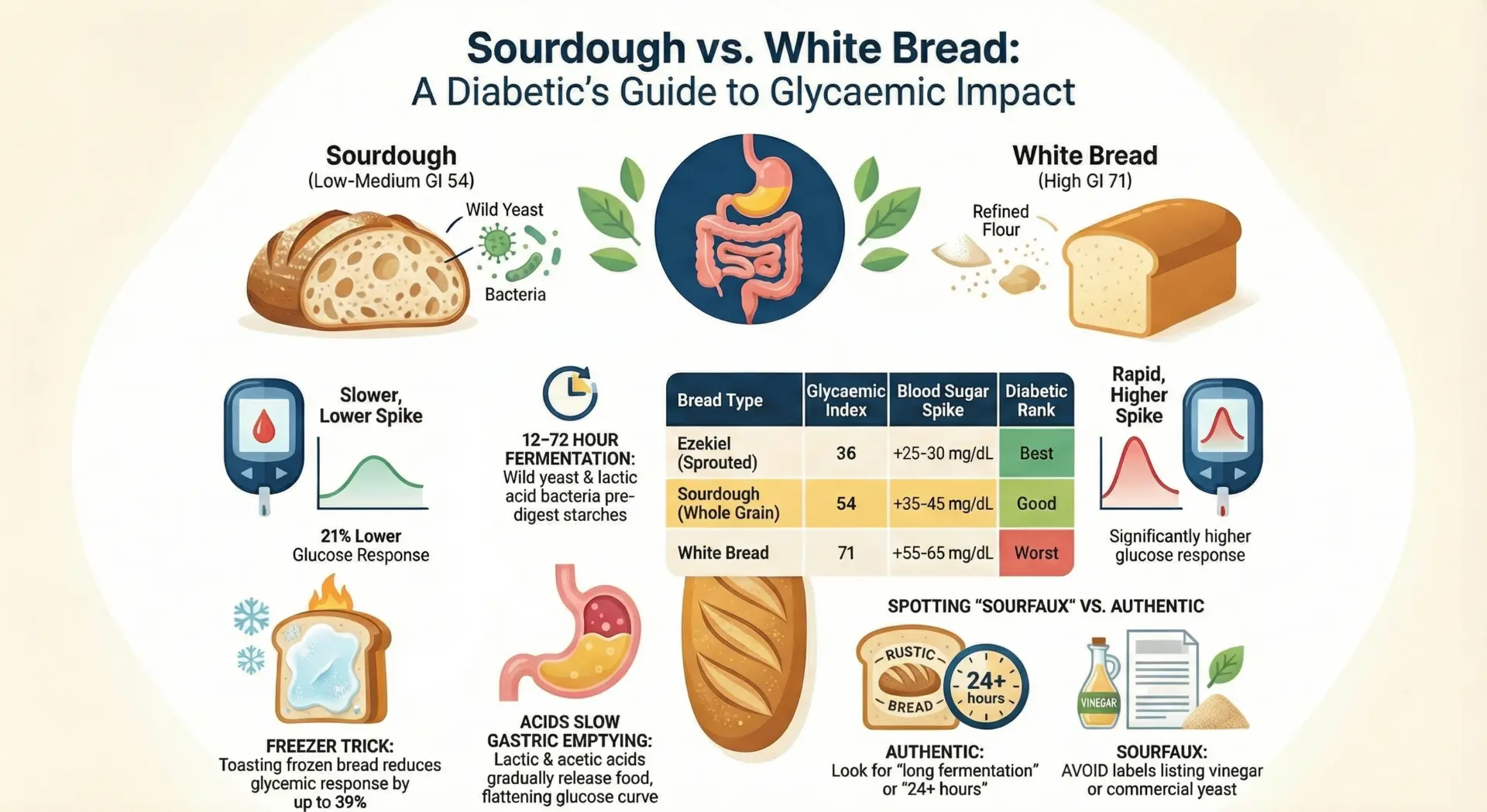
Most commercial honey wheat breads use refined wheat flour as their primary ingredient, not whole wheat flour. The small amount of honey added for sweetness does not provide meaningful nutritional benefits that would offset the blood sugar impact. True whole grain bread should list “100% whole wheat” or “whole grain” as the first ingredient and contain at least 3 grams of fiber per slice with less than 10 grams of net carbs. Sprouted grain breads and whole grain sourdough are better options for people managing diabetes, as the fermentation process in sourdough reduces glycemic response.
Better sweetener alternatives for diabetics
If blood sugar control is the priority, several sweeteners outperform honey without the carbohydrate load.
| Sweetener | Carbs/Tsp | GI | Daily Limit |
| Stevia | 0g | 0 | No limit |
| Monk Fruit | 0g | 0 | No limit |
| Allulose | 0.4g | 0 | No limit |
| Raw Honey | 6g | 55 | 1 tsp/meal |
For a diabetes-friendly breakfast, steel cut oats sweetened with stevia and topped with nuts provides 27 grams of carbs with a GI of around 55, which is steadier than cereal. The fiber in oats slows digestion and helps prevent the sharp spikes that processed cereals cause.
Safe honey rules for Ozempic and Mounjaro users
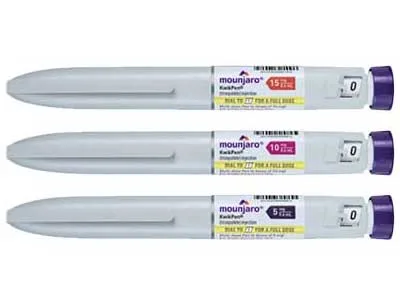
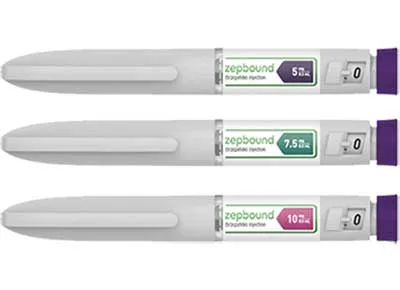
People taking GLP-1 agonists like semaglutide (Ozempic, Wegovy) or tirzepatide (Mounjaro, Zepbound) face additional considerations with honey. These medications slow gastric emptying, which can cause unpredictable blood sugar spikes after eating, including with honey. The appetite suppression these drugs produce also makes it easier to consume too much honey relative to other food intake.
The delayed absorption means standard insulin timing may not work. Those using continuous glucose monitors should extend their monitoring window and watch the two-hour postprandial reading carefully. Pre-bolusing may need to be extended to 20 minutes rather than the typical 15 minutes to account for slower digestion.
If you use GLP-1 medications and want to include honey in your diet, limit yourself to 1 teaspoon maximum, always pair it with protein or fat to further slow absorption, and track your glucose response over several hours to understand your individual pattern.
The antioxidant question: does honey have benefits for diabetics?
Honey does contain polyphenols and flavonoids with antioxidant and anti-inflammatory properties. Research published in Oxidative Medicine and Cellular Longevity suggests these compounds may help reduce oxidative stress, which plays a role in diabetes complications. Darker honeys like buckwheat and manuka contain higher antioxidant levels than lighter varieties.
A 2022 systematic review in Nutrition Reviews found that some types of honey slightly lowered participants’ fasting blood sugar, though results were mixed and study sizes were small. Another meta-analysis suggested that 10 grams of honey daily (about half a tablespoon) may positively influence HbA1c when substituted for simple sugars, though researchers cautioned that higher amounts had adverse effects on blood glucose and triglycerides.
Disclaimer: This information is intended for general knowledge and informational purposes only and does not constitute medical advice. Always consult with a healthcare professional for personalized guidance.
Written by the Pandameds.com Editorial Team
Our content is created by pharmacy-trained researchers and healthcare specialists and rigorously reviewed by a diverse panel of authentic experts from the pharmaceutical and healthcare fields. This collaborative review process ensures that every article meets the highest standards of medical accuracy, reliability, and relevance.
- ✅ Authored by pharmacy-trained professionals
- 🔍 Reviewed by multiple verified experts in the pharmaceutical and healthcare niche
- 💊 Based on trusted sources including FDA, Health Canada, and peer-reviewed clinical studies
- 🔄 Regularly reviewed and updated every 90 days to maintain accuracy and trustworthiness
About Pandameds.com
Pandameds.com offers a range of weight loss medications at an affordable price.
Fast, Reliable Shipping to the USA!
Affordable Prescription Meds From Canada




Join our mailing list for exclusive promos, curated health content & more.
Frequently Asked Questions
Can diabetics eat honey?
Yes, in small amounts. One teaspoon contains approximately 6 grams of carbohydrates. This should be counted toward daily carbohydrate intake just like any other sugar source. The American Diabetes Association recommends limiting added sugars, including honey, to 1 tablespoon per day for women and 2 tablespoons for men as part of an overall healthy diet. Always consult your doctor or dietitian before adding honey to your meal plan.
Is Manuka honey good for diabetics?
Manuka honey has the same blood sugar impact as other raw honeys, with a GI of around 54 and 17 grams of carbs per tablespoon. Its advantage lies in wound healing rather than glycemic control. The FDA has approved medical-grade Manuka honey for wound treatment, and clinical trials show it heals diabetic foot ulcers faster than conventional dressings. For eating, treat it like any other honey.
Are Honey Nut Cheerios good for diabetics?
No. One cup contains 30 grams of carbohydrates and 12 grams of added sugar with a glycemic index of 74. This combination of honey sweetener and refined grains causes blood sugar spikes of 80 to 100 mg/dL. Steel cut oats or plain Cheerios with added nuts and berries are better breakfast options.
Can diabetics eat Honey Nut Cheerios?
Only in very small portions with careful planning. Limit to half a cup maximum (15 grams of carbs), always pair with protein such as Greek yogurt or eggs, and account for the carbohydrates in your meal bolus if you use insulin. For most people with diabetes, this cereal represents a poor use of their carbohydrate budget.
Related Blog Posts
Call Us Today!
If you have any questions, please email our support team at support@pandameds.com or call us toll-free at 1-888-862-1210.