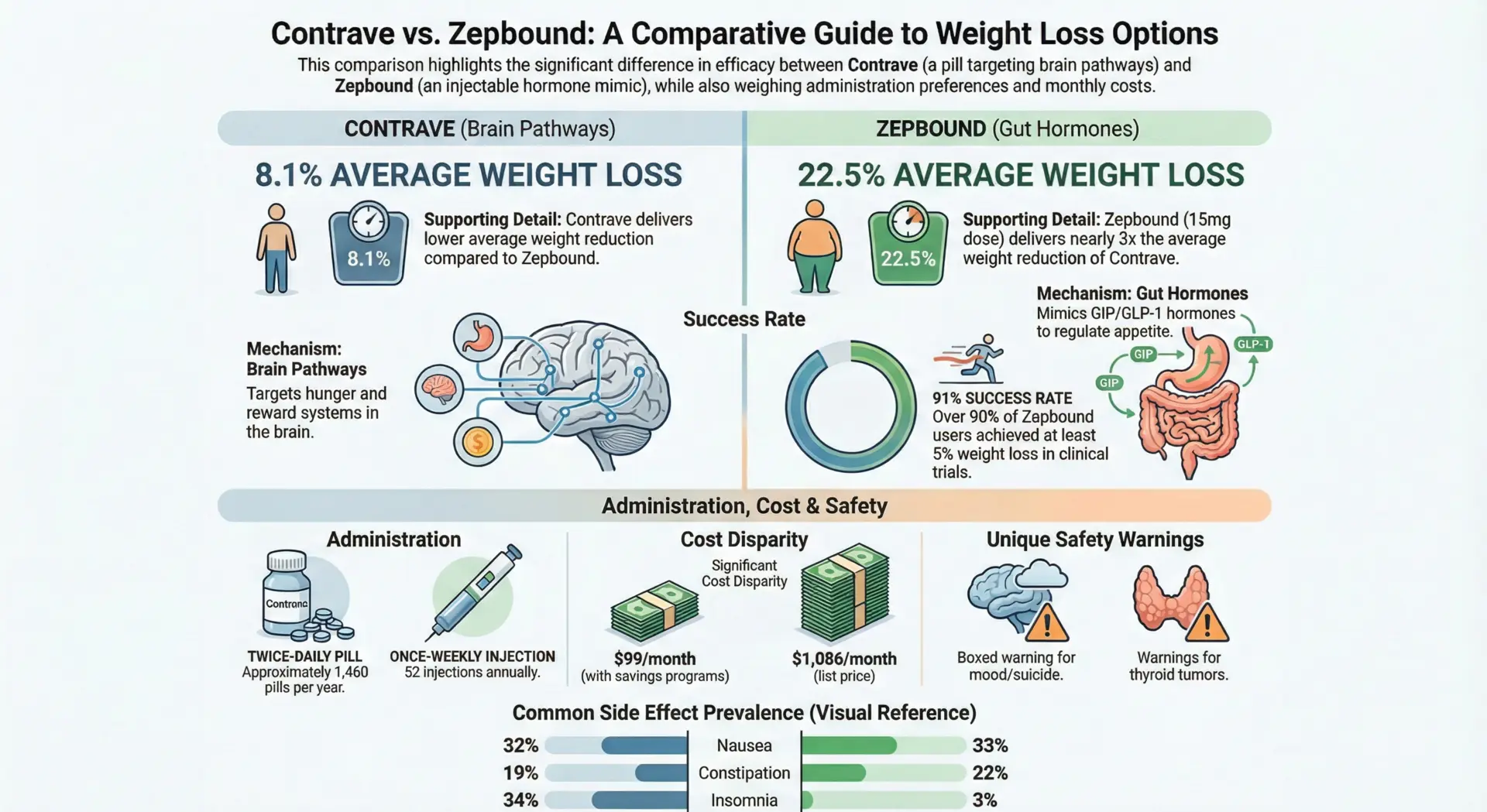

Zepbound (tirzepatide) produces approximately 22.5% average total body weight loss at the maximum 15 mg dose over 72 weeks, according to the SURMOUNT-1 clinical trial published in the New England Journal of Medicine. Contrave (naltrexone/bupropion) shows an average of 8.1% total body weight loss at the maximum daily dose over 56 weeks, as documented in the FDA prescribing information.
Both weight loss medications are FDA approved for chronic weight management in adults with obesity (BMI ≥30) or overweight (BMI ≥27) with at least one weight related medical condition such as high blood pressure, high cholesterol or type 2 diabetes.
TL;DR: Contrave vs Zepbound Quick Summary
- Zepbound delivers greater average weight loss (22.5% at 15 mg) compared to Contrave (8.1% at maximum dose) in clinical trials.
- Zepbound is a once weekly injection activating dual GIP/GLP-1 receptors to reduce appetite and slow digestion.
- Contrave is a twice daily pill targeting brain pathways to control hunger and food cravings.
- Zepbound costs approximately $1,086/month (list price); Contrave costs $99-$199/month with manufacturer savings programs.
- Both are FDA approved for chronic weight management and require a reduced calorie diet plus increased physical activity.
- You should choose Zepbound for significant weight loss needs and choose Contrave for budget-friendly options or if you prefer pill form.
Mechanism Comparison: How They Work
Contrave and Zepbound use entirely different mechanisms to support weight management.
Contrave is a combination medication containing naltrexone and bupropion that targets brain pathways involved in hunger and reward systems. It works by reducing food cravings and helping manage emotional eating, making it easier to follow a reduced calorie diet. The official Contrave website explains that the exact neurochemical effects are not fully understood, but the combination helps control hunger and reduce appetite.
Zepbound contains the active ingredient tirzepatide, a dual GIP/GLP-1 receptor agonist. This injectable medication mimics natural gut hormones released after eating to influence appetite, slow stomach emptying, slow digestion, and improve blood sugar control. According to Eli Lilly’s clinical data, Zepbound’s action on gut-hormone pathways helps individuals feel fuller longer and reduces food noise and hunger between meals.
| Feature | Contrave | Zepbound |
| Drug Class | Opioid antagonist + Antidepressant | Dual GIP/GLP-1 Receptor Agonist |
| Delivery | Twice daily pill | Once weekly injection |
| Primary Effect | Targets brain pathways for appetite control | Mimics natural gut hormones |
| Average Weight Loss | 5-8% | 16-22.5% |
| FDA Approved | Obesity/Overweight | Obesity/Overweight + OSA |
Clinical Target Populations
Both medications require dose titration, meaning the dose is gradually increased based on patient response to help your body adjust. Choosing between Contrave and Zepbound often depends on your current medications, medical history, and personal or family history of certain conditions.
| Patient Profile | Recommended Therapy |
| Seeking significant weight reduction | Zepbound |
| Managing type 2 diabetes + obesity | Zepbound |
| Struggles with cravings/emotional eating | Contrave |
| Prefers pill form over injection | Contrave |
| Budget-conscious | Contrave |
Weight Loss Results: Clinical Trial Data
Clinical studies have shown that Zepbound produces significantly larger average weight loss compared to Contrave when paired with healthy lifestyle changes. In clinical trials, participants taking Contrave lost an average of 8.1% of their total body weight over 56 weeks at the maximum daily dose. The PMC review of Contrave trials shows weight loss ranged from 3.7% to 8.1% depending on the study protocol.
Zepbound has shown substantially greater average weight loss in clinical trials. At the 15 mg maintenance dose, participants achieved 22.5% average body weight reduction over 72 weeks. Even at the lower 5 mg dose, participants achieved 16% average total body weight loss, according to Zepbound’s clinical data. Additionally, 91% of adults taking Zepbound 15 mg achieved clinically meaningful weight loss of 5% or more.
| Metric | Contrave | Zepbound | Difference |
| Average weight loss (max dose) | 8.1% | 22.5% | ~2.8x greater |
| Trial duration | 56 weeks | 72 weeks | – |
| Achieved ≥5% loss | 36-57% | 89-91% | ~1.6x more |
Note: Weight loss results from Contrave and Zepbound will vary from person to person due to factors including nutrition, physical activity, environment, medical history, and other medications.
Cost Analysis 2026 – Monthly Pricing Comparison
Most insurance plans do not cover weight loss medications, which can significantly impact monthly costs for both Contrave and Zepbound. According to Eli Lilly’s pricing information, Zepbound has a list price of $1,086 per month for prefilled pens. However, Zepbound savings programs offer eligible individuals with commercial insurance copays as low as $25/month, while single dose vials are available for $299-$449 through LillyDirect.
Contrave is more affordable, with the Contrave savings program offering eligible patients $99 per month with free home delivery. Without savings programs, Contrave typically costs between $99 and $199 per month with manufacturer offers-substantially lower monthly costs than Zepbound.
| Cost Factor | Contrave | Zepbound |
| List Price | ~$300-400/month | $1,086/month |
| Pandameds.com | $444.58 | $559.99 |
| With Savings Program | $99/month | $25-$499/month |
| Generic Available | Yes | No |
Side Effects Profile
Both Contrave and Zepbound can cause nausea and constipation as common side effects. According to the FDA label for Contrave, Contrave may cause side effects including nausea, constipation, headache, insomnia, dry mouth, and increased blood pressure. Contrave carries a boxed warning for a rare risk of suicidal thoughts and behaviors due to the presence of bupropion. Mood and blood pressure should be monitored closely while on Contrave, and patients should notify their healthcare provider right away if they experience any concerning side effects.
The most common side effects for Zepbound include nausea and constipation, similar to Contrave. Per the Zepbound prescribing information, gallbladder disease and pancreatitis are potential side effects. Zepbound may increase the risk of thyroid tumors, including medullary thyroid carcinoma, and is contraindicated if there is a personal or family history of medullary thyroid carcinoma or Multiple Endocrine Neoplasia syndrome type 2.
| Side Effect | Contrave | Zepbound |
| Nausea | 32% | 33% |
| Constipation | 19% | 22% |
| Headache | 28% | 14% |
| Insomnia | 34% | 3% |
Important: Contrave should not be used if there is a history of seizures or eating disorders. Avoid high fat meals while taking Contrave to prevent increased drug exposure.
Dosing & Administration
Contrave is available in pill form as a daily pill taken twice daily. The dosing schedule involves gradual titration from lower doses to the full dose of two tablets twice daily (32 mg naltrexone/360 mg bupropion) over four weeks. Zepbound is an injectable medication administered as a once weekly injection using prefilled pens or single dose vials. The titration period for Zepbound extends 20 weeks to reach the maintenance dose.
| Administration | Contrave | Zepbound |
| Doses/Year | ~1,460 pills | 52 injections |
| Titration Period | 4 weeks | 20 weeks |
| Storage | Room temperature | Refrigerate |
Eligibility & Contraindications
Contrave is FDA approved for weight loss in individuals with a body mass index of 30 or higher, or 27 or higher with one or more weight-related comorbidities. Zepbound is FDA approved for weight loss in patients with obesity or overweight with at least one weight-related comorbidity. Zepbound is also approved for moderate-to-severe obstructive sleep apnea in individuals with obesity.
Both medications have specific eligibility requirements and safety considerations that your healthcare provider will review before prescribing. Even if you have obesity or overweight, Zepbound and/or Contrave may not be safe choices depending on your health history and current medications. Contrave should not be taken with a monoamine oxidase inhibitor. Both Contrave and Zepbound require a reduced calorie diet and increased physical activity to be effective for long-term weight management.
Disclaimer: This information is intended for general knowledge and informational purposes only and does not constitute medical advice. Always consult with a healthcare professional for personalized guidance.
Written by the Pandameds.com Editorial Team
Our content is created by pharmacy-trained researchers and healthcare specialists and rigorously reviewed by a diverse panel of authentic experts from the pharmaceutical and healthcare fields. This collaborative review process ensures that every article meets the highest standards of medical accuracy, reliability, and relevance.
- ✅ Authored by pharmacy-trained professionals
- 🔍 Reviewed by multiple verified experts in the pharmaceutical and healthcare niche
- 💊 Based on trusted sources including FDA, Health Canada, and peer-reviewed clinical studies
- 🔄 Regularly reviewed and updated every 90 days to maintain accuracy and trustworthiness
About Pandameds.com
Pandameds.com offers a range of weight loss medications at an affordable price.
Fast, Reliable Shipping to the USA!
Affordable Prescription Meds From Canada




Join our mailing list for exclusive promos, curated health content & more.
Frequently Asked Questions
Is Zepbound better than Contrave for weight loss?
Yes, for average weight loss results, Zepbound demonstrates superior efficacy-approximately 2.8x greater average weight loss than Contrave in clinical trials. However, Contrave weight loss results may be sufficient for many patients and offers advantages in cost and administration.
Can I take Contrave and Zepbound together?
There is no clinical data supporting combination use. Both medications can cause nausea and abdominal pain, and combining them may increase side effect risk. Consult your healthcare provider about the safest approach for your weight loss journey.
Can Zepbound cause low blood sugar?
Zepbound can improve blood sugar control and may cause low blood sugar in patients also taking insulin or insulin secretagogues. Your healthcare provider may need to adjust other diabetes medications when starting Zepbound.
Related Blog Posts
Call Us Today!
If you have any questions, please email our support team at support@pandameds.com or call us toll-free at 1-888-862-1210.