
In most circumstances, it is illegal for Americans to import prescription drugs from another country, including Canada. The Federal Food, Drug, and Cosmetic Act (FD&C Act) prohibits the importation of unapproved drugs into the United States, and the FDA generally enforces this prohibition.
However, the practical reality in 2026 is more nuanced: the FDA exercises enforcement discretion for small personal-use shipments, and new state-level importation programs have created a legal wholesale pathway.
The short answer: buying prescription drugs from Canada as an individual American is technically a federal misdemeanor, but the FDA rarely enforces it for personal quantities under a 90-day supply.
State importation programs authorized under Section 804 of the FD&C Act like Florida’s offer a fully legal alternative for eligible consumers.
| Legal Status | Individuals | State Programs |
| Federal | Illegal (discretion applied) | Legal (SIP authorized) |
| Customs | <90 days personal OK | Pharmacy bulk import |
TL;DR – Summary
- Technically, it is illegal under federal law for individual Americans to import prescription drugs from Canada.
- However, the FDA’s Personal Importation Policy uses enforcement discretion to generally allow shipments of a 90-day or less supply for personal use and seizure rates remain below 0.1%.
- Meanwhile, state-level Section 804 Importation Programs (SIPs) provide a fully legal wholesale channel.
- Florida became the first state to receive FDA authorization in January 2024, and its program has been extended through May 2026.
- Prescription drugs in Canada can cost 25–50% less than in the U.S. thanks to government price controls by the Patented Medicine Prices Review Board (PMPRB).
- To order safely, Americans should only use CIPA-certified Canadian pharmacies that require a valid prescription or through a trusted prescription referral service that sources medication from Canadian pharmacies.
Federal Law: Technically Illegal for Individuals
Under Section 801 of the FD&C Act, importing prescription drugs that have not been approved by the FDA is a federal violation. The FDA’s official guidance states that “in most circumstances, it is illegal for individuals to import drugs or devices into the United States for personal use.” Unintentional violations are classified as misdemeanors under 21 USC § 333, carrying penalties of up to one year in prison and a $1,000 fine.
However, the FDA has a longstanding Personal Importation Policy (PIP), documented in the FDA Regulatory Procedures Manual, which outlines conditions under which officials may use enforcement discretion and allow personal shipments of prescription drugs from Canada. Under this policy, the FDA may permit importation when:
- The drug is for a personal use quantity (generally a 90-day supply or less)
- The medication is for a serious condition for which effective treatment may not be available domestically
- The drug does not represent an unreasonable risk to the individual
- The individual provides the name and address of a licensed healthcare provider supervising their treatment, or affirms in writing that the product is for personal use
- The drug is not commercially promoted or advertised to U.S. residents
The reality in 2026 is that an estimated 2.3 million Americans import prescription medications for personal use each year, according to the Regulatory Review (University of Pennsylvania). Customs and Border Protection (CBP) data suggests that fewer than 0.1% of personal-use drug shipments are confiscated.
Controlled substances such as opioids, benzodiazepines, and stimulants are strictly prohibited from importation under all circumstances, and the DEA has separate authority to enforce these restrictions.
Additionally, the Trump Administration’s Section 804 SIP pathway (finalized in an October 2020 FDA final rule) enables states and Indian tribes not individuals to propose wholesale importation programs. A May 2025 Executive Order further directed the FDA to streamline this process.
State Importation Programs: Legal Wholesale Channel
The most significant legal development for prescription drug importation from Canada is the Section 804 Importation Program (SIP), which allows states and Indian tribes to apply to the FDA for authorization to import certain prescription drugs from Canada at lower costs.
On January 5, 2024, Florida became the first state to receive FDA authorization under the SIP pathway. Florida’s plan was developed under the Trump Administration and executed under the Biden Administration. The state’s Agency for Health Care Administration (AHCA) submitted its proposal to import prescription drugs from Canada through a designated Canadian foreign seller (Methapharm Inc.) to a U.S. importer (LifeScience Logistics).
Florida initially seeks to import 14 drugs that treat HIV/AIDS, mental illness, prostate cancer, and urea cycle disorder. Under the SIP pathway, only drugs that are both FDA-approved and Health Canada-approved are eligible for importation.
The state projected savings of up to $183 million per year once fully implemented. As of early 2026, Florida’s program has received a third extension from the FDA through May 6, 2026, though no actual shipments of imported drugs have yet arrived.
| State | Status | Drugs Targeted |
| Florida | Authorized (extended to May 2026) | HIV/AIDS, mental illness, prostate cancer drugs |
| Colorado | SIP proposal submitted | High-cost specialty drugs |
| New Hampshire / Maine | SIP proposals submitted | Various prescription drugs |
| New Mexico | Piloting | Under development |
Several other states, including Colorado, Maine, New Hampshire, and New Mexico, have submitted SIP proposals to the FDA, but none beyond Florida have been approved yet.
In May 2025, the FDA announced enhancements to the SIP process, offering to pre-review proposals and developing a user-friendly tool for states, following President Trump’s April 2025 Executive Order on lowering drug prices. Patients in states with authorized SIPs access imported drugs through state-contracted U.S. pharmacies not by ordering directly from Canada.
Canada Export Limits: Pharmacy Shortages 2026
The Canadian government has expressed serious concern that U.S. importation programs could create drug shortages in Canada. Following the FDA’s approval of Florida’s SIP in January 2024, Health Canada issued a statement referencing provisions in Canada’s Food and Drugs Act that prohibit certain drugs intended for the Canadian market from being sold for consumption outside of Canada if that sale could cause or worsen a drug shortage domestically.
In 2025, export controls were tightened further, especially around high-demand medications like Mounjaro and Ozempic, where supply shortages had already been reported in Canada. Shipments under Florida’s SIP must now also be approved by the Canadian government to confirm that the drugs are surplus and do not create shortages.
For individual Americans ordering from CIPA-certified Canadian pharmacies, this means that legitimate pharmacies continue to serve personal-use orders with savings of 20–40% on brand-name medications. However, pharmacies sourcing from India, the UK, or other non-Canadian origins and marketing themselves as “Canadian” pose a seizure risk and should be avoided, as they may violate Canada’s export regulations and U.S. import laws.
Price Comparison: US vs Canada 2026
A 2024 study by the RAND Corporation, commissioned by the U.S. Department of Health and Human Services (ASPE), found that U.S. prescription drug prices across all drugs are approximately 2.78 times higher than in 33 comparison countries. Brand-name drug prices in the U.S. were at least 3.22 times higher than in peer nations even after adjusting for estimated rebates.
The reason Canada offers substantially lower drug costs is primarily the Patented Medicine Prices Review Board (PMPRB), a federal quasi-judicial body that reviews the prices of patented medicines and can order manufacturers to lower them if deemed excessive.
As of January 1, 2026, the PMPRB’s updated guidelines benchmark Canadian drug prices against 11 other countries notably excluding the United States. Additionally, the pan-Canadian Pharmaceutical Alliance (pCPA) allows provinces and territories to negotiate collectively, further driving prices down.
| Drug | US Cash Price | Canada Price | Savings |
| Trulicity 4.5mg (4 pens) | ~$1,395 | ~$825 CAD (~$600 USD) | ~57% |
| Mounjaro 5mg (4 pens) | ~$1,069 | ~$950 CAD (~$690 USD) | ~35% |
| Ozempic 2mg (3 pens) | ~$936 | ~$750 CAD (~$545 USD) | ~42% |
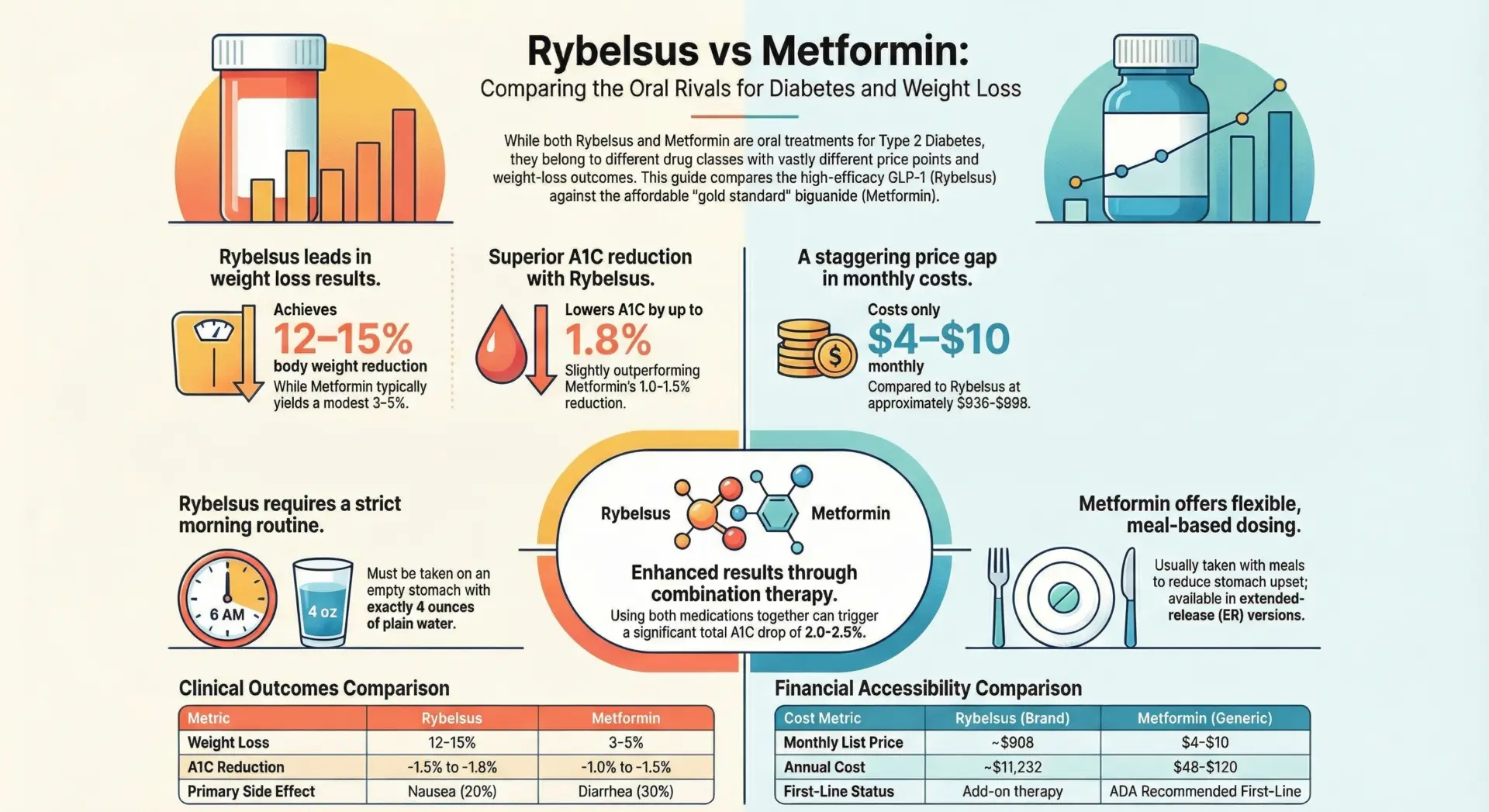
| Rybelsus 14mg (30 tabs) | ~$936 | ~$650 CAD (~$475 USD) | ~49% |
The availability of lower-cost Canadian drugs can also introduce more competition into the U.S. pharmaceutical market, potentially leading to reduced prices for a wider range of medications.
The approval of Canadian drug imports in Florida, for example, is expected to reduce prescription drug costs for state residents while maintaining safety standards through FDA oversight.
Safe Canadian Pharmacies Checklist
Websites claiming to be Canadian pharmacies may be fraudulent. The National Association of Boards of Pharmacy (NABP) has found that approximately 95% of online pharmacy websites are noncompliant with safety standards. To protect yourself, it is mandatory to use reputable, verified Canadian pharmacies. Here is what to look for:
CIPA Certification: The Canadian International Pharmacy Association (CIPA) is the gold standard for verifying legitimate Canadian online pharmacies. Only 51 pharmacy websites currently meet CIPA’s standards. Look for the official CIPA red oval seal on the pharmacy’s website, and verify it using CIPA’s website verification tool.
| Legitimate Pharmacy Signs | Red Flags |
| CIPA seal, .ca domain | .com domain, no prescription required |
| Canadian phone number, licensed pharmacist on staff | India/UK fulfillment addresses |
| Valid prescription required from your doctor | “No Rx Needed” or discount without verification |
| Phone verification call before dispensing | No phone contact, email-only communication |
Key requirements for safe ordering: your prescription must be faxed to the Canadian pharmacy for review by a licensed Canadian pharmacist. A phone verification call (typically 5 minutes) is mandatory.
No controlled substances (such as Adderall, Xanax, or opioids) can be dispensed. Standard shipping is 7–14 days via Canada Post. Individuals should always consult a physician to discuss their medical history and current medications before ordering drugs from Canada.
Customs & Seizure Risks: What Gets Confiscated
Understanding customs risk is essential for any American considering importing prescription medications from Canada. Customs and Border Protection (CBP) evaluates drug shipments at the border, and the FDA personnel review flagged packages on a case-by-case basis.
For personal-use shipments of a 90-day supply or less of non-controlled prescription medications, the practical seizure rate is extremely low well under 0.1%. The FDA typically issues a “Release with Comment,” allowing the medication through while informing the individual that the drug may not be FDA-approved.
Red flags that trigger seizure:
- Commercial quantities (more than a three-month supply)
- Controlled substances (opioids, benzodiazepines, stimulants)
- Unapproved or counterfeit packaging without appropriate labeling
- Origins from India, Mexico, or other non-Canadian countries disguised as Canadian
When a package is seized, the typical process involves a warning letter from the FDA, destruction of the package, and no criminal charges for personal quantities. The individual may be asked to provide a written statement that the medication is for personal use and supply their doctor’s contact information.
The FDA cannot guarantee the safety and effectiveness of drugs imported from Canada that have not been approved for use in the U.S., which is why appropriate labeling and known commercialization of the drug in Canada are important factors.
Step-by-Step: How to Order Legally (Risk-Minimized)
While ordering prescription drugs from a Canadian pharmacy is not technically legal for individuals under federal law, the following steps minimize risk and align with the FDA’s enforcement discretion framework:
Step 1: Choose a CIPA-certified pharmacy. Visit CIPA.com or PharmacyChecker.com to find verified, licensed Canadian pharmacies. Confirm the CIPA seal and .ca domain.
Step 2: Fax your U.S. prescription. Your valid prescription from a licensed healthcare provider is sent to the Canadian pharmacy, where a licensed Canadian pharmacist reviews it. A valid U.S. prescription is always required.
Step 3: Complete phone verification. A pharmacist will call you (typically a 5-minute call) to verify your identity, medical history, and current medications.
Step 4: Pay and await delivery. Payment is typically by Visa or Mastercard. Shipping takes 7–14 days via Canada Post to USPS. Track your package and ensure it is declared as “personal medications.”
Step 5: Keep within limits. Order no more than a 90-day supply per shipment. Medications must not be for resale, and the drug must not be a controlled substance.
Cost example: Trulicity 4.5mg (4 pens) might cost approximately $600 USD from a Canadian pharmacy plus ~$50 shipping, compared to a U.S. cash price of ~$1,395 a savings of roughly $745 per order.
Patient Matrix: Legal vs Practical
The following matrix helps patients understand which route is appropriate for their situation:
| Scenario | Legal Route | Practical Option |
| Urgent need, uninsured | State SIP pharmacy (if in FL) | CIPA-certified Canadian pharmacy direct |
| On Medicare | U.S. GoodRx / Part D | Canada cash pricing for non-covered drugs |
| Controlled substance Rx | U.S. pharmacy only | Illegal to import – no exceptions |
| 90-day supply needed | Canada direct (discretion applied) | Lowest seizure risk |
| Commercial insurance | Use U.S. pharmacy benefits | Compare Canada cash price vs copay |
The Department of Health and Human Services Secretary can terminate access to imported drugs if it is determined that importation is no longer safe or cost-effective.
Consumers should monitor regulatory changes, especially as more states pursue their own SIP applications and as the Trump administration’s most-favored-nation pricing policies continue to evolve.
Disclaimer: This information is intended for general knowledge and informational purposes only and does not constitute medical advice. Always consult with a healthcare professional for personalized guidance.
Written by the Pandameds.com Editorial Team
Our content is created by pharmacy-trained researchers and healthcare specialists and rigorously reviewed by a diverse panel of authentic experts from the pharmaceutical and healthcare fields. This collaborative review process ensures that every article meets the highest standards of medical accuracy, reliability, and relevance.
- ✅ Authored by pharmacy-trained professionals
- 🔍 Reviewed by multiple verified experts in the pharmaceutical and healthcare niche
- 💊 Based on trusted sources including FDA, Health Canada, and peer-reviewed clinical studies
- 🔄 Regularly reviewed and updated every 90 days to maintain accuracy and trustworthiness
About Pandameds.com
Pandameds.com offers a range of weight loss medications at an affordable price.
Fast, Reliable Shipping to the USA!
Affordable Prescription Meds From Canada




Join our mailing list for exclusive promos, curated health content & more.
Frequently Asked Questions
What Canadian drugs can Americans import?
Americans can potentially import non-controlled prescription medications that are both FDA-approved and Health Canada-approved. Controlled substances (such as Adderall, Xanax, and opioids) are strictly prohibited. Biologics, IV drugs, inhaled surgical drugs, and drugs subject to Risk Evaluation and Mitigation Strategies (REMS) are also excluded from importation under the SIP pathway.
Is Florida importing drugs from Canada?
Yes Florida received FDA authorization for its Section 804 Importation Program on January 5, 2024, and has received multiple extensions (the current one runs through May 6, 2026). However, as of early 2026, actual drug shipments have not yet arrived due to additional FDA drug-by-drug approval requirements, Canadian export controls, and logistical challenges. Patients in Florida would access imported drugs through state-contracted pharmacies, not by ordering directly from Canada.
What are the risks of buying from a Canadian pharmacy online?
The seizure rate for compliant personal-use orders is below 0.1%. The primary risk is using fraudulent pharmacy websites that sell counterfeit or unsafe products. To mitigate this risk, only use CIPA-certified pharmacies that require a valid prescription, display the CIPA seal, and have a Canadian phone number. The NABP Safe Site Search Tool can also help identify safe online pharmacies.
Related Blog Posts



Call Us Today!
If you have any questions, please email our support team at support@pandameds.com or call us toll-free at 1-888-862-1210.