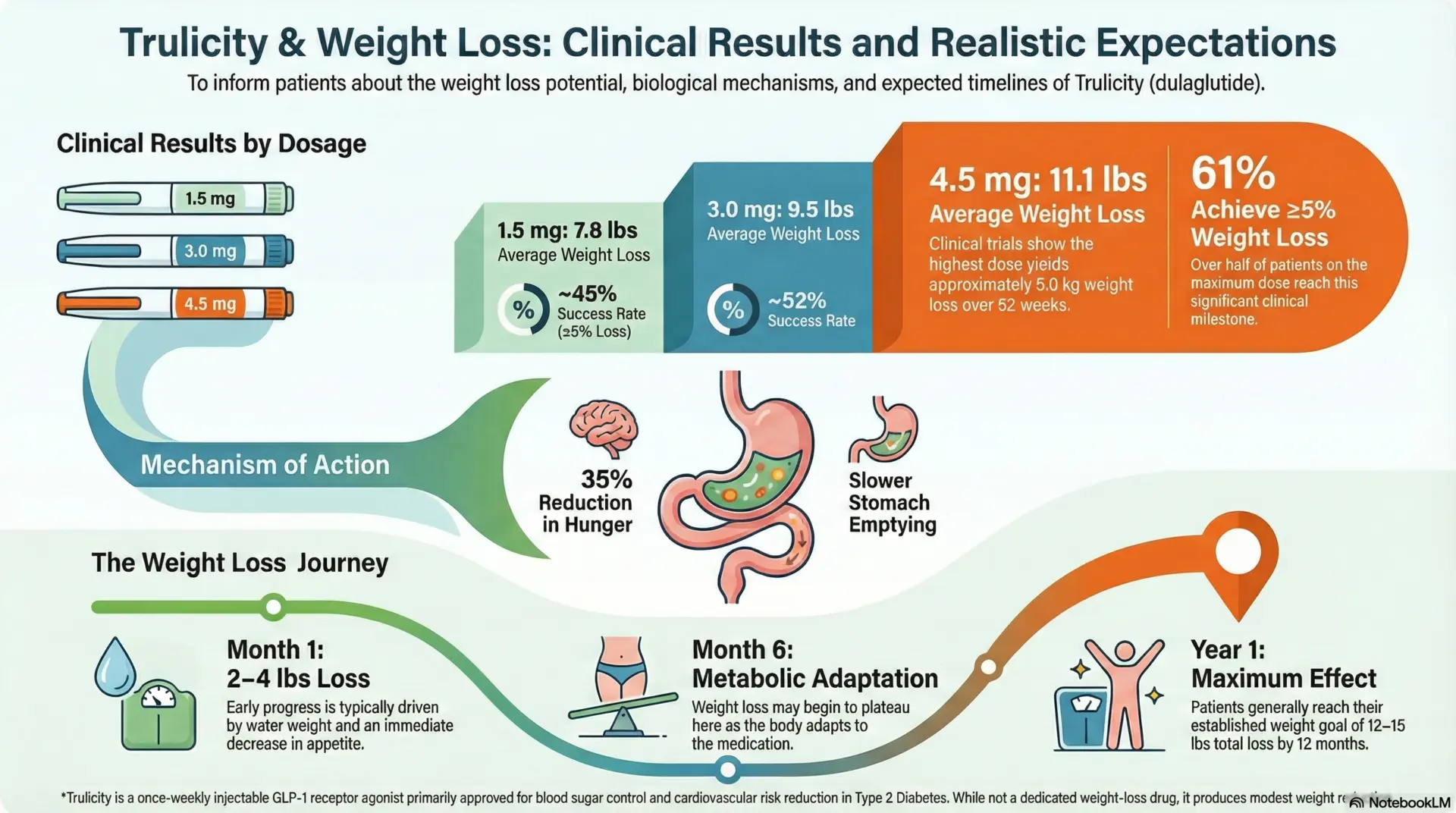

Yes, Trulicity (dulaglutide) does cause weight loss in most patients, producing a modest 4-7% body weight reduction in type 2 diabetes patients through GLP-1 mediated appetite suppression and slowing digestion.
Trulicity is a once-weekly injectable medication belonging to the GLP-1 receptor agonists class. It works by mimicking the natural GLP-1 hormone, which stimulates the pancreas to release insulin when blood sugar is elevated, while also helping to regulate blood sugar levels and decrease appetite.
TL;DR
- Yes, Trulicity (dulaglutide) causes weight loss as a secondary benefit. Clinical trials demonstrate that patients taking the 4.5 mg dose lose an average of 11.1 pounds (4.7 kg) over 52 weeks.
- However, Trulicity is not FDA-approved for weight loss—it is approved for blood sugar control in type 2 diabetes and reducing cardiovascular risk.
- Weight loss occurs through GLP-1 receptor agonist mechanisms that reduce appetite, slow gastric emptying, and promote feelings of fullness.
- If you’re considering Trulicity specifically for weight management without diabetes, consult your healthcare provider about FDA-approved alternatives like Wegovy or Zepbound.
Clinical Trial Results
Multiple randomized controlled trials have established Trulicity’s weight loss effects. The AWARD clinical trial program, sponsored by Eli Lilly, provides the most comprehensive data on how much weight patients can expect to lose with different doses of Trulicity dulaglutide.
AWARD Studies Weight Loss Data
The AWARD-11 trial showed that patients taking the 4.5 mg dose of Trulicity lost an average of 4.7 kg (10.4 lbs) over 36 weeks, with weight loss continuing through 52 weeks to reach approximately 11.1 pounds. This study included 1,842 metformin-treated patients with type 2 diabetes.
According to published research in Diabetes, Obesity and Metabolism, higher dulaglutide doses consistently produced greater weight reduction across all baseline BMI categories.
| Dose | 36-Week Weight Loss | 52-Week Weight Loss | ≥5% Loss Rate | Trial Reference |
| 1.5 mg | -3.1 kg (6.8 lbs) | -7.8 lbs | ~45% | AWARD-11 |
| 3.0 mg | -4.0 kg (8.8 lbs) | -9.5 lbs | ~52% | AWARD-11 |
| 4.5 mg | -4.7 kg (10.4 lbs) | -11.1 lbs | ~61% | AWARD-11 |
Source: AWARD-11 Clinical Trial Data
The AWARD-6 trial compared Trulicity 1.5 mg with liraglutide (Victoza) 1.8 mg over 26 weeks. Trulicity users lost an average of 2.9 kg (6.4 lbs), demonstrating its effectiveness even at lower doses.
The long-term REWIND study followed 9,901 patients over a median of 5.4 years and found that patients taking Trulicity 1.5 mg experienced sustained weight loss of around 1.5 kg (3.3 lbs) compared to placebo, demonstrating that weight loss is maintained over time.
On average, people taking Trulicity can expect to lose between 5 to 10 pounds after several months of use, with higher doses and longer treatment duration resulting in more significant weight loss. The average weight loss observed in clinical trials for patients taking Trulicity is around 5% of their baseline body weight—for a 200-pound patient at the maximum dose, this translates to approximately 10-15 pounds.
How Trulicity Reduces Weight
Trulicity works by mimicking the natural hormone GLP-1 (glucagon-like peptide-1), which plays several key roles in metabolism and appetite regulation. Understanding this mechanism helps explain why Trulicity causes weight loss as a beneficial side effect of diabetes therapy.
GLP-1 Mechanism Comparison
According to research published in the National Library of Medicine, dulaglutide activates GLP-1 receptors to produce multiple effects that support weight loss:
| Effect | How It Works | Impact on Weight |
| Appetite Suppression | Signals satiety to brain receptors | ~35% reduction in hunger |
| Slows Gastric Emptying | Delays stomach emptying | Prolonged fullness after meals |
| Insulin Secretion | Stimulates pancreas to release insulin | Better blood sugar control |
| Reduces Caloric Intake | Decreased appetite leads to eating less | ~300 fewer calories/day |
Trulicity helps lower blood sugar levels by stimulating insulin release when glucose is present, while also blocking glucagon secretion to prevent blood sugar spikes. The medication slows gastric emptying, which helps regulate blood sugar levels after meals and promotes feelings of fullness that support weight management.
Note: Unlike newer dual-agonist medications like Mounjaro (tirzepatide), Trulicity targets only the GLP-1 receptor without additional GIP fat-burning effects. This partly explains why newer medications like Mounjaro may offer more potent A1C reduction and greater weight loss compared to Trulicity.
Month-by-Month Weight Loss Timeline
Based on clinical trial data and real-world outcomes, here’s what to expect when you take Trulicity for weight management:
Expected Progress Milestones
| Timeframe | Average Weight Loss | Plateau Status | Contributing Factors |
| Month 1 | 2-4 lbs | None | Water weight + decreased appetite |
| Month 3 | 6-8 lbs | None | Steady caloric deficit |
| Month 6 | 10-12 lbs | May begin | Metabolic adaptation |
| Year 1 | 12-15 lbs | Established | Maximum effect reached |
Most patients notice decreased appetite and initial weight loss within the first 2-4 weeks. Nausea, one of the most common side effects, generally subsides after the first 2 weeks of treatment but may contribute to early weight loss. To maximize effectiveness, patients should combine Trulicity with healthy lifestyle choices including a balanced diet and regular exercise.
Important: Approximately 15-30% of users may not experience significant weight loss or may even gain weight while using Trulicity. Individual responses vary based on factors including baseline BMI, adherence to lifestyle interventions, and metabolic conditions.
Non-Diabetic Patient Considerations
Trulicity is not FDA-approved for weight loss in non-diabetic patients. However, some healthcare providers may prescribe it off-label for weight management in certain circumstances. Off-label use means using a medication for a purpose not officially approved by regulatory authorities.
BMI-Based Recommendations
| Patient Profile | Expected Weight Loss | Clinical Guidance |
| T2D + BMI 30-35 | 6-8% | Recommended first-line option |
| Non-diabetic BMI >35 | 4-6% | Specialist consult required |
| BMI 25-29.9 | 2-4% | Consider lifestyle changes first |
Off-label protocol requirements: Non-diabetic patients prescribed Trulicity for weight loss should undergo quarterly A1C monitoring, renal function tests, and thyroid monitoring. This is particularly important due to the increased risk of thyroid C-cell tumors observed in rodent studies, though human relevance remains unknown.
According to the FDA prescribing information, Trulicity is contraindicated in patients with a personal or family history of medullary thyroid cancer or Multiple Endocrine Neoplasia syndrome type 2 (MEN 2).
Real-World Before & After Results
Clinical trial data provides robust evidence of Trulicity’s weight loss effects. The AWARD-11 study offers particularly detailed insights into what patients can realistically expect.
AWARD-11 4.5mg Study Cohort (n=1,842)
| Measurement | Start | 52 Weeks | Total Change |
| Weight | 95.7 kg (211 lbs) | ~91 kg (200 lbs) | -4.7 to -5.0 kg |
| BMI | 34.2 kg/m² | ~32.5 kg/m² | -1.7 points |
| HbA1c | 8.6% | 6.8% | -1.8% |
Source: Published AWARD-11 data. Study participants: mean age 57.1 years, 68% female.
These results demonstrate that many patients report moderate weight loss while taking Trulicity, which can be beneficial for those with type 2 diabetes who need both improved blood sugar control and weight management. Patient retention in the study was above 90%, with 88-90% adherence to assigned treatment through 36 weeks.
Trulicity vs Obesity Medications
While Trulicity produces modest weight loss, it’s important to compare it with other diabetes medications and dedicated weight loss medications to understand where it fits in treatment options.
Clinical Effectiveness Comparison
| Medication | Year 1 Loss | FDA Indication | Drug Class | Est. Cost |
| Trulicity | 4-7% | Diabetes + CV Risk | GLP-1 RA | ~$980/mo |
| Wegovy | ~15% | Obesity/Weight Loss | GLP-1 RA | ~$1,350/mo |
| Zepbound | ~21% | Obesity/Weight Loss | Dual GLP-1/GIP | ~$1,100/mo |
| Metformin | 2-4% | Diabetes | Biguanide | ~$10/mo |
Clinical trials show that adults taking Wegovy (semaglutide) lose an average of 35 pounds over 68 weeks, while Saxenda users lose an average of 21 pounds over 56 weeks. Trulicity users lost an average of 11 pounds over 52 weeks in clinical trials—less than dedicated weight loss medications but still clinically meaningful for diabetes care.
Trulicity is considered an older generation GLP-1 medication compared to newer options like semaglutide and tirzepatide. However, Trulicity may be preferred for its simplicity (once-weekly injection), lower cost with insurance, or heart protection benefits compared to other diabetes medications. The REWIND trial demonstrated a significant 12% reduction in major cardiovascular events over 5.4 years.
References
- Frias JP, et al. Efficacy and safety of dulaglutide 3.0 mg and 4.5 mg versus dulaglutide 1.5 mg (AWARD-11)
- Bonora E, et al. Effect of dulaglutide 3.0 and 4.5 mg on weight (AWARD-11)
- Gerstein HC, et al. Dulaglutide and cardiovascular outcomes in type 2 diabetes (REWIND)
- FDA Prescribing Information for Trulicity.
- Smith LL, et al. Trulicity (Dulaglutide): A New GLP-1 Receptor Agonist
- Official Trulicity Clinical Trial Data from Eli Lilly.
Disclaimer: This information is intended for general knowledge and informational purposes only and does not constitute medical advice. Always consult with a healthcare professional for personalized guidance.
Written by the Pandameds.com Editorial Team
Our content is created by pharmacy-trained researchers and healthcare specialists and rigorously reviewed by a diverse panel of authentic experts from the pharmaceutical and healthcare fields. This collaborative review process ensures that every article meets the highest standards of medical accuracy, reliability, and relevance.
- ✅ Authored by pharmacy-trained professionals
- 🔍 Reviewed by multiple verified experts in the pharmaceutical and healthcare niche
- 💊 Based on trusted sources including FDA, Health Canada, and peer-reviewed clinical studies
- 🔄 Regularly reviewed and updated every 90 days to maintain accuracy and trustworthiness
About Pandameds.com
Pandameds.com offers a range of weight loss medications at an affordable price.
Fast, Reliable Shipping to the USA!
Affordable Prescription Meds From Canada




Join our mailing list for exclusive promos, curated health content & more.
Frequently Asked Questions
What are the Trulicity for weight loss reviews?
AWARD trials show 45-61% of patients achieve sustainable weight loss of ≥5% body weight. Real-world outcomes are generally similar to clinical trial results, though individual responses vary significantly.
What is the average weight loss with Trulicity?
Based on clinical trial data, average weight loss is dose-dependent: 4.4% with 1.5 mg and up to 7.2% with 4.5 mg over 12 months, compared to approximately 1.2% with placebo.
What is the Trulicity and weight loss timeline?
Most patients can expect 2-4 lbs in month 1, 6-8 lbs by month 3, and 12-15 lbs by year 1 (maximum effect). Weight loss plateaus typically occur around month 6 as the body adapts metabolically.
What are the non-diabetic considerations for Trulicity?
Non-diabetic patients with BMI >35 may experience 4-6% weight loss when Trulicity is prescribed off-label. This requires specialist supervision with monitoring every 3 months including A1C, kidney problems screening, and thyroid evaluation.
What is the risk of weight regain after stopping Trulicity?
Studies suggest that a significant percentage of patients regain weight within 12 months of discontinuing GLP-1 medications. To achieve sustainable weight loss, patients should establish healthy habits including a balanced diet and regular physical activity during treatment.
What diet recommendations work best with Trulicity?
To maximize effectiveness and promote weight loss, combine Trulicity with a 300-500 calorie deficit, adequate protein intake (1.6g/kg body weight), and resistance training to preserve lean mass. Eating smaller meals and blander foods can help manage nausea and stomach discomfort, especially when starting the medication or increasing the dose.
Related Blog Posts
Call Us Today!
If you have any questions, please email our support team at support@pandameds.com or call us toll-free at 1-888-862-1210.