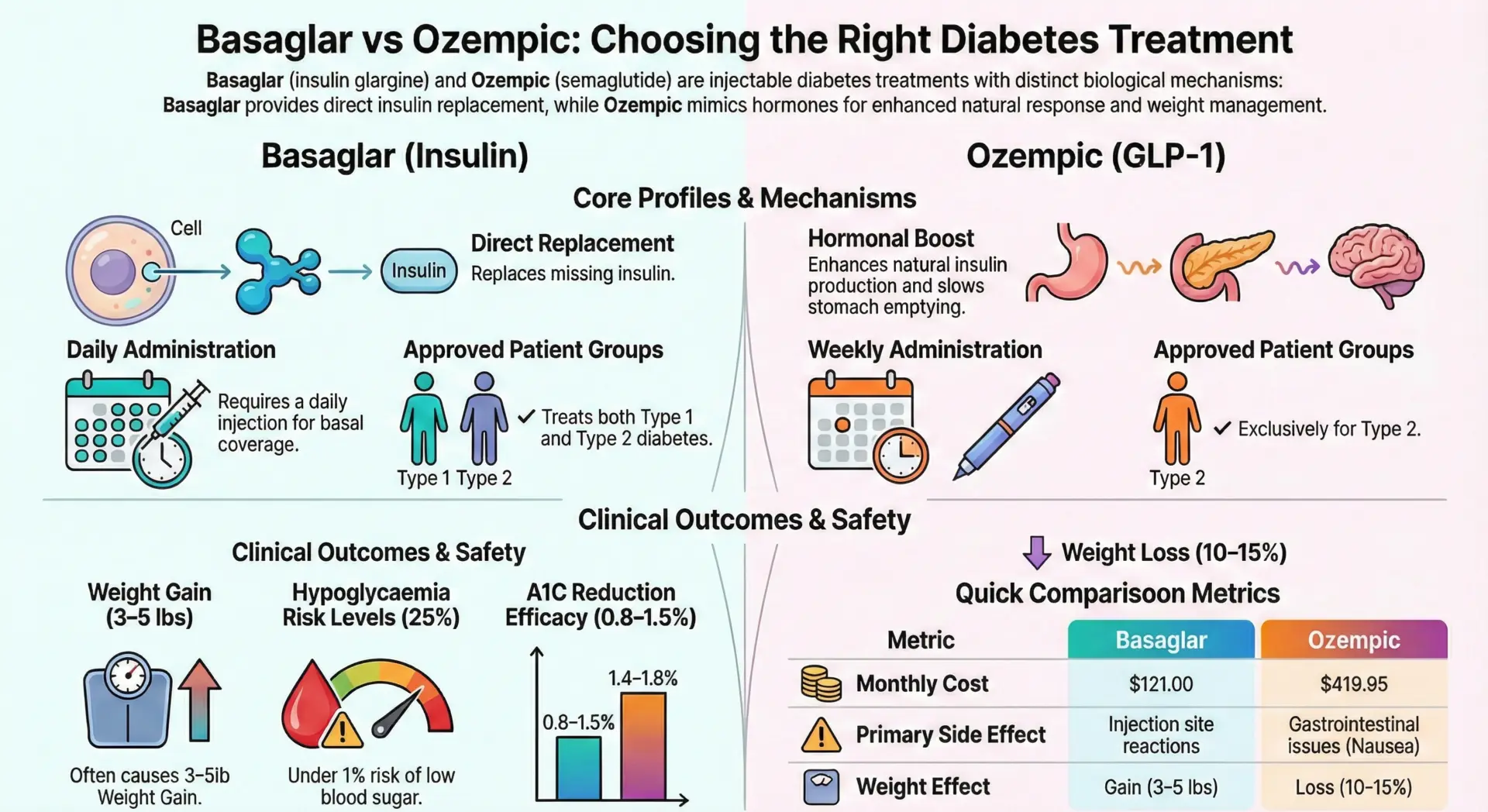
Basaglar and Ozempic represent two fundamentally different approaches to diabetes management. Basaglar – a long-acting insulin, containing insulin glargine, steadily keeps blood sugar levels in check over the course of 24 hours, just by topping up the natural insulin that your body’s already producing.
Ozempic – a GLP 1 receptor agonist containing semaglutide, however works in a few different ways: it enhances your body’s own production of insulin, reduces the liver’s production of glucose & slows the rate at which stomach empties allowing for more even blood sugar levels after eating.
Which one to choose depends on your individual diabetes diagnosis, current blood sugar levels, weight loss goals & what you’re trying to achieve overall with your treatment.
While Basaglar can be prescribed for both type 1 and type 2 diabetes in adults and also in children aged 6+, Ozempic, however, is only approved for type 2 diabetes & isn’t an option for people with type 1 diabetes
TL;DR
- Basaglar (insulin glargine) and Ozempic (semaglutide) treat type 2 diabetes through completely different mechanisms
- Basaglar is a long acting basal insulin injected daily that directly replaces insulin your body lacks while Ozempic is a GLP 1 receptor agonist injected weekly that enhances your body’s natural insulin production
- Key differences:
- Ozempic promotes weight loss (10-15%) while Basaglar often causes weight gain
- Ozempic reduces A1C by 1.4-1.8% vs Basaglar’s 0.8-1.5%; hypoglycemia risk is much lower with Ozempic (<1%) than with Basaglar (25%)
- Basaglar works for both type 1 and type 2 diabetes; Ozempic is type 2 diabetes only. Many patients use both medications together under medical supervision.
Basaglar vs Ozempic: Core Differences
| Metric | Basaglar (Insulin) | Ozempic (GLP-1) |
| Drug Class | Long acting basal insulin | GLP 1 receptor agonist |
| Dosing Frequency | Once daily injection | Once weekly injection |
| A1C Reduction | 0.8 to 1.5% | 1.4 to 1.8% |
| Weight Effect | Weight gain (3 to 5 lbs) | Weight loss (10 to 15%) |
| Hypoglycemia Risk | Moderate (25%) | Very low (<1%) |
| Diabetes Types | Type 1 and Type 2 | Type 2 only |
The fundamental difference between these diabetes medications lies in their mechanisms. Basaglar directly replaces insulin that your body cannot produce in sufficient quantities mimicking the body’s natural insulin secretion to help control blood sugar levels throughout the day. This basal insulin approach is essential for patients whose pancreas cannot produce enough insulin.
Ozempic works differently by enhancing your body’s own insulin production when blood glucose levels rise while also reducing glucose production in the liver. Additionally, Ozempic slows gastric emptying which helps reduce post meal blood sugar spikes and promotes feelings of fullness contributing to weight loss.
This dual approach is the reason Ozempic is a good fit for type 2 diabetes patients that are struggling with both getting their blood sugars under control and managing their weight.
Combination Therapy Benefits
According to the American Diabetes Association’s 2026 Standards of Care, many type 2 diabetes patients benefit from using both GLP 1 receptor agonists and basal insulin together. Clinical trials have shown that when you add a GLP 1 RA to basal insulin treatment, you can cut down your insulin needs by as much as 20-30%, while also keeping your blood sugar levels under control consistently.
However, using both Basaglar and Ozempic together does bring with it the added risk of low blood sugar – and you’ll need to keep a close eye on your blood sugar levels with regular monitoring.
Weight Loss: Ozempic vs Basaglar Results
| Therapy | Typical Weight Change |
| Basaglar | 3-5 lbs (weight gain) |
| Ozempic 1mg | -10 to 14 lbs (loss) |
| Ozempic 2mg | -12 to 16 lbs (loss) |
| Combination | Variable (less gain) |
Weight management represents one of the most significant differences between Basaglar and Ozempic. In clinical studies, the results show people taking Basaglar were steadily gaining weight while those on Ozempic were losing weight consistently. The SUSTAIN clinical trial program demonstrated that Ozempic users lost an average of 7.7 lbs more than placebo with the 1mg dose and even more with higher doses.
Ozempic promotes weight loss by reducing appetite and slowing gastric emptying which helps patients feel fuller longer and naturally reduces food intake. This makes Ozempic particularly advantageous for patients managing both blood sugar levels and body weight.
Insulin Weight Gain Mechanism
Basaglar can lead to weight gain as a common side effect due to insulin’s fat storing properties. Insulin signals the body to store sugar as fat when blood glucose levels are controlled which can increase body weight over time. This happens with any kind of insulin therapy – people tend to gain weight.
Ozempic is different – its effect is to shut down the body’s ‘store glucose as fat’ mechanism and at the same time reduce the urge to eat. It’s a two pronged approach to helping people get a handle on their weight.
A1C Control Comparison
| Starting A1C | Basaglar Reduction | Ozempic Reduction |
| 8.0-9.0% | -0.8 to 1.4% | -1.4 to 1.6% |
| 9.0-10.0% | -1.0 to 1.6% | -1.8 to 2.1% |
| Hypo Risk | Moderate to High | Minimal (<1%) |
Both Basaglar and Ozempic effectively lower blood sugar levels but they achieve this through different pathways. Clinical data show that Ozempic can lower HbA1c levels by 1.4% to 1.8%, significantly improving blood sugar control while Basaglar typically reduces A1C by around 0.8% to 1.5% depending on dosing and combination with other diabetes medications.
Ozempic shows superior performance in patients with higher baseline A1C (>9%) while offering minimal hypoglycemia risk. Basaglar provides predictable basal insulin coverage for consistent fasting glucose control. Both medications require regular monitoring of blood glucose levels for effective diabetes management.
Side Effects & Safety
| Risk Category | Basaglar | Ozempic |
| Hypoglycemia | 25% (moderate high) | <1% (very low) |
| Weight Gain | 65% of patients | 0% (weight loss) |
| GI Side Effects | Rare | 44% (nausea common) |
| Injection Site | Common reactions | Less common |
The most common side effects differ significantly between these medications. Common side effects of Basaglar include hypoglycemia (especially if meals are skipped), weight gain and injection site reactions. Serious side effects can include severe hypoglycemia and allergic reactions. Basaglar’s hypoglycemia risk requires careful carbohydrate counting and meal timing.
Common side effects of Ozempic include gastrointestinal issues such as nausea, vomiting, diarrhea and constipation. These GI effects are typically temporary and most common during the first 4 to 8 weeks of treatment and often resolve as the body adjusts. However, Ozempic has been linked to serious side effects including pancreatitis and a potential risk of thyroid tumors (observed in rodent studies). Both Basaglar and Ozempic can lead to hypoglycemia but the risk is generally much lower with Ozempic.
Basaglar vs Ozempic – Cost Comparison 2026
| Product | Typical Supply | Pandameds Monthly Cost |
| Basaglar | 5 pens (100u/mL) | $121 |
| Ozempic | 4 weekly doses (2mg/3mL & 4mg/3mL) | $419.95 |
Basaglar may seem like the more affordable option compared to Ozempic. However, it is also a once daily medication which raises its cost in comparison. On the other hand, Ozempic is a once weekly medication. Both are brand name medications which typically cost more than generics. However, Ozempic’s weight loss benefits may reduce long term healthcare costs associated with obesity related complications.
Basaglar + Ozempic Combination Therapy
Many healthcare providers prescribe both medications together for optimal diabetes management. When starting this combination therapy, a typical approach involves initiating Ozempic at the lowest dose (0.25mg weekly) while simultaneously reducing the Basaglar dose by approximately 20% during the first week to prevent hypoglycemia. Close monitoring of blood glucose levels is essential during the first month of combination therapy.
Using both Basaglar and Ozempic together increases the risk of severe hypoglycemia and requires close medical supervision. Your healthcare provider will adjust insulin doses based on your blood sugar readings and may further reduce basal insulin as Ozempic reaches therapeutic levels. Regular monitoring and communication with your diabetes care team is crucial for safe and effective combination therapy.
References & Resources
FDA Basaglar Prescribing Information
FDA Ozempic Prescribing Information
American Diabetes Association Standards of Care 2026
Disclaimer: This information is intended for general knowledge and informational purposes only and does not constitute medical advice. Always consult with a healthcare professional for personalized guidance.
Written by the Pandameds.com Editorial Team
Our content is created by pharmacy-trained researchers and healthcare specialists and rigorously reviewed by a diverse panel of authentic experts from the pharmaceutical and healthcare fields. This collaborative review process ensures that every article meets the highest standards of medical accuracy, reliability, and relevance.
- ✅ Authored by pharmacy-trained professionals
- 🔍 Reviewed by multiple verified experts in the pharmaceutical and healthcare niche
- 💊 Based on trusted sources including FDA, Health Canada, and peer-reviewed clinical studies
- 🔄 Regularly reviewed and updated every 90 days to maintain accuracy and trustworthiness
About Pandameds.com
Pandameds.com offers a range of weight loss medications at an affordable price.
Fast, Reliable Shipping to the USA!
Affordable Prescription Meds From Canada




Join our mailing list for exclusive promos, curated health content & more.
Frequently Asked Questions
Can I switch from Basaglar to Ozempic?
Switching requires medical supervision. Typically, you start Ozempic at 0.25mg while tapering insulin by 50% in week one. Only type 2 diabetes patients can switch; type 1 patients cannot use Ozempic.
Can Basaglar and Ozempic be used together?
Yes, combination therapy is often beneficial and can reduce insulin needs by 20 to 30%. However, this requires close medical supervision due to increased hypoglycemia risk.
Which costs less - Basaglar or Ozempic?
Basaglar costs $121 monthly versus Ozempic’s $419.95. Thus, Basaglar is cheaper upfront, though Ozempic’s weekly dosing and weight loss benefits may reduce long-term healthcare expenses.
Why does Basaglar cause weight gain while Ozempic causes weight loss?
Insulin signals the body to store glucose as fat. Ozempic suppresses appetite, slows gastric emptying and reduces the body's tendency to store excess sugar.
Is Ozempic better than Basaglar?
For type 2 diabetes, Ozempic often shows superior A1C reduction, weight loss and minimal hypoglycemia risk. However, Basaglar is essential for type 1 diabetes and some type 2 cases requiring insulin.
What about hypoglycemia risk: Basaglar vs Ozempic?
Basaglar carries approximately 25% hypoglycemia risk, while Ozempic has less than 1% risk. Ozempic's glucose dependent mechanism only enhances insulin when blood sugar is elevated.
How should Basaglar and Ozempic be dosed together?
A typical protocol involves Ozempic at 1mg weekly with Basaglar dose reduced by 20%. Your healthcare provider will individualize dosing based on your blood glucose monitoring results.
Related Blog Posts


Call Us Today!
If you have any questions, please email our support team at support@pandameds.com or call us toll-free at 1-888-862-1210.