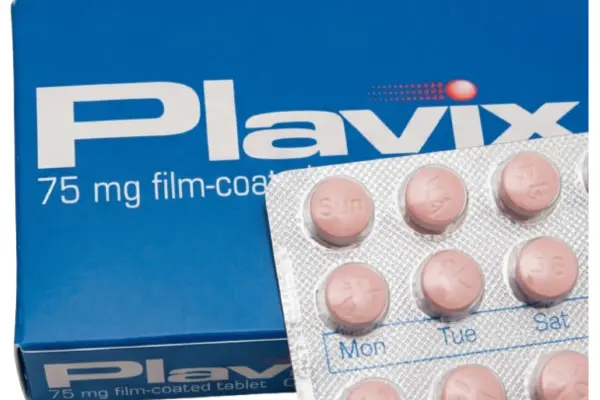

Plavix (clopidogrel) is an antiplatelet blood thinner that stops platelets from clumping together and forming dangerous blood clots. It belongs to a class of drugs called P2Y12 inhibitors, which block a specific receptor on platelet surfaces.
Doctors prescribe Plavix for patients who have experienced a recent heart attack or stroke, those living with peripheral arterial disease (poor leg circulation), and individuals who have had coronary artery stent placement. It is also used during acute coronary syndrome, including unstable angina.
Product Quick Facts
| Attribute | Details |
| Brand Name | Plavix |
| Generic Name | Clopidogrel Bisulfate |
| Drug Class | Antiplatelet (P2Y12 Inhibitor) |
| Available Strengths | 75mg, 300mg tablets |
| Standard Dose | 75mg once daily |
| Onset of Action | Approximately 2 hours |
| Duration of Effect | 5 days (platelet lifespan) |
| Prescription | Required |
| Shipped From | Canada |
How Plavix Works
When a blood vessel gets injured, platelets rush to the site and activate a receptor called P2Y12, which binds a chemical messenger (ADP) and triggers platelets to stick together. Under normal circumstances, this clotting process stops bleeding. But in patients with narrowed or damaged arteries, unwanted clots can block blood flow to the heart or brain.
Clopidogrel irreversibly blocks the P2Y12 receptor so platelets cannot clump. Because the bond is permanent and platelets lack the ability to produce new proteins, each affected platelet stays inactive for its entire 5-day lifespan. New, functional platelets only appear as the body produces them.
Loading Dose vs. Maintenance Dose
- Loading dose (300mg): Given as a single dose before stent placement or in emergency situations. Achieves rapid platelet inhibition within roughly 30 minutes.
- Maintenance dose (75mg daily): Taken once every day at the same time. Full platelet inhibition kicks in within about 2 hours.
Who Should Use Plavix?
Plavix is prescribed for the following conditions:
- Prevention of repeat heart attack (within the past 12 months)
- Prevention of repeat stroke or transient ischemic attack (TIA)
- Peripheral arterial disease (blocked leg arteries)
- After coronary artery stent placement
- Acute coronary syndrome (unstable angina, active heart attack)
Who Should Not Take Plavix
- Patients with active bleeding (stomach ulcer, hemorrhage)
- Those who need treatment for venous clots (DVT/PE) an anticoagulant such as Eliquis is typically used instead
- Children under 18 (safety not established in pediatric patients)
Dual Antiplatelet Therapy (DAPT): Plavix is often paired with low-dose aspirin for up to 12 months after a coronary stent or acute coronary event. Your doctor will decide when it is safe to stop.
Plavix Dosage and How to Take It
| Situation | Dose | Frequency | Duration |
| Maintenance | 75mg | Once daily | Ongoing (as directed by doctor) |
| Loading dose | 300mg | Single dose | Before stent or emergency event |
| After stent/ACS | 75mg + aspirin | Once daily | 6–12 months minimum |
Practical Tips
- Take with or without food there are no dietary restrictions for absorption.
- Swallow the tablet whole; do not crush or chew.
- If you miss a dose, take it within 12 hours. If more than 12 hours have passed, skip it and resume the next day.
- Never stop Plavix suddenly without consulting your doctor stopping raises the risk of a clot.
Side Effects and Warnings
Common Side Effects
| Side Effect | How Common | What to Do |
| Bleeding/bruising | Very common (~30%) | Monitor; report severe cases |
| Nosebleed | Common (~15%) | Apply steady pressure |
| Headache | Common (~10%) | Stay hydrated |
| Nausea / diarrhea | Common (~5%) | Take with food |
Serious Side Effects Seek Emergency Care
- Major bleeding: black/bloody stools, red or dark urine, vomiting blood
- Signs of TTP: purple spots on skin or in the mouth, yellowing skin/eyes, sudden fever, fast heartbeat, confusion, or vision changes
- Allergic reaction: rash, hives, swelling of face/lips/tongue, difficulty breathing
Patients over 65, those with a history of ulcers, and anyone taking aspirin, NSAIDs, or other blood thinners face a higher bleeding risk.
Drug Interactions and Foods to Avoid
Before starting Plavix, tell your doctor about every medication and supplement you take. Key interactions include:
- Omeprazole (Prilosec): Reduces Plavix effectiveness. Pantoprazole is a safer alternative if you need a proton pump inhibitor.
- NSAIDs (ibuprofen, naproxen): Significantly increase bleeding risk. Avoid or use with caution.
- Warfarin or direct oral anticoagulants: Combining these with Plavix raises bleeding risk substantially.
- Grapefruit, alcohol, garlic supplements: All may amplify bleeding. Limit or avoid them.
If you have surgery scheduled, let your surgeon know you take Plavix you may need to stop it 5–7 days beforehand because of the 5-day platelet effect.
Plavix Pricing at PandaMeds
All prices below reflect current rates through PandaMeds. Products are dispensed by licensed Canadian pharmacies and shipped directly to your door. A valid prescription is required.
| Product | Type | Strength | Quantity | Price |
| Plavix | Brand | 75mg | 28 tablets | $124.20 |
| Plavix | Brand | 75mg | 90 tablets | $399.40 |
| Clopidogrel | Generic | 75mg | 100 tablets | $32.63 |
| Clopidogrel | Generic | 300mg | 30 tablets | $450.90 |
Need help placing an order? Visit our how to order page for step-by-step instructions, or contact our support team for assistance.
Storage and Shelf Life
- Store at room temperature, between 59°F and 86°F (15°C–30°C).
- Keep in the original container to protect from moisture and light.
- Do not store in the bathroom or expose to temperatures above 86°F.
- When travelling, carry Plavix in your hand luggage rather than checked bags.