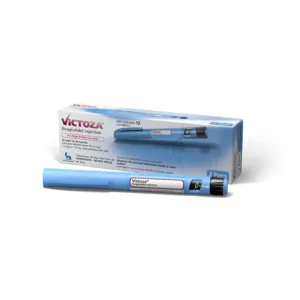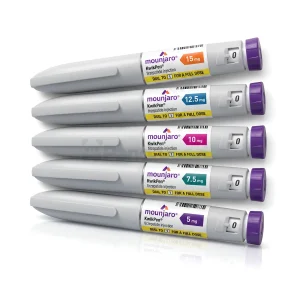
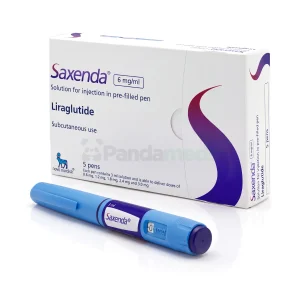
Victoza and Saxenda are both brand-name drugs manufactured by Novo Nordisk that contain the same active ingredient: liraglutide. Despite sharing an identical GLP-1 molecule, these two medications have different FDA approvals and maximum dosing. Victoza (liraglutide 0.6-1.8mg daily) is approved for managing blood sugar levels in adults with type 2 diabetes, while Saxenda (liraglutide 3.0mg daily) is FDA-approved for long-term weight management.
The main differences between Victoza vs Saxenda come down to dosage intensity and intended use. Victoza produces approximately 5 lbs of average weight loss as a side effect, while Saxenda delivers 8-10% body weight reduction in clinical trials. Both medications carry the same side effect profile, but Saxenda is more likely to cause gastrointestinal side effects due to its higher dosage.
According to the FDA prescribing information, both Saxenda and Victoza carry a boxed warning for thyroid cancer risk, making endocrinology oversight essential for off-label high-dose liraglutide use.
TL;DR
- Victoza and Saxenda contain the same active ingredient (liraglutide) but serve different purposes: Victoza (max 1.8mg/day) is FDA-approved for type 2 diabetes management, while Saxenda (max 3.0mg/day) is approved for weight management.
- Saxenda produces greater weight loss (8-10% body weight vs 5 lbs with Victoza) due to its higher dosage.
- Both are manufactured by Novo Nordisk and carry a boxed warning for thyroid cancer risk. Victoza is typically less expensive ($800-900/month vs $1,300-1,400/month for Saxenda) and has better insurance coverage for diabetes patients.
- At pandameds.com, Victoza is available for $295, and Saxenda for $515 only
Drug Comparison Overview
Both Saxenda and Victoza belong to the class of prescription drugs known as GLP-1 receptor agonists. These medications work by mimicking the GLP-1 incretin hormone to help regulate insulin secretion, slow gastric emptying, and control hunger. Victoza helps control blood sugar by telling the pancreas to produce more insulin, while Saxenda uses the same mechanism primarily to reduce appetite and support weight loss.
| Feature | Victoza | Saxenda |
| Active Ingredient | Liraglutide | Liraglutide |
| FDA Approved For | Type 2 Diabetes (A1C) | Obesity (BMI ≥30) |
| Max Daily Dose | 1.8mg | 3.0mg |
| Average Weight Loss | ~5 lbs | 8-10% body weight |
| Pen Color | Red | Blue |
Clinical Trial Results
Clinical studies have demonstrated significant differences in weight loss outcomes between these two medications. The SCALE Obesity clinical trial showed that patients taking Saxenda achieved an average of 10.4% body weight loss compared to the placebo group. Meanwhile, the LEAD-2 trial for Victoza showed approximately 4.8 lbs of weight loss in patients with type 2 diabetes. Both medications have been shown to be effective for their approved uses in clinical trials.
| Clinical Trial | Victoza Weight Loss | Saxenda Weight Loss |
| LEAD-2 (Type 2 Diabetes) | 4.8 lbs | N/A |
| SCALE Obesity | N/A | 10.4% |
Dosing Schedule Comparison – Victoza vs Saxenda Titration
Both medications follow a gradual titration schedule to minimize gastrointestinal side effects. According to the recommended dosage guidelines, patients start at 0.6mg daily and increase weekly. The first three weeks are identical for both Saxenda and Victoza, but Saxenda continues escalation to reach its higher maximum dosage of 3.0mg. Both medications are administered via subcutaneous injection in the upper arm, abdomen, or thigh.
| Week | Victoza Dose | Saxenda Dose | Difference |
| 1 | 0.6mg | 0.6mg | 0mg |
| 2 | 1.2mg | 1.2mg | 0mg |
| 3 | 1.8mg (Max) | 1.8mg | 0mg |
| 5 | 1.8mg (Max) | 2.4mg | +0.6mg |
| 16+ | 1.8mg (Max) | 3.0mg (Max) | +1.2mg |
Weight Loss Head-to-Head – Dose-Dependent Results
At equivalent doses, the weight loss is similar, but Saxenda’s higher maximum dosage produces 67% greater loss than Victoza at its max dose. Saxenda is intended to be used in combination with a healthy diet and exercise as part of a comprehensive treatment plan.
| Dose Level | Victoza Loss | Saxenda Loss | Winner |
| 1.8mg | ~5 lbs | ~5 lbs | Equal |
| 3.0mg | N/A | ~18 lbs | Saxenda |
| 52 weeks | ~6% | ~10% | 1.7x Saxenda |
Cost Analysis – Pricing and Insurance Comparison
On average, Victoza is typically less expensive than Saxenda, although both can cost over $1,000/month out of pocket. Without insurance, Saxenda can cost around $1,300 to $1,400 for a 30-day supply, while Victoza costs about $800 to $900 for the same duration. Insurance coverage for Saxenda can be trickier, as some insurance plans won’t cover weight loss drugs. Victoza is often less expensive and more likely to receive insurance coverage than Saxenda due to its diabetes indication. Both Saxenda and Victoza offer assistance programs to help eligible patients afford the medications. Healthcare providers can prescribe Saxenda or Victoza off-label for other conditions, but insurance coverage may vary.
| Factor | Victoza | Saxenda |
| List Price/Month | $800-950 | $1,300-1,400 |
| Diabetes Coverage | ~95% | ~55% |
| Obesity Coverage | ~15% | ~75% |
| Average Copay | $25 | $50 |
Side Effects by Dose
Both Saxenda and Victoza can cause gastrointestinal side effects such as nausea, vomiting, and diarrhea. Saxenda is more likely to cause side effects than Victoza due to its higher dosage of liraglutide. Both medications can increase the risk of pancreatitis and may cause severe abdominal pain.
According to the FDA safety information, both Saxenda and Victoza may cause allergic reactions, including symptoms such as hives, rash, and difficulty breathing. Saxenda can cause hypoglycemia (low blood sugar) in patients with type 2 diabetes who are also taking diabetic medications that increase insulin production.
| Side Effect | Victoza 1.8mg | Saxenda 3.0mg |
| Nausea | 28% | 39% |
| Diarrhea | 17% | 20% |
| Vomiting | 10% | 15% |
| Hypoglycemia | 13% | 6% |
| Discontinuation Rate | 5% | 8% |
Important: Pancreatitis risk is identical at 0.3% regardless of brand. Both medications carry a boxed warning for possible thyroid tumors, including medullary thyroid carcinoma and thyroid C-cell tumors. Patients with a personal or family history of thyroid cancer or multiple endocrine neoplasia syndrome type 2 should not use either medication.
Pen Dose Differences – Delivery System Comparison
Both medications are administered via subcutaneous injection at the same injection site options: abdomen, upper arm, or thigh. The pen devices use identical 32G x 4mm needles, but the number of doses per pen differs significantly due to the different doses required.
| Feature | Victoza Pen | Saxenda Pen |
| Doses per Pen (at max) | 18 doses | 6 doses |
| Total mg/Pen | 32.4mg | 18mg |
| Needle Size | 32G x 4mm | 32G x 4mm |
| Duration at Maintenance | ~4.5 weeks | ~2.5 weeks |
Switching Protocol – Victoza to Saxenda
Switching between Saxenda and Victoza is not recommended due to their different FDA-approved uses and dosages. These medications are not interchangeable and should not be used together.
However, if a healthcare provider determines that switching is appropriate, no washout period is required since the steady-state liraglutide is identical. It is important to discuss with a healthcare provider which medication might be better suited for an individual’s specific health condition and medical conditions. Using Victoza solely for weight loss is considered off-label.
| Last Victoza Dose | First Saxenda Dose | Titration Plan |
| 1.8mg | 1.8mg | →2.4→3.0mg |
| 1.2mg | 1.2mg | Standard titration |
| 0.6mg | 0.6mg | Standard titration |