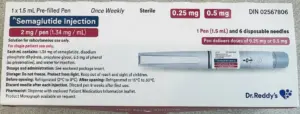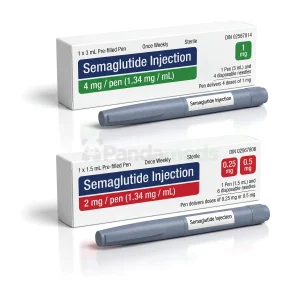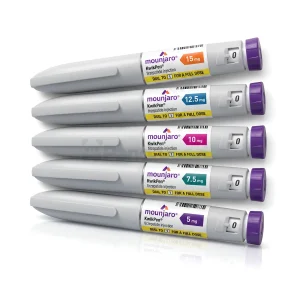
Generic semaglutide follows the same weekly titration schedule as the brand Ozempic. Prescribers usually ask their patients to start off with a 0.25 mg dose and can be increased up to a maximum of 2 mg once a week.
However, any changes in medication consumption should only be made based on the generic semaglutide dosage and dose chart or as prescribed by your healthcare service provider.
This article serves as a printable semaglutide dosage chart designed for US patients as a weekly reference. Make sure to consult your prescriber before changing or increasing the dosage to ensure safety and effectiveness.
Key Takeaways
- The starting dose of generic semaglutide is usually 0.25 mg once a week for 4 weeks. This dosage is intended to identify tolerance before beginning the actual treatment.
- After 4 weeks of the 0.25 mg dose, the first maintenance dose is prescribed as 0.5 mg once a week.
- Afterwards, your prescriber will increase the dosage to 1 mg and then 2 mg at 4-week intervals (just in case additional blood sugar control is required).
- The maximum recommended dosage for generic semaglutide is 2 mg. However, it requires a different pen strength.
- However, if someone misses a dose, they should take it within 5 days. Otherwise, he should skip it entirely and then resume the regular schedule. Doctor consultation is recommended for weeks of missed doses.
What Is Generic Semaglutide?
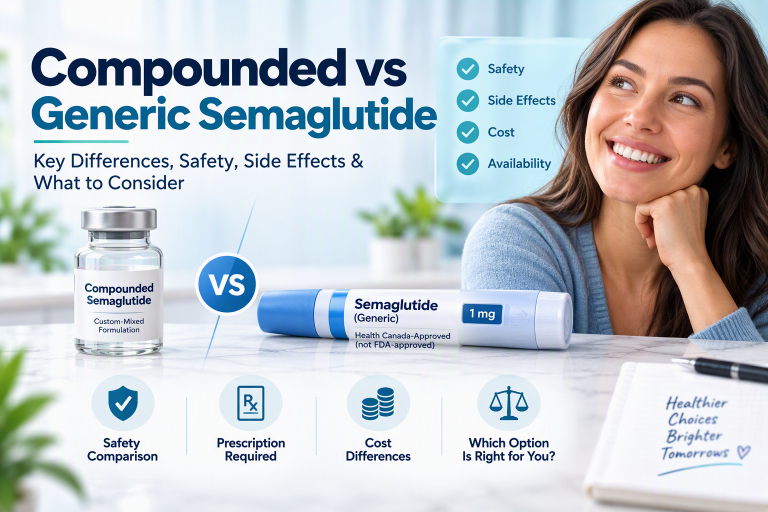
Generic semaglutide is a glucagon-like peptide-1 (GLP-1) receptor agonist that is primarily used for glycemic control in adults suffering from type 2 diabetes. This drug is administered as a once-weekly injection and follows the same dosing as Ozempic because their active molecules, as well as available strengths, are similar.
Besides treating diabetes, the medication is used off-label for weight loss; however, it is Health-Canada-approved only for treating type 2 diabetes. Anyone who is looking for chronic weight management will require higher doses such as 2.4 mg or more. This dose is currently available in branded Wegovy or its equivalent.
Standard Generic Semaglutide Dose Chart
Semaglutide weekly dose is generally managed by a healthcare provider through a gradual, step-wise increase in dosage. Here’s what the dose chart often looks like.
| Week | Dose | Frequency | Purpose |
| Weeks 1 to 4 | 0.25 mg | Once weekly | Starting dose for tolerance; not a therapeutic dose |
| Weeks 5 to 8 | 0.5 mg | Once weekly | First maintenance dose |
| Weeks 9 to 12 (if needed) | 1 mg | Once weekly | Escalated dose for additional glycemic control |
| Weeks 13 and beyond (if needed) | 2 mg | Once weekly | Maximum recommended dose; requires an alternative pen strength |
As per this semaglutide dosage chart, the dose starts at 0.25 mg and doubles to 0.5 mg after 4 weeks. The dose given in the first 4 weeks helps determine how your body is reacting to the drug.
If everything seems fine and there are no signs of side effects, the prescriber decides whether to increase the dose to 1 mg or 2 mg. This is decided on the basis of whether more glycemic control is needed.
Important: Any changes in the semaglutide dosing are made only after the prescriber’s decision. Patients should not self-titrate the dose without consulting the healthcare provider.
Starting Dose Explained
The generic semaglutide or generic Ozempic dosage usually starts with 0.25 mg once weekly. This dosage is given to build tolerance in patients rather than providing them with therapeutic blood sugar control.
This initial 4-week period allows the body to adjust to the semaglutide 0.25 mg starting dose and determine any side effects such as nausea, gastrointestinal issues, diarrhea, constipation, and vomiting. To be specific, these side effects are common in the first few weeks and may stop showing up as the body adapts. However, you can also manage Semaglutide side effects on your own.
Here, it is important to note that the starting dose is administered using a lower-strength pre-filled pen available in 0.25 mg or 0.5 mg doses. However, the most important thing to note here is that you should always consult with your prescriber before adjusting any dose in order to ensure safety and effectiveness.
Titrating Up: When and How the Dose Is Increased
The titration process in the semaglutide dosage schedule follows a strict 4-week interval for each dose level. This helps ensure patient safety and tolerance. Patients are usually prescribed the semaglutide starting dose at 0.25 mg once weekly for four weeks.
After analyzing your response to the starting dose, the dose increases to 0.5 mg once weekly for the next four weeks. Based on your current situation, the dose may be increased to 1 mg for another four weeks, only if additional weight management or glycemic control is needed. This may also be increased to 2 mg once weekly if needed.
Here, it is important to note that all patients may not require the maximum dose. The increase in the dose at a faster pace may increase the chances of gastrointestinal side effects.
Maximum Recommended Dose
As approved by Health Canada, the maximum recommended dose for generic semaglutide is 2 mg once weekly, similar to that of Ozempic. Here, it is important to note that the 0.25 mg, 0.5 mg, and 1 mg pens cannot deliver the highest dose of 2 mg.
If you are prescribed to take 2 mg once weekly, the specialized 2 mg strength pen is required. Any doses more than 2 mg weekly are sold off-label for a generic semaglutide formulation and are not approved by Health Canada.
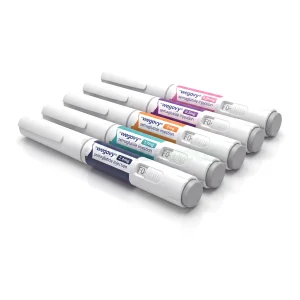
For chronic weight management, your prescriber may ask you to take the 2.4 mg dosage of semaglutide, which is available in weight-loss-specific products such as Wegovy. The chart presented here does not cover the dosage of Wegovy.
How to Administer the Injection
If this is the first time that you are going to inject this drug into your body, this step-by-step guide will help you with that:
- To begin with, choose an injection site from the thigh, abdomen, or upper arm.
- Now, administer the injection subcutaneously, meaning just under the skin.
- Do not inject it intravenously or directly into the muscle.
- You can inject it once weekly at any time of the day. (With or without food)
Notes:
- Rotate the injection site for each consecutive dose to avoid irritation; this means you should never use the same spot consecutively.
- If you need to change your weekly injection day, ensure a gap of at least two days.
- Before injecting, visually inspect the solution for color and clarity.
- Do not use if you see discoloration, cloudiness, or dispersed particles.
What to Do If You Miss a Dose
Upon missing a generic semaglutide dose, you must take it as soon as possible within 5 days of the missed dose. This helps maintain consistent blood sugar control. However, if it is more than 5 days from the missed dose, skip the missed dose and take the next dose on the regularly scheduled day.
Do not take two doses of the medication consecutively to make up for the missed one. Doing this can increase the risk of missed-dose side effects. In short, you must resume the regular schedule of a once-weekly dose of semaglutide after missing any dose for more than 5 days.
Note: This guideline is applicable only to the Health–Canada-approved semaglutide dose chart covered here, and other formulations may have different rules. You must consult with your prescriber for any personalized advice.
Dose Considerations for Special Situations
There are some special considerations for semaglutide dosage in units. Based on these details, consult your healthcare provider and make necessary alterations:
- Metformin: No adjustment to metformin dose.
- Sulfonylurea or Insulin: Prescribers may reduce these doses to lower hypoglycemia risk
- Kidney Function: No dose change is needed for renal insufficiency. However, the medicine is not recommended for end-stage renal disease.
- Liver Function: Use cautiously in hepatic insufficiency only after doctor consultation.
- Age 65+: No dose adjustment is based on the age factor alone.
- Pediatric Use: Not approved for individuals under the age of 18.
- Pregnancy / Breastfeeding: Not to be used.
- Thyroid / Genetic History: Patients with a history of medullary thyroid carcinoma or MEN2 should not take this medication.
Managing Side Effects During Titration
During the first few weeks of taking semaglutide or during the dose titration, side effects such as nausea, vomiting, diarrhea, constipation, abdominal pain, and decreased appetite are most common. However, one can manage these side effects with the following tips:
- Eat smaller, more frequent meals.
- Stay well hydrated throughout the day.
- Avoid fatty or heavy meals on the injection day.
In case you experience persistent stomach pain, signs of low blood sugar, vision changes, or allergic reactions, immediately contact your prescriber.
Bottom Line and Next Steps
The standard weekly ladder for generic semaglutide starts at 0.25 mg once weekly for four weeks and increases to 0.5 mg, 1 mg, and a maximum of 2 mg simultaneously, if needed for glycemic control.
- Always follow your prescriber’s guidance and never self-adjust your dose.
- Order your semaglutide pen through a trusted prescription referral service such as pandameds.com/. Here, you can use the promo code PANDA10 for the first-time user discount.
- Follow the weekly schedule as mentioned in the semaglutide dose chart and log the details of any side effects to discuss with your prescriber later on.
Check my price
Please note that a valid US prescription is necessary for placing the order. Upload the prescription and enjoy tracked shipping in 5 to 8 business days. Every order is cold-chain packed.