503A vs 503B Pharmacy: What Patients and Providers Need to Know in 2026
503A and 503B are the two main types of pharmacies that create compounding medications tailored specifically to an individual patient’s needs. While both 503A and 503 Federal Food, Drug and Cosmetic Act of compounding pharmacies in the United States, there are several underlying distinctions between them.
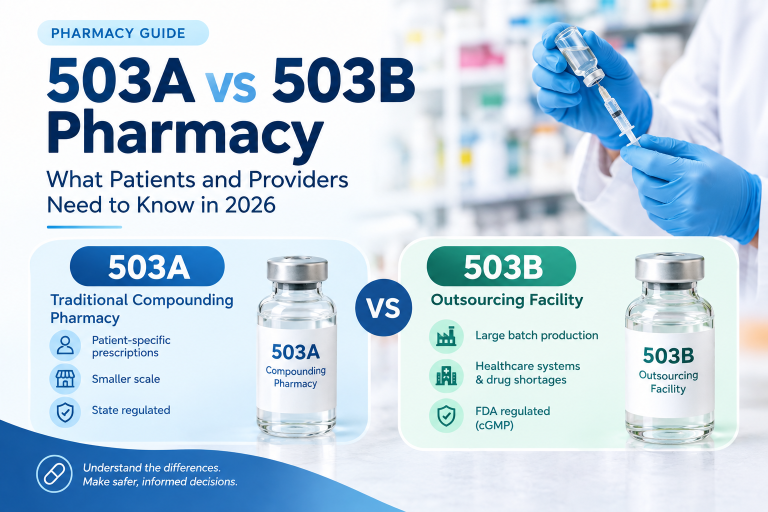
503A pharmacies are traditional compounding pharmacies. They prepare medications only after receiving a valid prescription for an individual patient. Moreover, these pharmacies typically operate on a smaller scale and are regulated primarily by state boards of pharmacy.
503B pharmacies, on the other hand, are also known as outsourcing facilities and produce larger batches of compounded medications without individual prescriptions. They serve healthcare facilities like hospitals and ambulatory surgery centers.
In this guide, we will thoroughly explain the differences between these two pharmacies and will help you better understand which one is right for you.
503A vs 503B Pharmacy at a Glance
- 503A pharmacies compound medications only after receiving individual patient-specific prescriptions.
- These pharmacies operate on a smaller scale, as they mainly focus on customized medications for individual patients.
- These facilities are regulated primarily by state pharmacy boards, they emphasize patient safety and pharmacy compounding accreditation board standards.
- 503A pharmacies serve individual patient care, while 503B facilities support healthcare systems and address drug shortages.
- 503B pharmacies, however, can compound large batches without individual prescriptions.
- 503B facilities produce sterile medications in bulk to supply healthcare providers like hospitals and clinics.
- These pharmacies are federally regulated by the FDA and must comply with current good manufacturing practices (cGMP).
- Prescription requirements, scale, regulatory oversight and intended use are key regulatory differences between 503A and 503B compounding pharmacies.
What Is a 503A Compounding Pharmacy?
To explain 503A pharmacies in simple terms, they are traditional compounding facilities that prepare medications only after receiving a specific, valid prescription for an individual patient. In the sector of personalized medicine, these pharmacies play a crucial role as they create patient specific medications as per the unique health conditions. Common examples of such medicines include allergy-friendly formulations or hormone-affecting drugs.
However, do note that 503A pharmacies have their own specific set of limitations. One of the notable limitations is their inability to produce large batches or supply medications without prescriptions. Moreover, they are also required to adhere to strict pharmacy regulations and USP standards. They are also required to perform environmental monitoring every six months to ensure drug quality and safety.
Core Characteristics of 503A Pharmacies
503A pharmacies focus exclusively on individual prescriptions. They create medications tailored to the specific needs of a single patient. Through this approach, they support individualized patient care. Below, we have shared the key features of these pharmacies.
- They create compounding medications only after receiving a valid prescription.
- The medications are specifically created to address unique patient requirements.
- The drugs are produced in small batches to ensure both safety and quality control.
- These pharmacies perform both sterile compounding as well as non-sterile compounding under strict regulatory compliance.
Common Services Provided
503A pharmacies offer a range of specialized compounding services tailored to individual patient needs. Below, we have listed some of the key services that they provide.
- Hormone replacement therapy, providing customized hormone formulations.
- Allergy-friendly formulations that avoid common allergens.
- Pediatric medications with adjusted dosages and flavors suitable for children.
- Customized dosage forms such as creams, gels, capsules, and liquids to meet specific patient preferences and medical requirements.
Regulatory Requirements
503A compounding pharmacies operate under strict regulatory frameworks to ensure patient safety and medication quality. Mentioned below are the key regulatory aspects of 503A facilities.
- State Licensing: 503A pharmacies must be licensed by the state pharmacy board where they operate. This state licensing ensures compliance with local regulations and standards.
- USP Standards: These pharmacies adhere to United States Pharmacopeia (USP) standards, particularly USP <795> for non-sterile compounding and USP <797> for sterile compounding. These standards set quality and safety benchmarks for compounded medications.
- State Board Oversight: State pharmacy boards regulate 503A pharmacies, conducting inspections and enforcing compliance with state laws and USP guidelines. This oversight helps maintain high-quality compounding practices.
These regulatory requirements ensure that 503A pharmacies maintain quality systems and protect patient health through documented procedures and environmental monitoring every six months.
Benefits of 503A Compounding
503A pharmacies provide unique benefits to patients by creating compounded medications that are specific to their condition. Below, we have shared some of these key benefits to help you better understand them.
- Personalization: Medications are tailored to the specific health requirements of patients.
- Flexible Dosing: Dosage can be precisely adjusted to fit the requirements of the individual patient.
- Patient-Specific Solutions: Each formulation is designed to address specific challenges, sensitivities and preferences.
The approach of 503A pharmacies focuses on supporting better treatment outcomes. They allows patients to receive medications that are not commercially available. Furthermore, doctors also often refer these pharmacies for customized therapies that improve patient comfort and adherence to treatment plans.
Limitations of 503A Pharmacies
Aside from the benefits, there are certain limitations imposed on 503A pharmacies that you must be aware of. Below, we have listed some of these limitations to promote your understanding of the matter.
- Limited Production Capacity: These pharmacies can only produce a limited amount of compounded medications. This means that you cannot place an order for a long dosage.
- Shorter Use Dates: Compounded medications have a rather short use dates. This is primarily due to smaller batches and the patient-specific nature.
- Restricted Distribution: These pharmacies only supply the medication to identified individual patients and cannot be distributed broadly.
What Is a 503B Outsourcing Facility?
503B facilities, also known as outsourcing facilities, are designed for large-scale compounding. Unlike 503A pharmacies, they can produce medications in bulk without needing individual prescriptions. Due to this, these facilities mainly serve healthcare providers, like hospitals, clinics and ambulatory surgery centers.
Their role is crucial in meeting the high demand for sterile compounded drugs. They provide consistent, ready-to-use medications that support pain management, anesthesia, and other specialized treatments. 503B facilities must comply with stringent FDA regulations, including current Good Manufacturing Practices (cGMP), ensuring high-quality and safe compounded preparations.
By supplying large batches, 503B outsourcing facilities help healthcare systems maintain supply chain resilience. They effectively address drug shortages and provide timely access to essential medications for patient care in various healthcare settings.
Key Differences Between 503A and 503B Pharmacies
To help you better understand the distinctions between 503A and 503B pharmacies, we have shared a thorough comparison table below, highlighting the differences that set them apart from one another.
| Feature | 503A Pharmacy | 503B Outsourcing Facility |
| Prescription Required | Yes | Not always |
| Primary Customer | Individual patients | Hospitals and clinics |
| FDA Registration | No | Yes |
| State Regulation | Yes | Yes |
| Federal Oversight | Limited | Extensive |
| cGMP Compliance | No | Yes |
| Bulk Production | Limited | Yes |
| Nationwide Distribution | Restricted | Allowed |
| Product Testing | Limited | Extensive |
When Should a Patient Use a 503A Pharmacy?
Customized medications are needed when standard drugs do not fit a patient’s unique needs. Children often need medications in liquid form or adjusted dosages. Some patients benefit from hormone therapy tailored to their specific levels. Aside from this, there are also several other factors that influence when patients should opt for a 503A pharmacy.
Customized Dosage Needs
503A pharmacies are particularly ideal for providing specialized formulations when commercially available medications do not offer the precise dosage or combination required. Below, we have listed some of the key factors that make a 503A pharmacy ideal.
- Non-standard Strengths: Medications can be compounded in unique dosages not found in traditional pharmacies.
- Personalized Regimens: Customized combinations and formulations to fit specific treatment plans.
- Improved Adherence: Tailored medications increase patient comfort and compliance.
Medication Allergies and Sensitivities
503A compounding pharmacies serve an important role for patients with medical allergies and sensitivities. These are among the few conditions that cannot be met by commercially available FDA-approved drugs.
Mentioned below are some key benefits that 503A pharmacies provide to patients with medical allergies and sensitivities.
- Customized Formulations: If the patient has an allergy to a specific inactive ingredient, dye or preservative, a 503A pharmacy can prepare a customized version without the allergen.
- Custom Dosage: These facilities can adjust the strength level of the medications for patients who need precise, fraction doses.
- Excipient Removal: These pharmacies can remake standard, commercial drugs without problematic ingredients like gluten, lactose, artificial dyes, alcohol or specific preservatives.
Specialized Formulations
503A pharmacies offer a variety of specialized formulations and customized therapies to meet unique patient needs. Below, we have shared some of these specialized formulations.
- Oral Liquids: Customized liquid medications for patients who have difficulty swallowing pills or require precise dosing.
- Topical Medications: Creams, gels and ointments tailored to treat specific skin conditions or deliver medication through the skin.
- Pediatric Preparations: Child-friendly formulations with appropriate flavors and dosages to ensure safe and effective treatment for younger patients.
503A vs 503B and Compounded GLP-1 Weight-Loss Medications
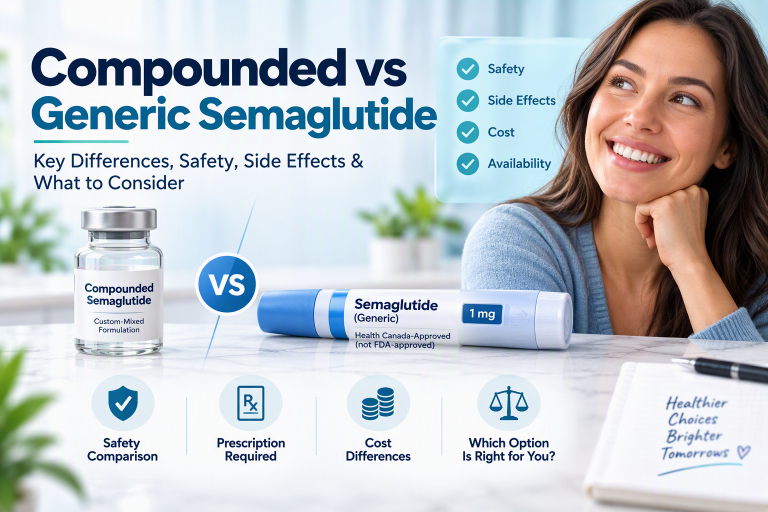
GLP-1 medications, like generic semaglutide, are generally prescribed for chronic weight management. In the USA, the compounded version of these medications was delivered when there was a severe shortage of GLP-1 drugs. Although the crisis has now been resolved, compounded GLP-1 medications can still be bought under specific, restricted conditions.
503A pharmacies tailor compounded versions of GLP-1 to meet specific health requirements. Meanwhile, 503B outsourcing facilities produce larger batches for healthcare providers. As a result, they ensure a consistent supply of the compounded drug. Due to this, there are several differences between 503A and 503B pharmacies that are essential to understand when choosing the right compounding partner for safe, effective GLP-1 treatment.
503A Compounding and GLP-1 Medications
503A compounding pharmacies have the legal right to make patient specific GLP-1 medications. However, this is only when the drug is on the active FDA shortage list or when the doctor prescribes a unique clinical medical need for an individual.
Below, we have mentioned the key aspects of 503A pharmacies for compounding GLP-1 medications.
- Patient-Specific Prescriptions: This is the foundation of 503A pharmacies. They ensure that the medications are prepared only after receiving a valid prescription to meet the unique medical needs of an individual.
- Individualized Formulations: Compounding GLP-1 medications can have customized dosages and ingredients. This is ideal for patients who require a personalized treatment to address specific health conditions effectively.
503B Facilities and GLP-1 Production
Contrary to 503A facilities, 503B pharmacies specialize in large-scale production. They produce compounding drugs in bulk. Their role is crucial in maintaining a steady supply chain as they provide the drugs directly to healthcare providers, like hospitals and clinics.
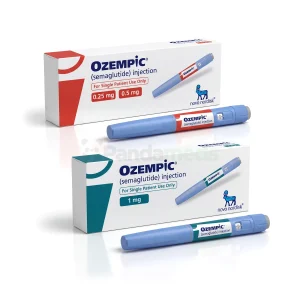
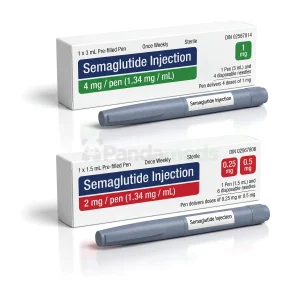
As a result, they help to effectively address drug shortages. While their large-scale operations support nationwide healthcare systems, they are not required to create the medication for unique patient-specific prescriptions. Nonetheless, the compounding GLP-1 drugs still go through essential quality and safety standards, though the checks are not as specific as brand-name drugs, like Ozempic, or generic semaglutide.
How Pandameds.com Fits Into the Conversation
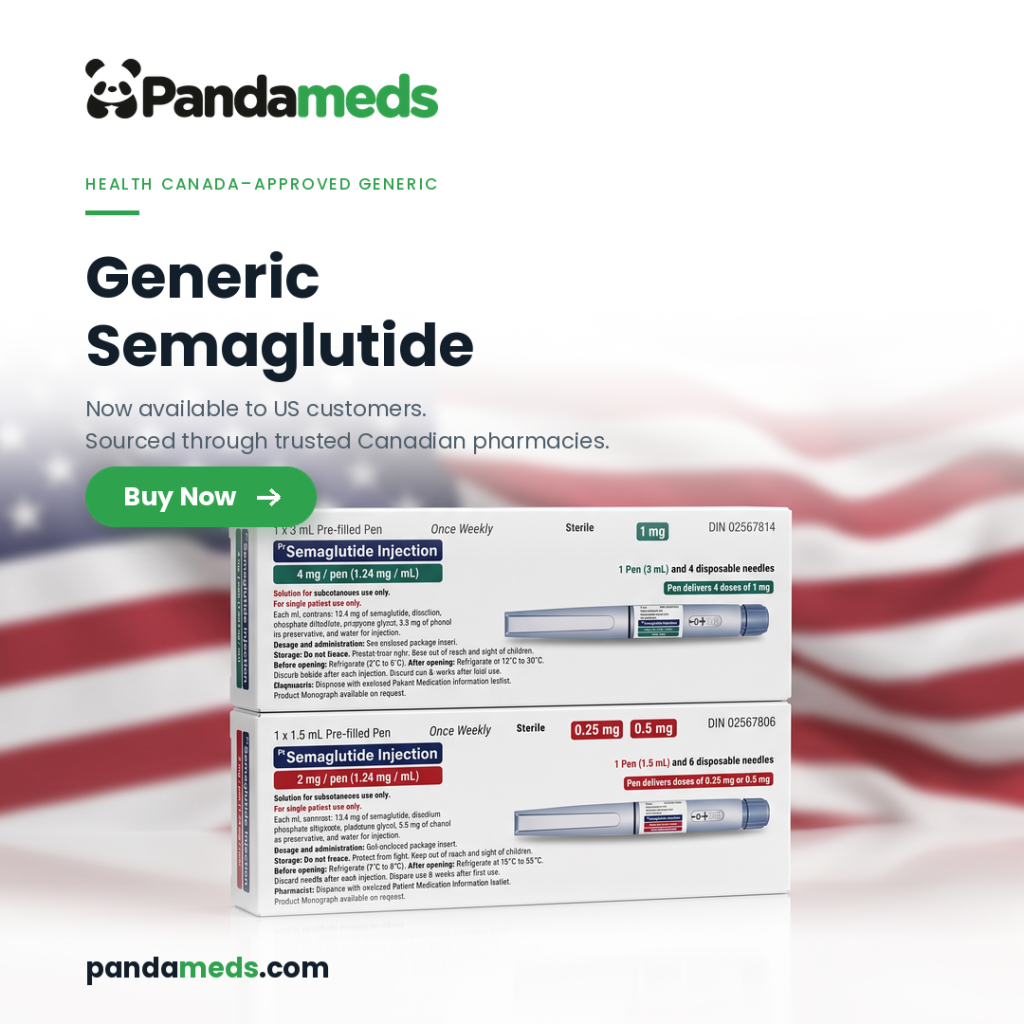
Pandameds.com is not a compounding pharmacy. Instead, we are a dedicated Canadian prescription referral service, providing U.S. patients with easy access to authentic weight loss medications. Unlike 503A or 503B compounding pharmacies, we do not create customized or compounded medications.
We ensure that all medications are shipped in their ideal environment with timely delivery. Through this, we ensure that you get your medications without any issues and can follow your treatment plan without any concerns.